How Spray Foam Insulation Improves Home Energy Efficiency
admin_lamotheinsulation
March 30th, 2026
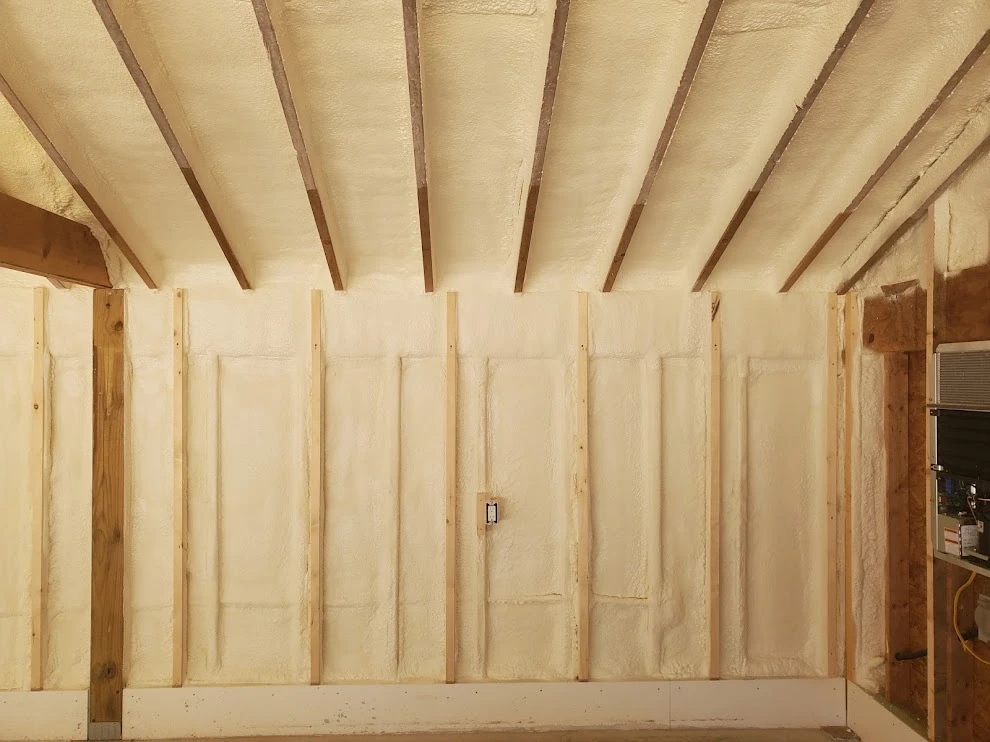
Spray foam insulation solution improves home energy efficiency by creating an airtight seal that stops air leakage while providing superior thermal resistance with R-values of R-6 to R-7 per inch for closed-cell varieties. Unlike traditional insulation materials that only slow heat transfer, spray foam expands to fill gaps, cracks, and cavities, simultaneously insulating and air sealing in one application. This dual-action approach reduces heating and cooling costs by 25% to 40% compared to uninsulated or poorly insulated homes, while reducing HVAC runtime by up to 35% and extending equipment lifespan International Foam Solutions. The material’s continuous barrier eliminates thermal bridging and maintains consistent indoor temperatures year-round.
TLDR / Key Takeaways
Up to 40% energy savings: Spray foam reduces heating and cooling costs by 25% to 40% compared to traditional insulation methods.
Superior R-value: Closed-cell spray foam delivers R-6 to R-7 per inch, nearly double the R-value of fiberglass batts at R-3.2 per inch.
Air sealing advantage: Spray foam acts as both insulation and air barrier, stopping up to 40% of energy loss that occurs through air leaks in typical homes.
HVAC efficiency: Proper spray foam installation reduces HVAC system runtime by up to 35%, decreasing wear and extending equipment life.
Moisture control: Closed-cell foam provides a vapor barrier that prevents condensation and moisture-related energy losses.
Long-term performance: Unlike fiberglass that can sag or settle over time, spray foam maintains its integrity for decades without degradation.
How Spray Foam Reduces Energy Loss
Air leakage accounts for approximately 30% to 40% of energy loss in the average home, according to Rogers Insulation. Spray foam insulation addresses this problem through its unique expansion properties that create an airtight envelope. When applied, the foam expands up to 100 times its liquid volume, penetrating cracks, gaps around electrical boxes, plumbing penetrations, and framing joints that traditional insulation cannot seal.
The U.S. Department of Energy’s Guide to Home Insulation indicates that homeowners can save up to 20% on heating and cooling costs or up to 10% on total energy costs by adding proper insulation to attics, floors, crawl spaces, and accessible basement rim joists. Spray foam achieves these savings more effectively than other materials because it eliminates convection currents within wall cavities and prevents conditioned air from escaping.
R-Value Performance Comparison
Thermal resistance, measured as R-value, determines how well insulation resists heat flow. Spray foam significantly outperforms conventional insulation materials on a per-inch basis.
Insulation Type
R-Value per Inch
Air Barrier
Moisture Barrier
Best Applications
Closed-Cell Spray Foam
R-6.0 to R-7.0
Yes
Yes
Basements, rim joists, exterior walls
Open-Cell Spray Foam
R-3.6 to R-3.9
Yes
No
Interior walls, soundproofing, attics
Fiberglass Batts
R-3.1 to R-3.4
No
No
Standard framing cavities, budget projects
Cellulose (Blown)
R-3.2 to R-3.8
Partial
No
Attics, existing wall retrofits
Mineral Wool
R-4.0 to R-4.3
No
No
Fire-resistant applications
Closed-cell spray foam delivers nearly twice the R-value per inch compared to fiberglass, meaning you achieve target R-values with less material thickness. This advantage proves critical in retrofit applications where cavity depth is limited. Research from Building Science Corporation demonstrates that spray foam’s continuous coverage eliminates thermal bridging through studs and framing members, which can account for 15% to 25% of total heat loss in wood-framed construction.
Energy Savings by Climate Zone
Performance varies by geographic location and climate conditions. The following table shows typical energy savings ranges based on climate zones:
Climate Zone
Heating Degree Days
Cooling Degree Days
Annual Energy Savings
Primary Benefit
Cold (Northern)
High
Low
30% to 40%
Heating cost reduction
Mixed-Humid (Central)
Moderate
Moderate
25% to 35%
Balanced heating/cooling
Hot-Humid (Southern)
Low
High
20% to 30%
Cooling efficiency, humidity control
Northern climates with extreme temperature differentials see the highest returns, as spray foam’s superior air sealing prevents warm air from escaping during heating season. In hot-humid climates, closed-cell foam’s moisture barrier properties reduce latent heat loads on air conditioning systems, improving comfort while lowering electricity consumption Anderson Insulation .
Real-World Installation Scenarios
The following examples demonstrate how spray foam performs in typical residential applications:
Scenario
Home Type
Problem
Solution
Outcome
Attic Conversion
1970s Ranch
Air leaks at top plates, 30% heat loss through attic
Open-cell spray foam to roof deck, R-38
32% reduction in heating bills, even second-floor temperatures
Basement Retrofit
Colonial with unfinished basement
Cold floors, drafty rim joists, 25% humidity issues
Exceeded energy code by 40%, qualified for utility rebates
Historic Renovation
1920s Victorian
No wall insulation, plaster walls, air infiltration
Inject foam through exterior access holes
Preserved interior finishes, reduced air changes by 45%
Pole Barn Conversion
Metal building
Condensation issues, extreme temperature swings
Closed-cell foam on metal walls and ceiling
Condensation eliminated, year-round usable space
Installation Factors That Affect Performance
Several variables determine whether spray foam delivers promised energy savings:
Foam Thickness and Density: Closed-cell foam requires 2 to 3 inches to achieve R-13 to R-19 in walls, while open-cell needs 5 to 6 inches for equivalent thermal performance. Under-application results in suboptimal R-values and reduced air barrier effectiveness.
Temperature During Application: Ambient and substrate temperatures must meet manufacturer specifications, typically between 60°F and 90°F for optimal expansion and adhesion. Cold-weather installation requires heated equipment and enclosures.
Surface Preparation: Substrates must be clean, dry, and free of dust or oils. Poor surface prep causes delamination, creating air gaps that compromise the thermal envelope.
Mix Ratio Accuracy: Improperly mixed chemicals result off-ratio foam that shrinks, cracks, or fails to achieve stated R-values. Professional installers use calibrated equipment and trained technicians.
Coverage Continuity: Gaps in coverage create thermal bypasses. Complete air sealing requires attention to electrical boxes, plumbing stacks, and intersection details where trades create penetrations.
Long-Term ROI and Durability
Spray foam insulation maintains performance characteristics for decades without settling, sagging, or degrading like fiberglass or cellulose. The Environmental Protection Agency estimates that homeowners can save an average of 15% on heating and cooling costs through proper air sealing and insulation combined.
When evaluating return on investment, consider these factors:
Initial Cost Premium: Spray foam costs 2 to 3 times more per square foot than fiberglass.
Payback Period: Energy savings typically recoup the additional investment within 5 to 7 years in extreme climates, 8 to 10 years in moderate zones.
HVAC Downsizing: Superior envelope performance often allows for smaller heating and cooling equipment, reducing upfront mechanical cost.
Extended Equipment Life: Reduced runtime extends furnace, boiler, and air conditioner lifespan by 3 to 5 years.
The material’s rigidity in closed-cell applications also adds structural strength to walls and roof decks, improving building durability against wind loads and racking forces.
Get Expert Spray Foam Installation
Ready to cut your energy bills and eliminate drafts? Lamothe Insulation delivers professional spray foam installation for homeowners and contractors who demand measurable energy performance. Our certified technicians assess your home’s specific thermal weak points and recommend the right foam density and thickness for Illinois’s demanding climate zone.
Contact us today for a free energy assessment and detailed quote. Call us at (508) 847-0119 or email [email protected] to schedule your consultation. We help you access utility rebates and financing options that make energy-efficient upgrades affordable. Do not settle for another season of high energy bills and uneven temperatures, let our team seal your home for decades of comfort and savings.
Frequently Asked Questions
How much can I save on energy bills with spray foam insulation?
Homeowners typically reduce heating and cooling costs by 25% to 40% after installing spray foam insulation. The exact savings depend on your climate zone, current insulation levels, air leakage rates, and energy costs. In northern climates with harsh winters, savings often exceed 35% due to the superior air sealing that prevents heat loss.
Is closed-cell or open-cell spray foam better for energy efficiency?
Closed-cell spray foam provides higher R-value per inch (R-6 to R-7) and acts as a moisture barrier, making it ideal for basements, crawl spaces, and exterior walls. Open-cell foam (R-3.6 to R-3.9) offers excellent air sealing at a lower cost and works well for attics and interior applications where moisture control is less critical. Both improve energy efficiency significantly compared to traditional insulation.
How long does spray foam insulation last?
Properly installed spray foam insulation maintains its thermal performance for the lifetime of the building, typically 80+ years. Unlike fiberglass or cellulose, spray foam does not settle, compress, or deteriorate over time. The material bonds to substrates and retains its structural integrity, ensuring consistent energy savings without maintenance or replacement.
Can spray foam insulation reduce my HVAC size?
Yes. Spray foam’s superior thermal envelope often allows HVAC contractors to specify smaller heating and cooling equipment. Tighter building envelopes reduce peak heating and cooling loads by 20% to 30%, enabling downsized systems that cost less upfront and operate more efficiently. Always conduct load calculations after air sealing to right-size equipment.
Does spray foam insulation qualify for tax credits or rebates?
Many spray foam insulation projects qualify for federal tax credits under the Energy Efficient Home Improvement Credit, allowing homeowners to claim 30% of costs annually. Additionally, Illinois utility companies and the Department of Energy offer rebates for insulation upgrades that meet specific R-value and installation standards. Check current programs at Energy.gov.
Building Science Corporation – Research organization providing technical data on thermal bridging, air sealing performance, and building envelope science.
Rogers Insulation – Detailed comparison of fiberglass, cellulose, and spray foam insulation materials with use case recommendations.
Mineral wool offers superior soundproofing performance compared to blown-in insulation, delivering STC ratings of 45-52 versus cellulose’s typical STC rating…
Closed-cell spray foam insulation outlasts all traditional insulation types, maintaining peak performance for 80 to 100+ years without degradation. Traditional…