How to Address Uneven Insulation Coverage With Open-Cell Spray Foam in Worcester, MA
Fixing uneven insulation coverage with open-cell spray foam in Worcester, MA starts with diagnosis, not with more foam. Our team…


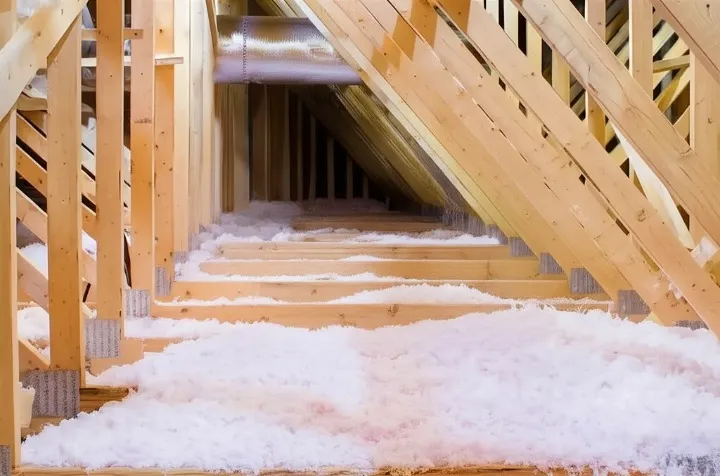
When it’s time to quiet a shared wall, a home theater, or a noisy street-facing room, the mineral wool vs cellulose insulation decision is usually the first question that comes up. Mineral wool delivers STC ratings of 45 to 52. At the same time, blown-in cellulose typically lands around STC 45, close enough that cost, density, and installation method end up deciding the winner for most projects. For a wider look at how different materials protect a building and support long-term comfort, see our guide to insulation materials and property protection. Below, we break down STC performance, cost per square foot, installation differences, and the specific scenarios where each material wins so that you can make the right call for your project.
The Sound Transmission Class (STC) rating measures how well a material blocks airborne sound. According to Acoustical Surfaces’ comparison of mineral wool and fiberglass, mineral wool typically scores between 45 and 52, among the highest of common insulation materials. At that range, mineral wool can reduce normal conversation to barely audible levels in a standard wall assembly.
Blown-in cellulose usually reaches an STC rating around 45 when dense-packed to 3.5 pounds per cubic foot. That’s a solid result, but it reflects cellulose’s core purpose as a thermal product rather than a purpose-built acoustic one.
Mineral wool’s edge comes from its engineered density. The material weighs 4 to 8 pounds per cubic foot depending on the product grade, giving it the mass needed to block sound transmission. Its rigid batts and boards hold their shape without settling, so the acoustic performance stays consistent for decades.
Blown-in cellulose at dense-pack levels reaches 3.5 to 4.0 pounds per cubic foot. That density still provides reasonable sound dampening, but cellulose fibers are softer and more compressible than mineral wool’s rock or slag-based structure.
| Frequency Range | Mineral Wool Performance | Blown-In Cellulose Performance |
| Low (125 to 250 Hz) | Excellent absorption | Moderate absorption |
| Mid (500 to 1000 Hz) | Superior blocking | Good dampening |
| High (2000 to 4000 Hz) | Excellent blocking | Moderate blocking |
For context on what these numbers mean in real rooms, the Insulation Institute’s guide to insulating for sound recommends an STC of 52 or higher for bedrooms and even higher for living spaces, kitchens, and bathrooms where noise control matters most.
| Insulation Type | Material Cost | Labor Cost | Total Installed Cost |
| Blown-In Cellulose | $0.30 to $0.80/sq ft | $0.30 to $1.50/sq ft | $0.60 to $2.30/sq ft |
| Mineral Wool Batts | $0.80 to $1.50/sq ft | $0.50 to $1.20/sq ft | $1.30 to $2.70/sq ft |
| Mineral Wool Boards | $1.20 to $2.50/sq ft | $0.60 to $1.50/sq ft | $1.80 to $4.00/sq ft |
Mineral wool’s higher upfront cost tends to pay off on soundproofing-specific projects. It doesn’t settle, compress, or degrade from moisture exposure, so the acoustic performance holds for the life of the building.
Blown-in cellulose costs less upfront but may need a re-inspection after 10 to 15 years if settling occurs. That said, according to Green Building Advisor’s comparison of dense-pack cellulose and mineral wool, cellulose brings moisture-buffering properties, added thermal mass, and strong air-infiltration control that go beyond soundproofing alone.
| Scenario | Property Type | Recommended Option | Estimated Cost |
| Home theater in the basement | Residential basement | Mineral wool batts in walls and ceiling | $2,200 to $3,800 |
| Attic conversion to bedroom | Residential attic | Blown-in cellulose at R-49 | $1,800 to $3,500 |
| Shared wall between townhomes | Multi-family residential | Mineral wool with double stud wall | $4,500 to $7,200 |
| Whole-house re-insulation | Residential retrofit | Blown-in cellulose throughout | $3,500 to $6,500 |
| Recording studio construction | Commercial/residential | Mineral wool boards with isolation clips | $8,500 to $15,000 |
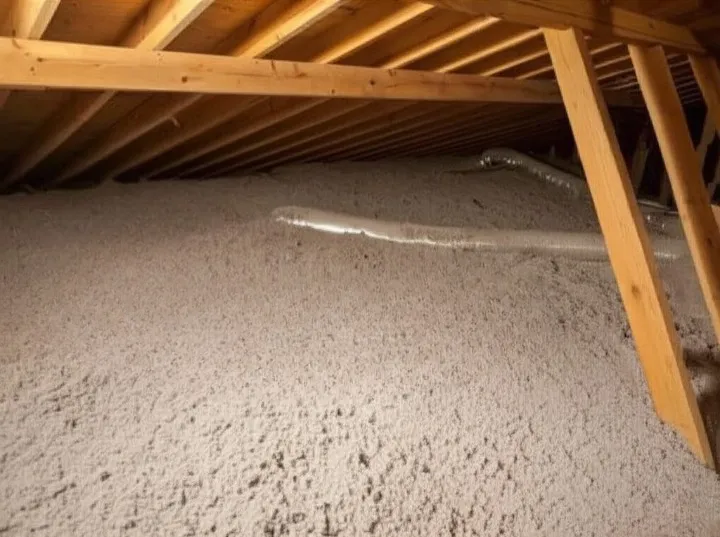
Blown-in cellulose is well suited to irregular spaces, gaps around pipes and wiring, and large attic areas. Installation requires specialized blowing equipment, but it covers ground quickly. Dense-pack applications in walls create a monolithic fill that reduces air infiltration while adding moderate sound dampening.
Mineral wool takes more labor to install but delivers a more precise result. Installers cut batts or boards to fit stud bays exactly, avoiding the compression that would reduce acoustic performance. The rigid structure allows tight, sag-free installation, which matters most in vertical wall applications where consistent density is the whole point. If you’re weighing options for a specific room, our mineral wool insulation services page covers what a professional install looks like from start to finish.
Choose mineral wool when:
Choose blown-in insulation when:
This comparison is not for clients who only need thermal insulation with no acoustic concerns, projects with very tight budgets where basic fiberglass is the practical choice, or applications that specifically require spray foam’s air-sealing properties.
Choosing the wrong insulation can leave a room noisier than expected, even after a full renovation. Whether you’re leaning toward mineral wool for its higher STC rating or blown-in cellulose for its cost and coverage speed, getting the install right matters as much as the material choice. Contact us for a free quote and we’ll help you match the right product to your space and budget.
Related reading: for a closer look at how blown-in cellulose performs on its own, check out our blown-in insulation guide.
Mineral wool generally performs better, with STC ratings of 45 to 52 compared to cellulose’s typical STC of 45. The difference comes down to density and rigidity: mineral wool’s engineered fiber structure holds its shape and mass over time, while cellulose is softer and more compressible. For most noise-sensitive rooms, mineral wool is the stronger pick, though cellulose still performs adequately for general noise reduction at a lower cost.
Aim for STC 50 or higher for home theaters and recording spaces, and STC 45 to 50 for bedrooms or shared walls between units. A standard interior wall with minimal insulation typically sits around STC 33 to 35, which allows normal conversation to be clearly heard through it. Upgrading to mineral wool in a standard 2×4 wall assembly can push that rating up to STC 48 to 52.
Blown-in cellulose typically installs for $0.60 to $2.30 per square foot. Mineral wool batts run $1.30 to $2.70 per square foot, and mineral wool boards run $1.80 to $4.00 per square foot. The premium reflects mineral wool’s higher material cost and the more labor-intensive cutting and fitting process.
Adding depth to blown-in cellulose does improve sound dampening, but density matters more than thickness for blocking airborne noise. Doubling cellulose depth to try to match mineral wool’s density is impractical and structurally difficult in a standard wall cavity. Mineral wool’s engineered density at standard thicknesses outperforms even a thick cellulose application for sound blocking.
Mineral wool generally outperforms standard fiberglass batts for soundproofing because of its higher density and more rigid fiber structure. Fiberglass can still contribute to noise reduction, especially in budget-conscious projects, but mineral wool’s mass gives it a measurable edge for blocking mid and high-frequency sound in walls and ceilings.