What Happens When Closed-Cell Spray Foam Is Installed Too Thin in Sterling, MA?
When closed-cell spray foam is installed too thin in Sterling, MA, three problems start stacking up at once: the assembly…


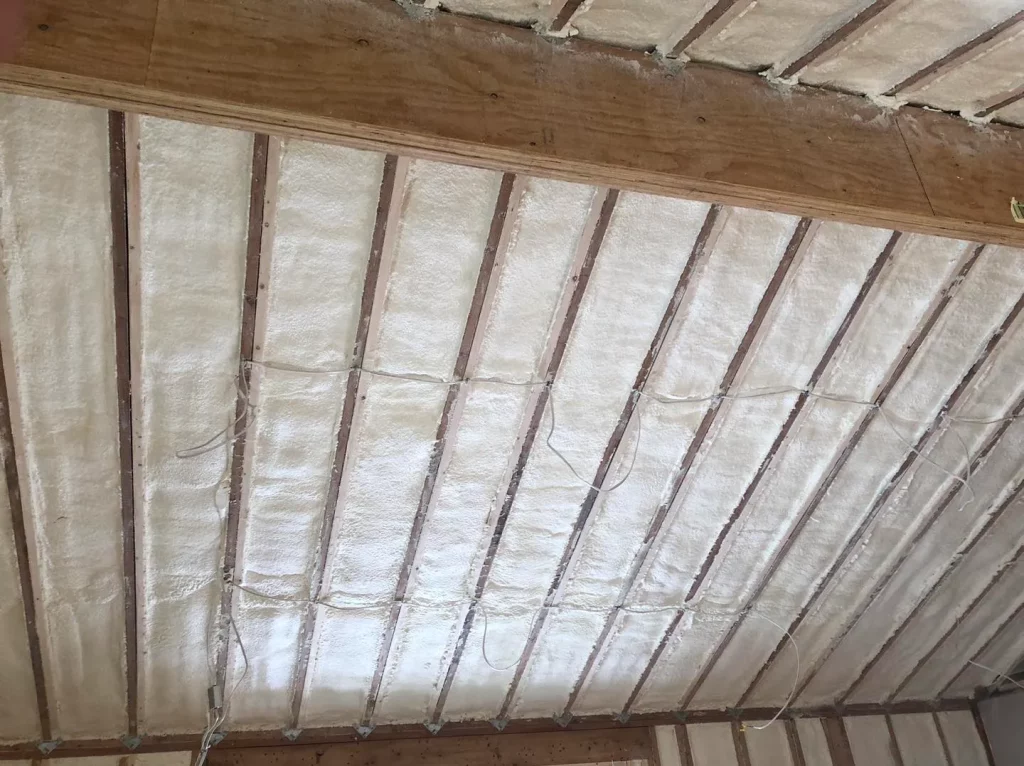
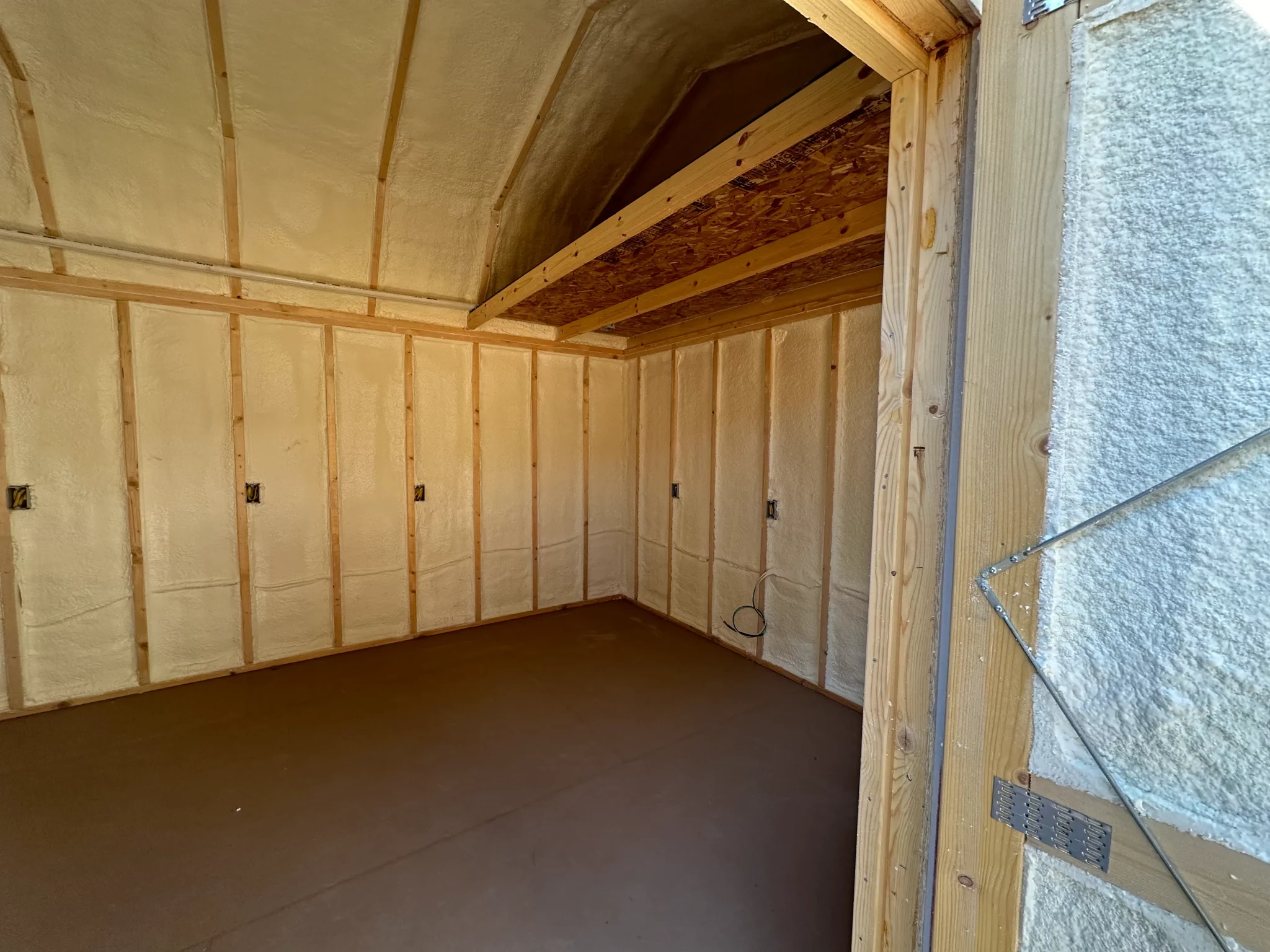
When closed-cell spray foam is installed too thin in Sterling, MA, three problems start stacking up at once: the assembly loses R-value because this foam is rated per inch of installed thickness, the foam may never cure fully because a thin pass sheds the heat it needs to react, and the wall or roof can lose the vapor-retarding performance that protects sheathing through central Massachusetts winters. Homeowners, builders, and property managers usually notice the pattern first as cold rooms, condensation or frost on sheathing, a chemical odor that lingers, or an energy inspection that fails. The right correction depends on why the foam came up short, so the sections below explain the physics, the health and moisture risks, and the practical steps for confirming and fixing an under-thin install.
Closed-cell spray polyurethane foam is specified and sold by the inch. Reference data puts closed-cell polyurethane spray foam at roughly R-5.5 to R-6.5 per inch, with two-pound medium-density products commonly cited at R-5.1 to R-6 per inch of long-term thermal resistance Wikipedia – Spray foam. Because R-values are additive across layers, total performance is simply thickness multiplied by per-inch rating. There is no trick that recovers R-value a thin pass never contained.
That is why a shortfall is not cosmetic. If a wall was supposed to get three inches and got two, the missing inch is missing insulation for the life of the building. As the R-value literature plainly states, manufacturer R-values apply only to properly installed insulation Wikipedia – R-value (insulation).
| Installed Thickness | Approx. Total R-Value (at R-5.1 to R-6/inch) | What It Means in a Sterling Home |
|---|---|---|
| 1 inch | R-5 to R-6 | Air sealing value only; far below wall insulation targets |
| 2 inches | R-10 to R-12 | Minimum zone for vapor-retarding function on many products |
| 3 inches | R-15 to R-18 | Typical target for framed walls in cold climates |
| 4 inches | R-20 to R-24 | Common for rooflines and cathedral ceilings |
Spray foam is created when two chemical parts mix at the gun and react, and that reaction generates heat through an exothermic process EPA – Chemicals and Production of Spray Polyurethane Foam. That heat is not waste; it drives the reaction and the rise. A pass applied too thin sheds its heat into the surrounding framing, and in a Sterling January a cold stud bay pulls warmth out of the foam fast. The typical results are foam that stays soft, spongy, or tacky, cures unevenly, and pulls away from framing.
The consequences go beyond appearance. While curing, spray foam emits a gas that can cause blurred vision and trouble breathing. EPA guidance says occupants and unprotected workers should vacate during closed-cell spray foam installation and stay out until the product has finished curing and the building has been ventilated and cleaned, with many manufacturers recommending 24 hours for professional high-pressure systems EPA – Vacate and Safe Re-Entry Time. Exposures to isocyanates and other SPF chemicals can cause asthma, sensitization, lung damage, and skin and eye irritation EPA – SPF Insulation and How to Use it More Safely. A thin, under-cured layer has more residual unreacted material and takes longer to reach an inert state, which is why a chemical smell that lingers for weeks is a genuine red flag rather than a nuisance.
Medium-density closed-cell foam functions as both a vapor barrier and an air barrier when installed at the required minimum thickness, about 50 mm or two inches of spray foam insulation in Sterling, MA. Below that threshold, a wall may retain some air-sealing value while losing the vapor-retarding performance the assembly was designed around.
In central Massachusetts, that matters most in winter. Warm, humid indoor air pushes outward through the assembly, and if the foam layer is too thin, that moisture reaches cold sheathing and condenses. Moisture is not only a mold question. Long-term laboratory testing found that moisture absorption and loss of blowing agent were major causes of R-value loss in closed-cell spray polyurethane foam Wikipedia – R-value (insulation). A thin layer accelerates that failure because the warm, humid side of the wall sits closer to the cold side from day one.
| Factor | Installed to Spec | Installed Too Thin |
|---|---|---|
| Total R-value | Matches the project plan | Drops linearly with missing inches |
| Curing | Full rise, inert after the cure window | Soft or tacky, extended off-gassing |
| Vapor performance | Qualifies as a vapor retarder at minimum thickness | May not qualify, condensation risk rises |
| Inspection | Passes energy inspection | Risks a failed or red-tagged inspection |
| Comfort | Even temperatures room to room | Cold rooms, drafts, ice at problem spots |
| Long-term value | Stable performance for decades | Moisture and aging degrade R-value faster |
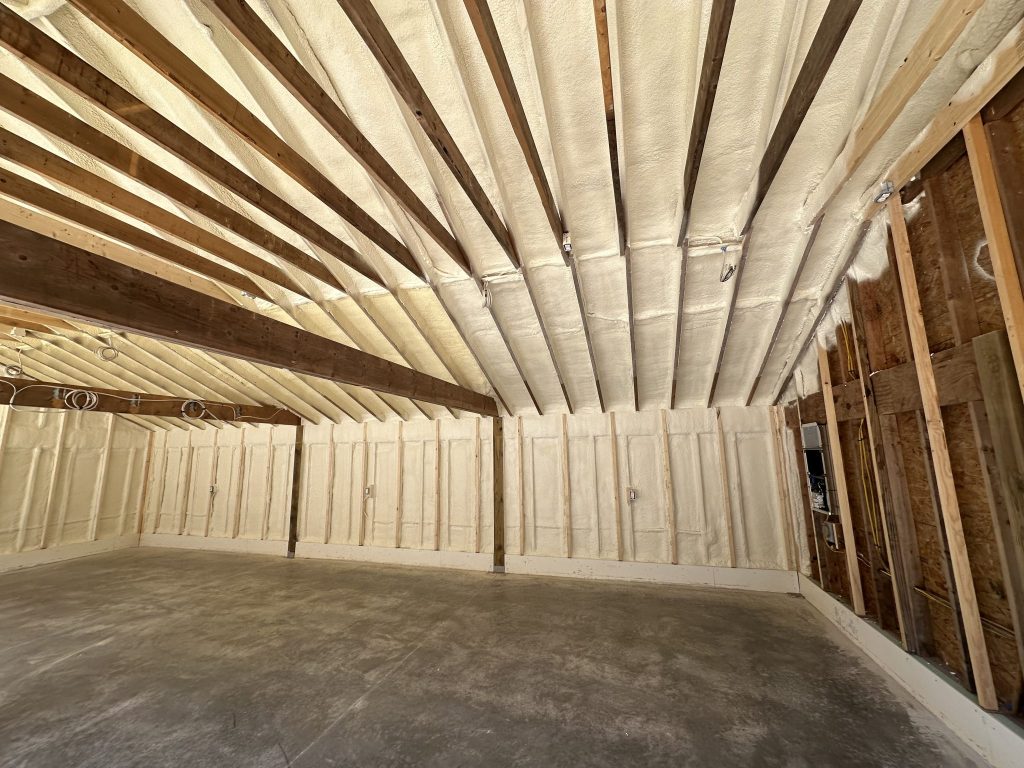
Confirmation starts with a depth-gauge survey at multiple points in multiple cavities, because thickness varies across a pass. Infrared thermography is the standard field companion: it is used in the building sector to identify thermal bridges and inhomogeneous, or uneven, insulation Wikipedia – R-value (insulation). If the walls are still open, measure and photograph before drywall closes the evidence away. If the walls are already finished, a thermal scan on a cold day followed by targeted probe checks gives a defensible picture of what is inside the cavity.
| Audience | Recommended Approach | Key Notes |
|---|---|---|
| Homeowners, pre-drywall | Depth-check every wall before sign-off | Photos and measurements protect you permanently |
| Homeowners, finished install | Start with an infrared assessment | Symptoms like odor or cold rooms deserve investigation |
| Homebuyers | Request install records and a thermal scan | Make foam verification part of due diligence |
| Builders and remodelers | Put per-assembly thickness in the contract | Verify substrate temperature and pass thickness same-day |
| Property managers | Schedule foam evaluations between tenancies | Catch moisture and comfort complaints at the source |
Lamothe Insulation and Contracting installs and evaluates closed-cell spray foam for homes and light commercial buildings across Sterling and central Massachusetts. If you suspect an install came up thin, or you want your next project done to spec the first time, email [email protected] or call (508) 847-0119 and our team will walk your building with you. Walls only get one chance at a first pass, so make it the right thickness.
A: Often, yes, if the first layer cured hard, adhered well, and is clean. The existing surface must be evaluated for soundness and compatibility before a top-off is scheduled.
A: Most framed wall applications run two to three inches to reach code-level R-values in a cold climate. The exact target depends on the assembly and the energy code path your project follows.
A: EPA guidance says occupants should vacate during installation and stay out until the foam finishes curing and the space is ventilated. Many manufacturers cite about 24 hours for professional high-pressure applications.
A: Some air-sealing value can remain, but vapor-retarding performance generally requires the manufacturer’s minimum thickness, roughly two inches for many closed-cell products.
A: Combine a depth-gauge survey across multiple cavities with an infrared scan, and keep the photos and measurements. Documentation gathered before drywall closes the wall is the strongest evidence.