How Poor Installation Can Affect Closed-Cell Spray Foam Performance
Closed-cell spray foam earns its reputation through high R-value per inch, air sealing, and moisture resistance, but none of that…


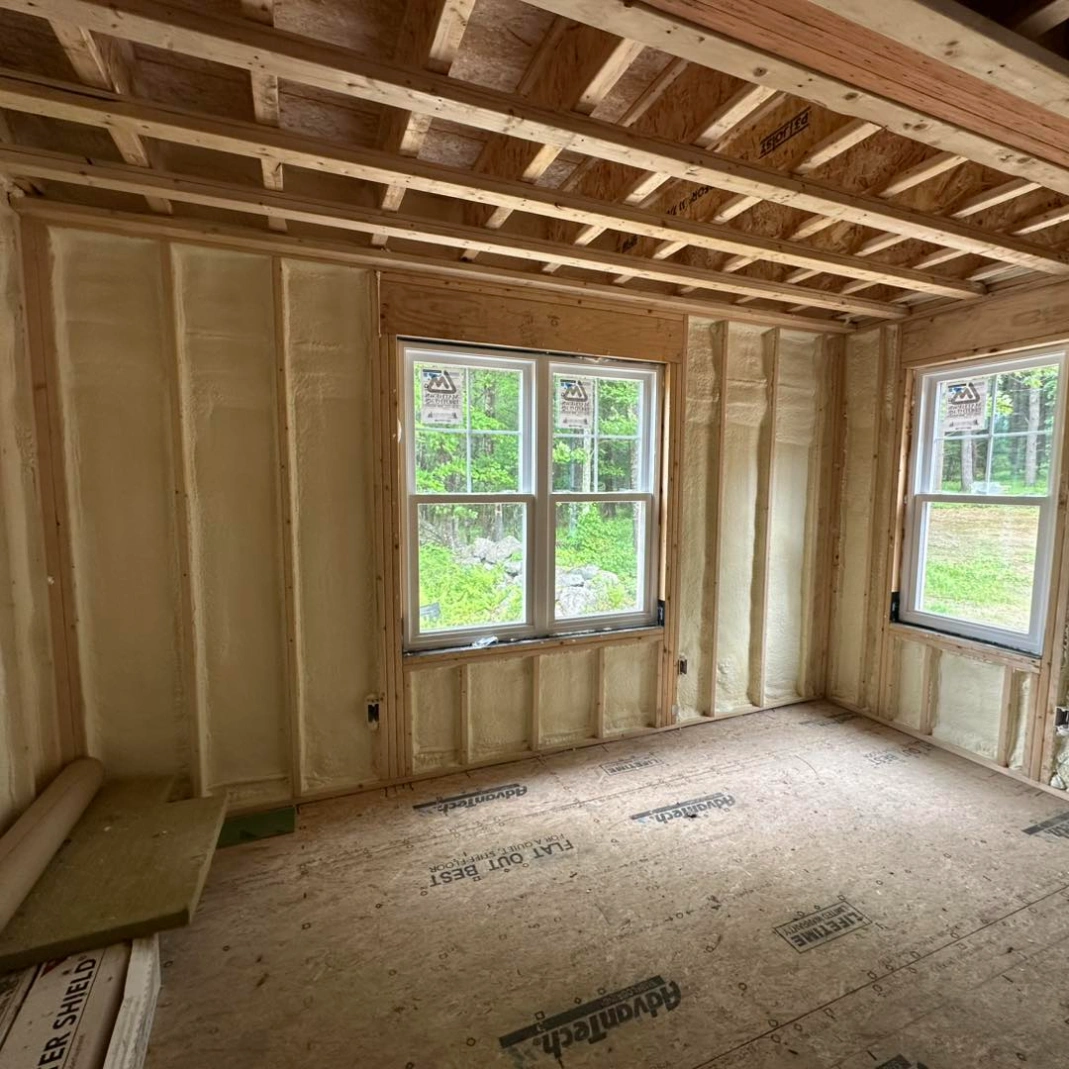
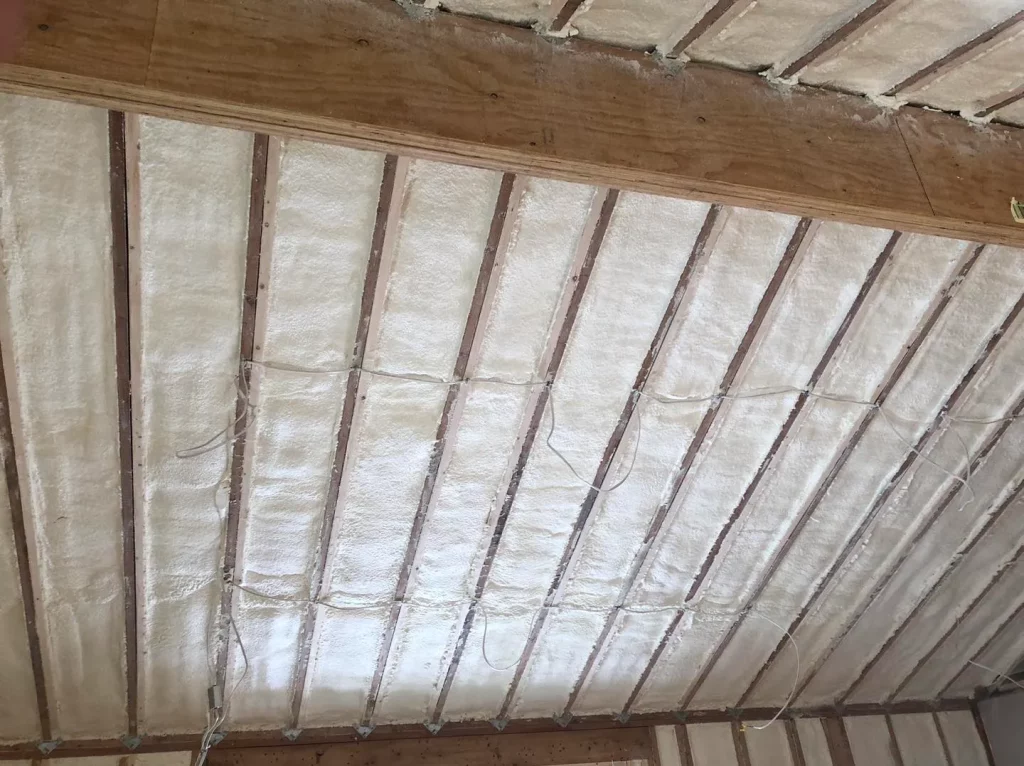
Closed-cell spray foam earns its reputation through high R-value per inch, air sealing, and moisture resistance, but none of that arrives in the drums. It only materializes when the crew on site mixes the chemistry correctly, manages substrate and weather conditions, and applies the foam in controlled passes. Poor installation, whether from off-ratio mixing, overthick passes, or spraying onto damp or dirty surfaces, bakes permanent defects into walls and roof decks that later trades cannot easily see or fix. For homeowners, builders, and property managers evaluating closed-cell spray foam installation performance, the deciding variable is rarely the product itself. It is the quality of the installation behind it. Below, our team at Lamothe Insulation and Contracting breaks down how bad workmanship degrades results, which warning signs matter, and how to verify quality before the walls close in.
Closed-cell spray foam starts as two liquid chemicals, an A-side isocyanate and a B-side polyol blend, that mix only at the spray gun and react within seconds. The finished material is created on your job site, which means the installer is effectively running a small factory. When that factory falls out of spec, the foam itself changes.
Industry inspection guidance from the Spray Foam Coalition identifies blocked lines and strainers, running out of one material, and pump cavitation as common causes of off-ratio foam, and it classifies off-ratio foam as a defect because it does not deliver the rated physical properties of on-ratio material. Cure conditions matter just as much. The EPA directs applicators to follow the product label and safety data sheet to achieve consistent curing conditions and times and warns that unpredictable or uncontrolled curing rates increase risk. That is why professional crews record substrate temperature, humidity, and pass timing instead of guessing.
Most closed-cell failures trace back to a short list of preventable errors:
| Defect | Typical Cause | Performance Impact | Warning Signs |
|---|---|---|---|
| Off-ratio foam | Blocked lines or strainers, running out of one material, pump cavitation | Loss of rated properties: soft foam compresses and creeps, brittle foam crumbles and loses adhesion | Lighter color with a sticky, spongy feel (B-rich); darker color with a hard, glassy, crumbly feel (A-rich) |
| Overthick passes | Spraying more material per lift than the manufacturer allows | Excess exothermic heat scorches the core, causing discoloration, internal cracks, and shrinkage | Brown streaks inside the foam mass, visible cracks, burnt odor |
| Gaps and voids | Missed areas, sprayed-too-thin sections, foam pulling away during cure | Direct convective heat loss, air leakage, cold surfaces that invite condensation | Drafts, uneven room temperatures, visible gaps at studs, plates, and penetrations |
| Shrinkage and cracking | Overheating during cure, off-ratio chemistry, cold substrates | Cohesive or adhesive failure opens the air barrier and lowers effective R-value | Creases and crevices between foam and framing |
| Blisters and delaminations | Weak bond to the substrate or between passes, often from moisture | Hollow, unbonded zones weaken air sealing and can fail structurally | Hollow sound when tapped, give or flex under hand pressure |
| Wet or dirty substrate | Spraying over dust, oils, frost, or damp sheathing | Open, irregular cell layers that can progress to blistering and delamination | Enlarged irregular cells at the substrate line in a core sample |
Closed-cell foam is sold as a continuous air barrier and insulation layer in one. When installation defects punch holes in that continuity, the rated R-value stops matching real-world performance. Air bypasses the foam through gaps and shrinkage cracks, carrying heat and moisture into assemblies where it can condense on cold surfaces.
Indoor air is part of performance too. NIST researchers, working for the CPSC, tested a spray foam sample applied in a potentially non-ideal manner, identified more than 17 chemicals, and quantified emission rates for six, noting that emissions vary with chemistry, temperature, airflow, and foam type. Foam that cures wrong does not just underperform thermally. It becomes far harder to predict. The CPSC’s consumer guidance also notes there is no standard process for removing misapplied foam and advises occupants to vacate during and after application for at least 24 hours under general industry guidance. Prevention is dramatically easier than correction.
Because most defects hide behind a decent-looking surface skin, quality control has to go below the surface. The inspection guidance referenced above lays out a practical sequence we follow on closed-cell projects:
The single best predictor of a good outcome is who holds the gun. The Spray Polyurethane Foam Alliance operates a four-level Professional Certification Program, from Assistant through Installer, Master Installer, and Project Manager, with experience thresholds such as 100,000 board feet of spraying for Installer certification and 500,000 board feet plus a field exam for Master Installer status. The EPA recommends hands-on classroom training through SPFA’s accreditation program and tells consumers to verify a contractor’s training, insurance, licenses, and references before hiring. When you evaluate us, bring exactly that level of scrutiny. We welcome it, because our process is built to stand up to it.
| Audience / Context | Recommended Approach | Key Notes |
|---|---|---|
| Homeowners planning a retrofit | Request a written scope covering pass thickness, cure conditions, and verification methods | Confirm re-occupancy timing before work starts, with at least 24 hours out of the home |
| Builders and general contractors | Add substrate moisture checks and thickness verification to the punch list | A modest inspection scope protects the entire closeout schedule |
| Property managers | Get re-entry and odor-response plans in writing | Lingering odor is the most common complaint trigger, so document the cure window |
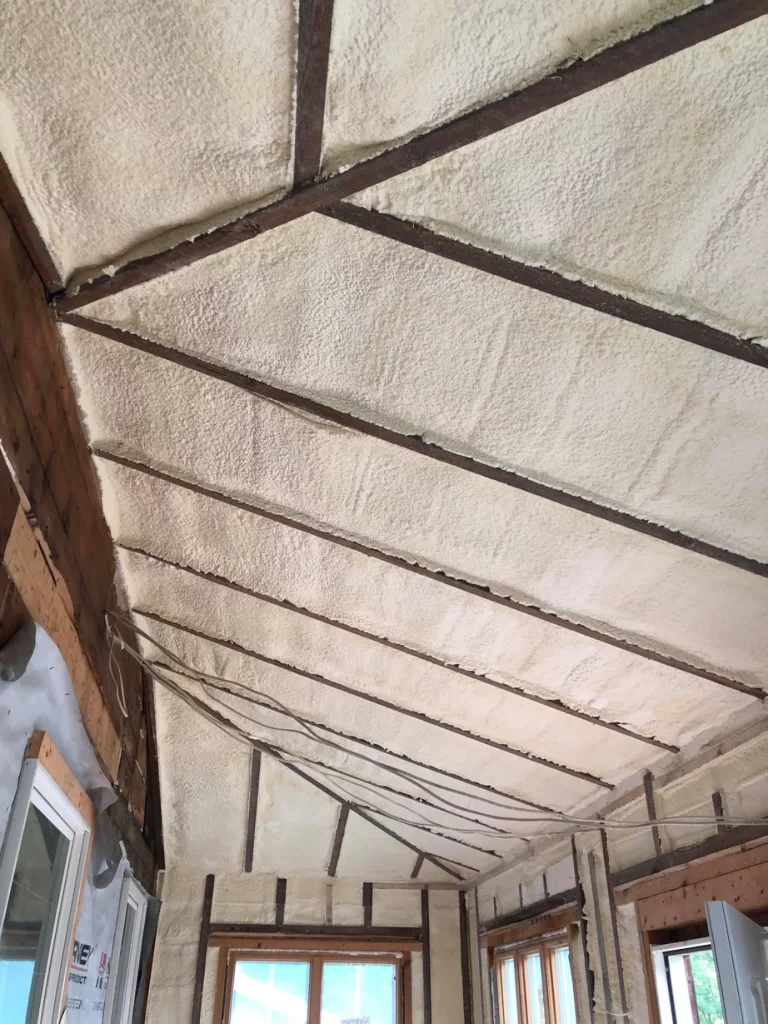
| Cathedral ceilings and roof decks | Confirm per-lift thickness limits and barrier planning early | Thermal and ignition barrier requirements should be decided before spray day |
Closed-cell spray foam rewards precision and punishes shortcuts, and Lamothe Insulation and Contracting builds every job around that reality. Our team controls ratio, substrate conditions, and lift thickness, then verifies the result with probing, core sampling, and full documentation. Call us at (508) 847-0119 or email [email protected] to talk through your project.
The right installation is the one that still performs decades from now. Let’s make sure yours does.
Small, localized defects can often be patched with additional foam after diagnosis. Widespread off-ratio foam, delamination, or persistent odor problems may require sampling and removal, which the CPSC notes has no standard process, making prevention far easier.
Foam lacking A-side is lighter than normal and feels sticky, spongy, or soft. Foam lacking B-side is darker, brittle, hard, and glassy, and both conditions are classified as defects in industry inspection guidance.
Inspectors probe with a calibrated wire and pull core samples to count passes and examine cell structure. For projects under 10,000 square feet, guidance suggests roughly one probe per 100 square feet of area assemblies and one per 10 linear feet at rim joists.
Occupants should stay out during application and for at least 24 hours afterward under general industry guidance, longer if the manufacturer or your contractor directs it. Persistent odors or breathing symptoms warrant medical attention and a documented response from the installer.
Yes, in most occupied spaces. Codes require SPF to sit behind a thermal barrier with at least a 15-minute fire rating, and half-inch gypsum board is a prescribed option, while many attics and crawlspaces accept listed ignition barriers.