Why Your Worcester Property Is Losing Energy and How Spray Foam Can Fix It?
admin_lamotheinsulation
March 30th, 2026
Your Worcester property loses energy through air leaks, inadequate insulation, and thermal bridging that forces your heating system to work overtime during Massachusetts’ harsh winters. Spray foam insulation creates an airtight seal that stops this energy waste by filling gaps and cracks where traditional insulation fails, reducing heat loss by up to 50% compared to conventional fiberglass batting. This translates to lower utility bills, more consistent indoor temperatures, and a building envelope that actually performs in New England’s demanding Climate Zone 5 conditions.
TLDR / Key Takeaways
Air leakage accounts for 25-40% of home heating costs in cold climates like Worcester, and spray foam eliminates this by creating a continuous air barrier.
Closed-cell spray foam delivers R-6 to R-7 per inch compared to fiberglass at R-3.5 per inch, providing superior thermal resistance in limited spaces.
Massachusetts energy code now requires R-20+ wall insulation plus continuous insulation on exterior walls, which spray foam achieves more effectively than combined systems.
Properties with spray foam insulation report 30-50% energy savings within the first year of installation.
Spray foam acts as both insulation and a moisture barrier, preventing condensation issues common in Worcester’s freeze-thaw cycles.
The upfront investment typically pays for itself in 3-7 years through reduced heating costs, with continued savings for decades.
Where Worcester Properties Lose the Most Energy
Worcester’s location in Climate Zone 5 means winter temperatures regularly drop below freezing, and homes here face unique energy challenges. The most significant heat loss occurs through specific building components that traditional insulation fails to protect adequately.
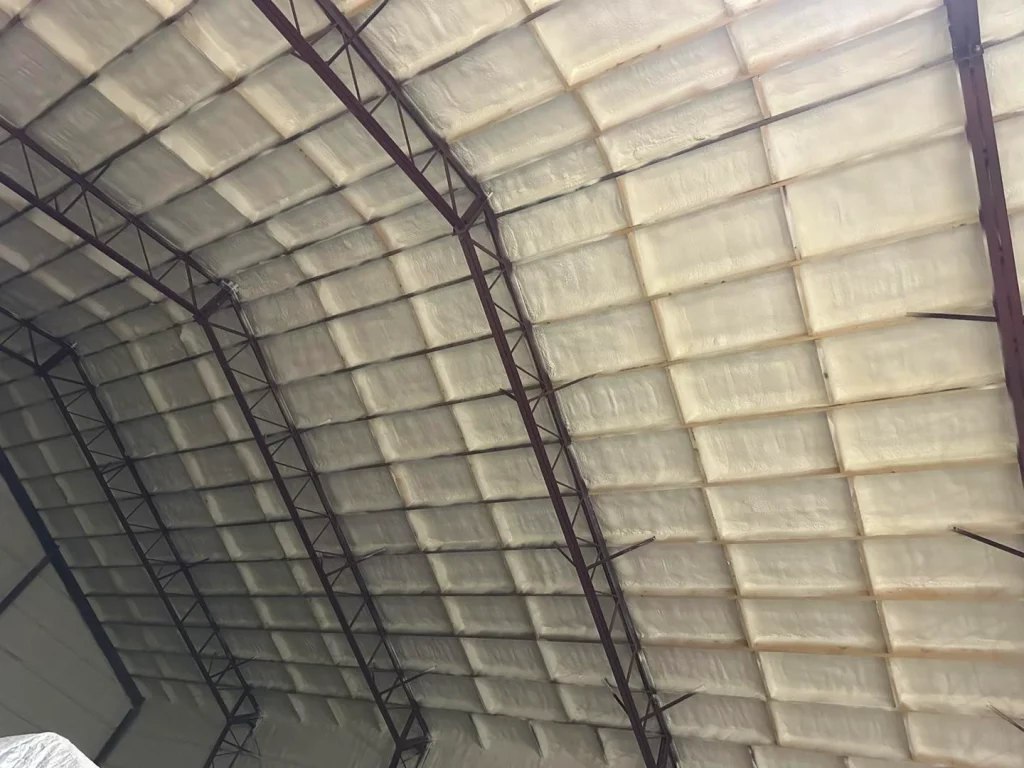
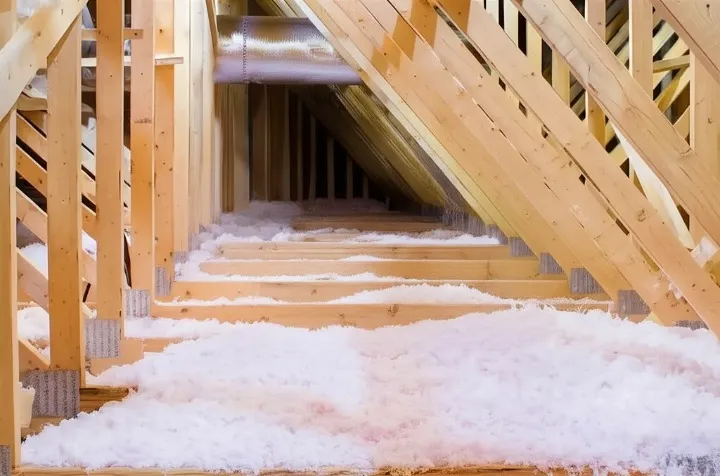
Attic and Roof Assemblies: Up to 25% of a home’s heat escapes through the attic. In Worcester’s older housing stock, attics often contain degraded fiberglass or no insulation at all. Hot air rises and escapes through recessed lighting, plumbing vents, and the attic hatch. Spray foam applied directly to the roof deck creates a conditioned attic space that eliminates this thermal bypass entirely.
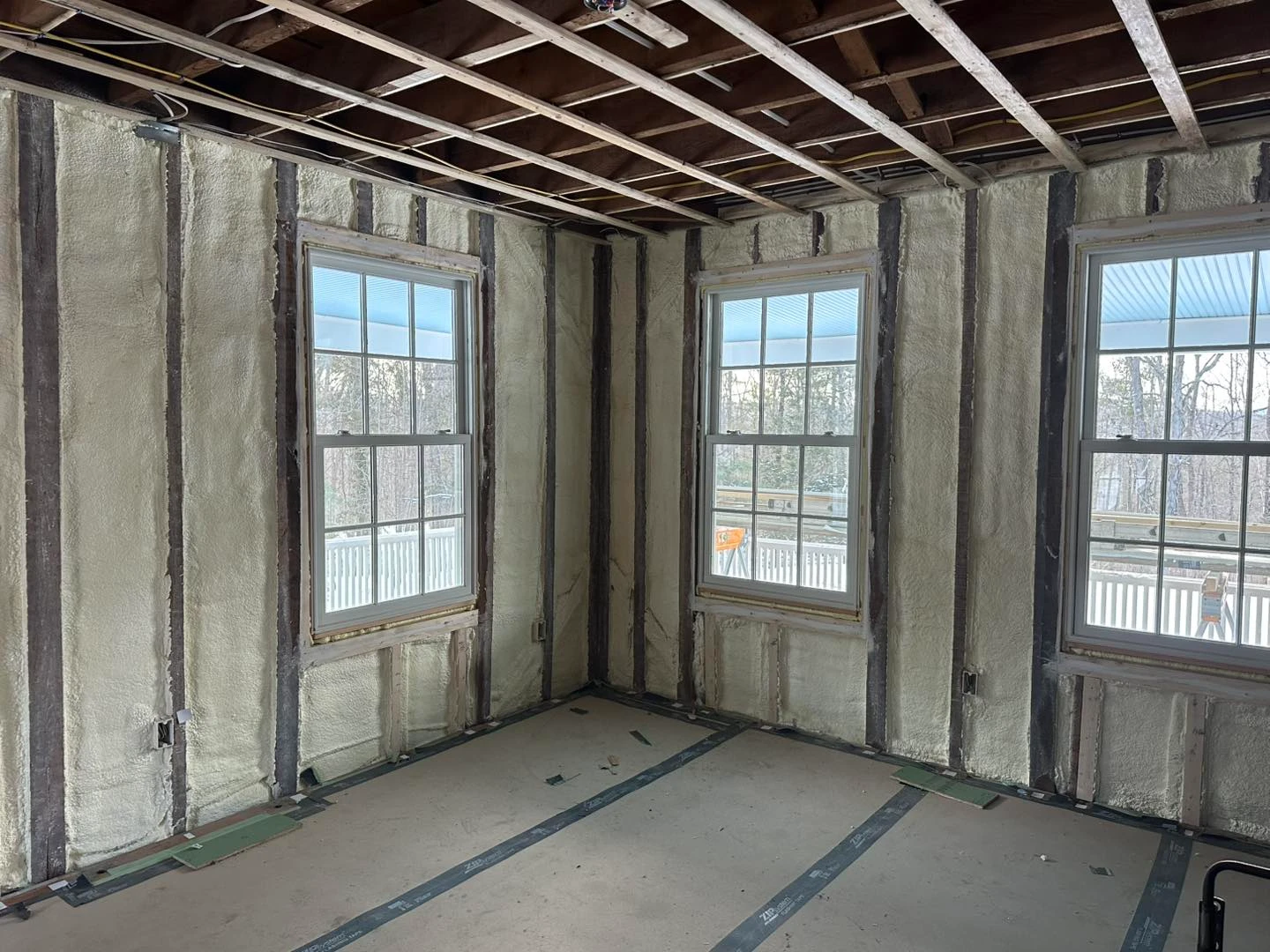
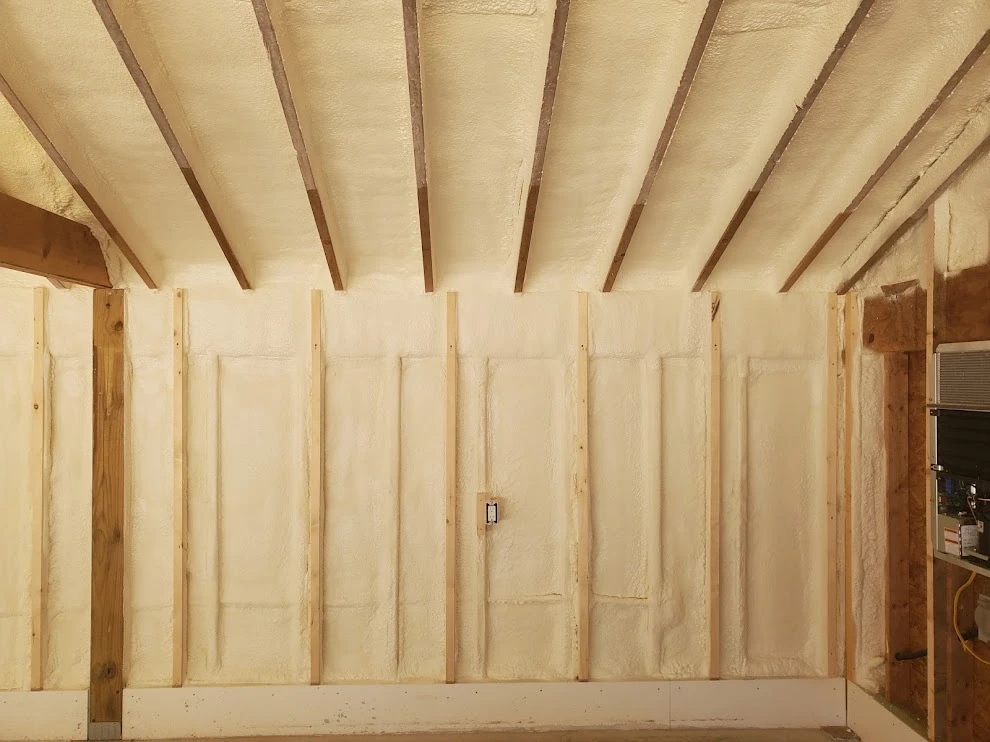
Wall Cavities and Thermal Bridging: Standard wall framing creates thermal bridges where studs account for up to 25% of wall surface area. Fiberglass batts leave gaps around electrical boxes, plumbing penetrations, and irregular framing. Spray foam expands to fill every void, providing continuous coverage that eliminates these thermal weak points.
Basements and Rim Joists: The area where the foundation meets the first floor, called the rim joist, is often completely uninsulated in Worcester homes. This single area can account for 15-20% of total heat loss. Closed-cell spray foam adheres to concrete and wood, sealing this critical junction while providing structural rigidity.
Performance Comparison: Spray Foam vs. Traditional Insulation
Insulation Type
R-Value per Inch
Air Barrier
Moisture Control
Best Applications
Closed-Cell Spray Foam
R-6.0 – R-7.0
Yes
Vapor barrier
Basements, rim joists, exterior walls
Open-Cell Spray Foam
R-3.5 – R-4.0
Yes
Permeable
Attics, interior walls, sound control
Fiberglass Batts
R-3.0 – R-3.5
No
Absorbs moisture
Standard walls, budget applications
Cellulose
R-3.2 – R-3.8
Partial
Treatable for pests
Attics, retrofits
Rigid Foam Board
R-5.0
Yes
Vapor barrier
Exterior sheathing, basements
The Energy Star program recommends specific R-values for Massachusetts homes, with attic insulation targeting R-49 to R-60 and wall insulation at R-20 or higher. Spray foam achieves these targets in fewer inches of material while delivering air sealing that other products cannot match.
Worcester experiences average winter lows in the teens and single digits, with humidity levels that fluctuate dramatically. These conditions create specific risks that open-cell insulation and fiberglass cannot address effectively.
Closed-cell spray foam provides a vapor barrier at 1.5 inches or greater thickness, preventing moisture from condensing within wall cavities during cold snaps. This is critical because the University of Michigan’s Center for Sustainable Systems notes that moisture-related building damage accounts for significant energy waste in residential structures.
Additionally, closed-cell foam adds structural strength to walls and roofs, providing 3-4 times the racking resistance of uninsulated framing. This matters in Worcester, where winter storms and freeze-thaw cycles stress building envelopes.
Real-World Worcester Scenarios
Property Type
Primary Problem
Spray Foam Solution
Projected Savings
1920s Colonial
Uninsulated walls, attic floor only
Closed-cell walls + open-cell roof deck
45% heating reduction
1970s Ranch
Fiberglass batts settled in the attic, rim joist gaps
Proper spray foam installation requires trained technicians who understand Massachusetts building codes and Worcester’s specific climate challenges. The process begins with a comprehensive assessment of your building envelope using blower door testing and thermal imaging to identify leak points.
Preparation includes removing old insulation that may contain moisture, sealing major gaps with caulk or foam, and protecting finished surfaces from overspray. Temperature and humidity must be controlled during application; winter installations require heated enclosures for proper chemical reaction.
Closed-cell foam requires professional-grade equipment and certified installers. The material expands 30-60 times its liquid volume, filling cavities completely before curing to a rigid, durable finish. Quality contractors verify coverage depth and density to ensure you receive the R-value and air sealing performance specified.
ROI and Long-Term Value
The Massachusetts consumer fact sheet on insulation confirms that even in newer homes, added insulation often pays for itself within a few years through utility savings. Spray foam insulation in Worcester, MA typically costs 2-3 times more than fiberglass upfront, but delivers substantially greater performance.
Beyond energy savings, spray foam increases property values, extends HVAC equipment life by reducing runtime, and improves indoor air quality by blocking pollen, dust, and outdoor pollutants. These benefits compound over the 30+ year lifespan of properly installed foam.
Critical Installation Factors
Several variables determine whether your spray foam installation delivers the promised performance:
Thickness and Density: Closed-cell foam must achieve a minimum of 1.5 inches to function as a vapor barrier, with 3 inches recommended for exterior walls in Climate Zone 5. Quality contractors verify density with core samples.
Complete Coverage: Gaps or thin spots create thermal bypasses that compromise the entire system. Thermal imaging during installation identifies these weak points immediately.
Chemical Mixing: Proper ratio of A-side and B-side chemicals ensures complete curing. Off-ratio foam remains sticky, shrinks over time, or fails to achieve specified R-values.
Vapor Management: Worcester’s humid summers and frozen winters require careful placement of vapor barriers. Closed-cell foam eliminates the need for separate vapor retarders when installed at adequate thickness.
Ready to Stop Energy Loss at Your Worcester Property?
At Lamothe Insulation, we’ve helped Worcester homeowners and commercial property owners eliminate energy waste with precision spray foam installation tailored to Massachusetts’ demanding climate. Our certified technicians understand the unique challenges of Central Massachusetts buildings, from historic Victorians with balloon framing to modern commercial structures requiring code compliance.
Don’t let another winter of high heating bills drain your budget. Contact Lamothe Insulation at (508) 847-0119 or email [email protected] to schedule your comprehensive energy assessment. We’ll identify exactly where your property is losing heat and design a spray foam solution that delivers measurable results. Your comfort and savings start with a single call.
Frequently Asked Questions
How long does spray foam insulation last?
Properly installed closed-cell spray foam maintains its R-value and performance for the lifetime of the building, typically 30 years or more. Unlike fiberglass that settles or cellulose that compresses, spray foam adheres permanently to substrates and does not degrade when protected from UV light.
Can spray foam be installed in winter?
Yes, professional contractors use heated enclosures and specialized equipment to maintain proper substrate temperatures and chemical reaction conditions during winter installation. Worcester’s cold climate actually makes winter an ideal time to identify and seal air leaks before peak heating season.
Will spray foam cause moisture problems in my walls?
When installed at the proper thickness, closed-cell spray foam acts as a vapor barrier that prevents moisture issues. The key is working with experienced contractors who understand Massachusetts building science and ensure adequate thickness for vapor control in our cold climate.
How does spray foam affect indoor air quality?
Spray foam improves indoor air quality by sealing gaps that allow outdoor pollutants, pollen, and dust to enter. Once fully cured, spray foam is inert and does not off-gas. Proper ventilation during and immediately after installation ensures occupant safety.
Is spray foam worth the higher upfront cost compared to fiberglass?
For Worcester properties, spray foam typically delivers 2-3 times better performance per inch than fiberglass while eliminating air leakage entirely. Most homeowners recover the additional investment within 3-7 years through energy savings, then continue saving for decades while enjoying superior comfort.
Mineral wool offers superior soundproofing performance compared to blown-in insulation, delivering STC ratings of 45-52 versus cellulose’s typical STC rating…
Closed-cell spray foam insulation outlasts all traditional insulation types, maintaining peak performance for 80 to 100+ years without degradation. Traditional…