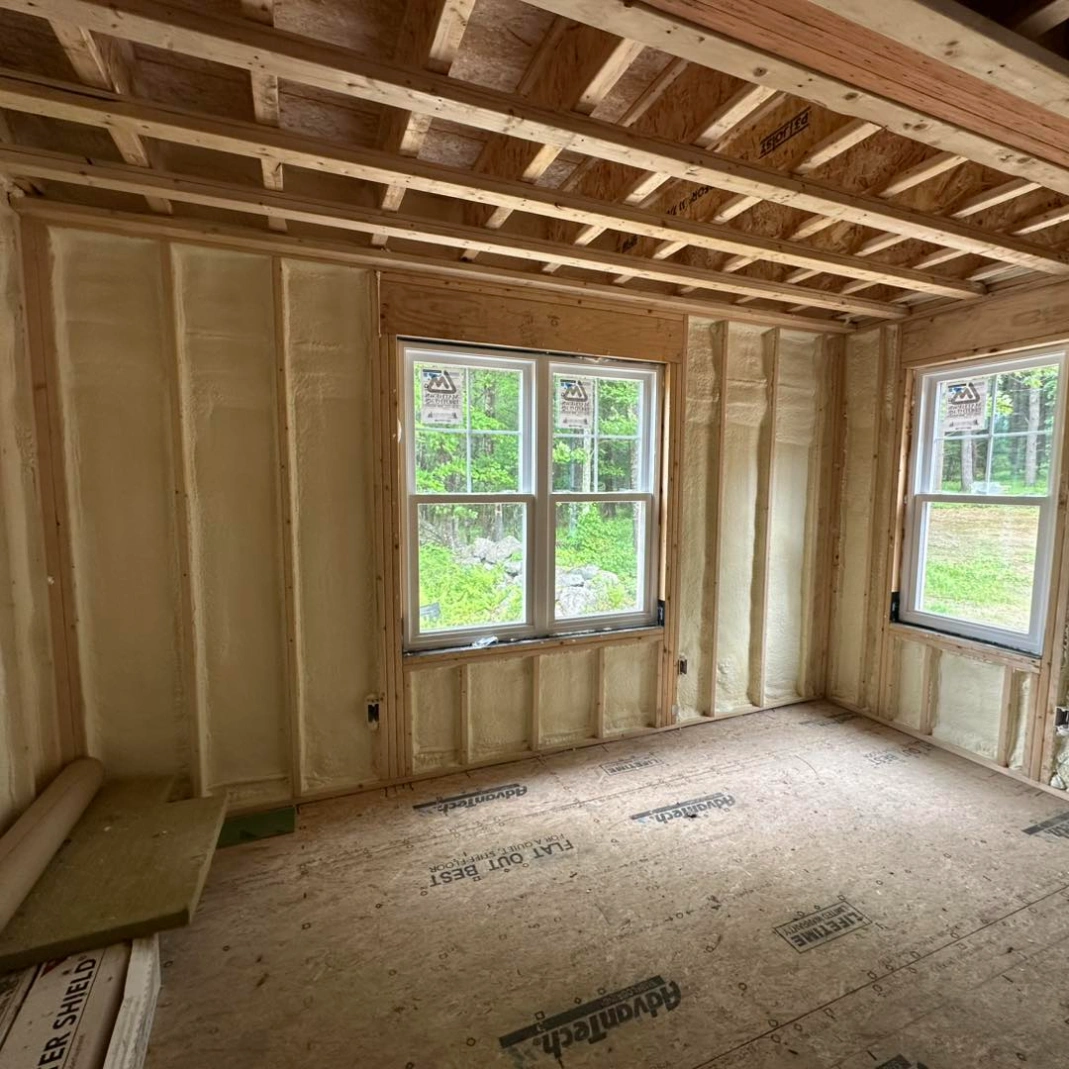
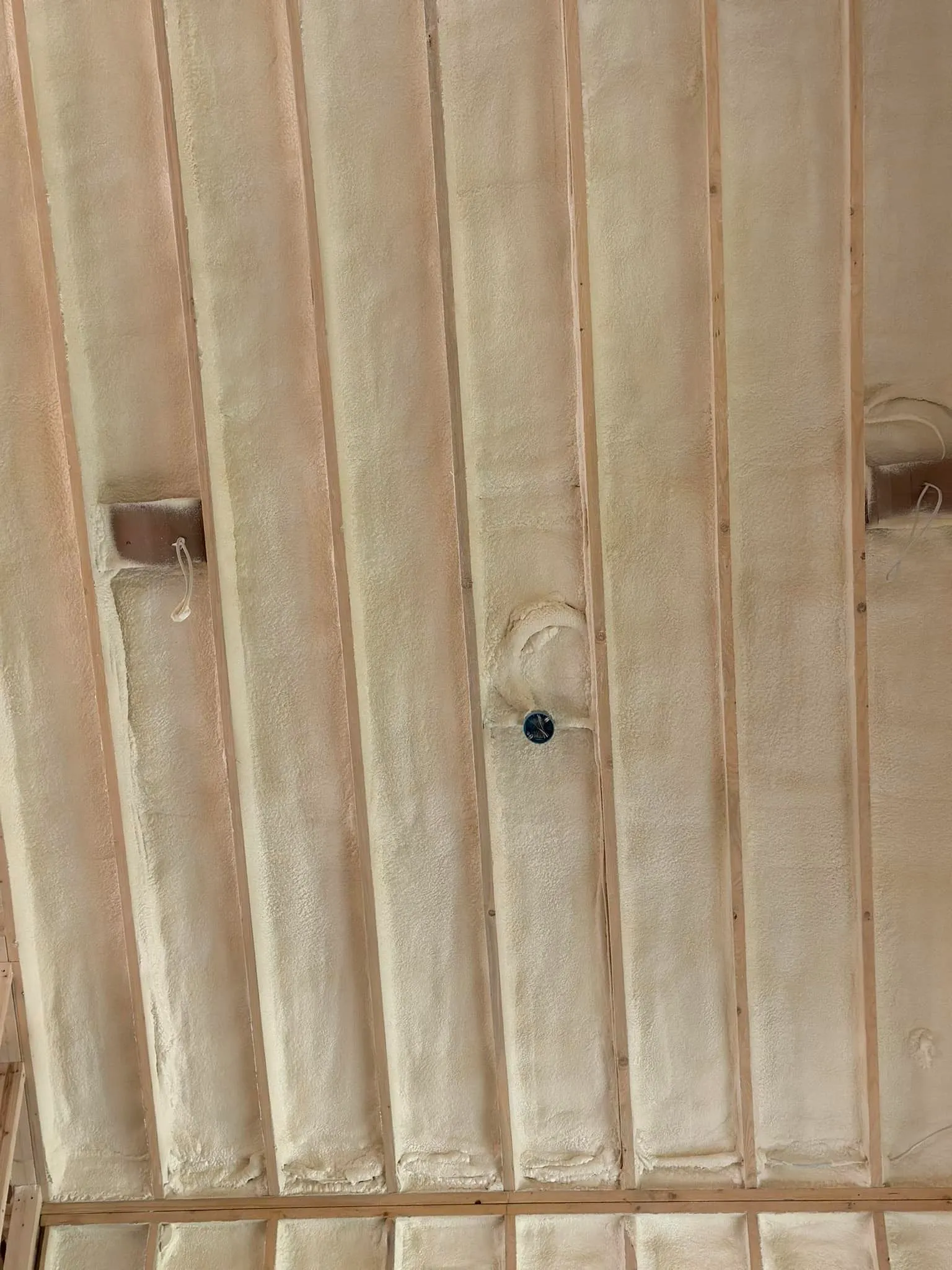
How Closed-Cell Spray Foam Creates a Continuous Air Seal in Worcester, MA
Closed-cell spray foam creates a continuous air seal by applying liquid polyurethane that expands up to 60 times its original…

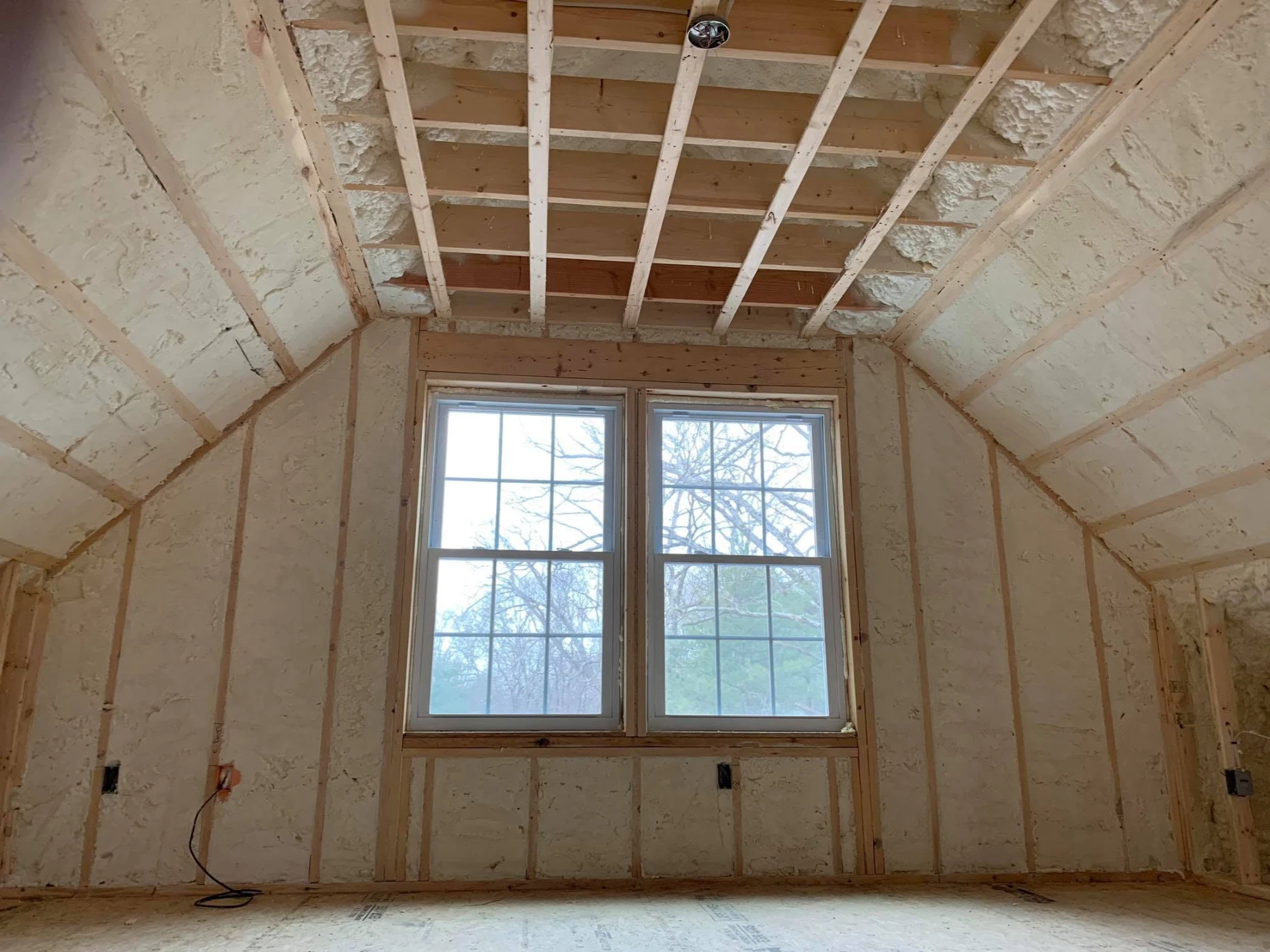
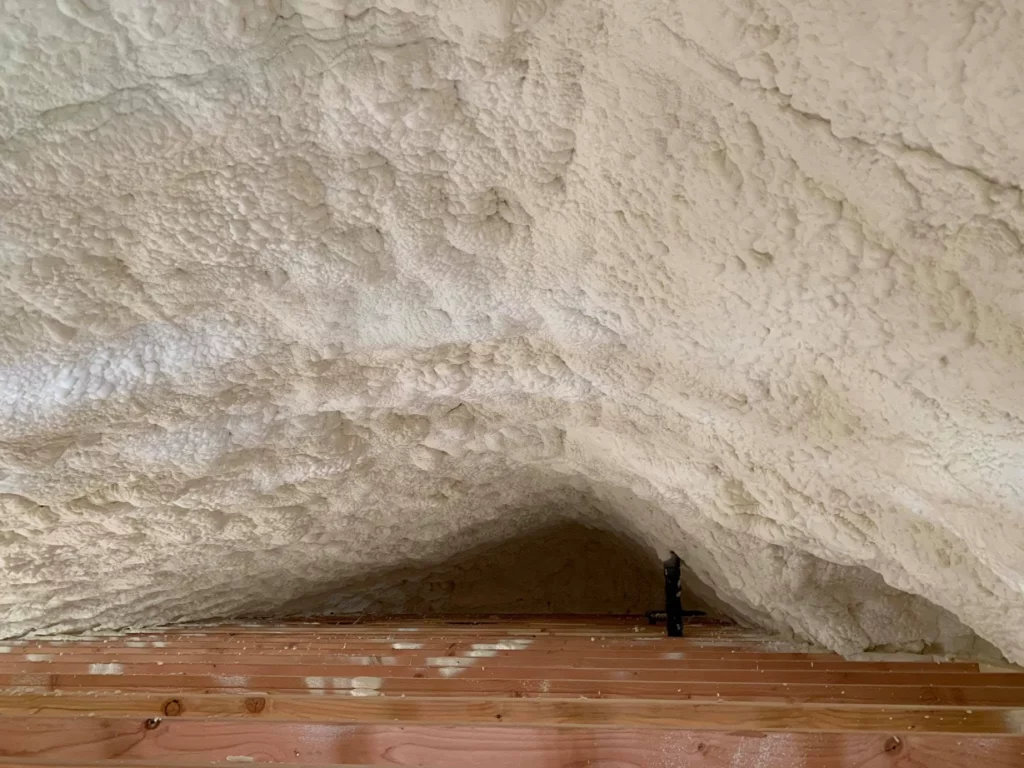
Spray foam insulation in the attic works by creating a continuous, airtight barrier that blocks both conductive heat transfer and air leakage, the two largest drivers of energy waste in most homes. Unlike fiberglass batts or blown cellulose that sit loosely between ceiling joists, spray foam expands to fill every gap, crack, and penetration in the attic assembly, sealing the building envelope from the top down. According to ENERGY STAR, air leakage accounts for 25 to 40 percent of the energy used for heating and cooling in a typical home. The attic is often the single largest source of that leakage, making it the first place homeowners should target when trying to reduce energy bills. Spray foam addresses the problem in one step by combining high thermal resistance (R-value) with an air-impermeable seal, something no other insulation material achieves on its own. Two main approaches exist: insulating the attic floor to separate conditioned space from the unvented attic above, or applying spray foam directly to the underside of the roof deck to create an unvented, conditioned attic. The right approach depends on your home’s age, climate zone, HVAC system layout, and whether ductwork runs through the attic.
Most homes lose a significant portion of their conditioned air through the attic, and the problem goes beyond simply having too little insulation. The real issue is air leakage. Gaps around plumbing stacks, electrical wiring, recessed lights, duct chases, and framing penetrations create a network of hidden pathways that allow warm air to escape in winter and hot air to enter in summer. ENERGY STAR compares the cumulative effect of all these gaps to leaving a window open year-round.
Fiberglass batts and blown-in insulation reduce conductive heat flow but do not stop air movement through those gaps. Air simply passes around and through loose-fill materials, rendering much of their rated R-value ineffective in real-world conditions. This is where spray foam delivers a fundamentally different result. As a class I air barrier material, spray foam blocks airflow through the insulated assembly entirely, which means the R-value you pay for is the R-value you actually get.
The Building America Solution Center notes that heat gain through the roof and attic represents 15 to 25 percent of total heat gain for an entire building. In cold climates, that dynamic reverses and the attic becomes the primary pathway for heat loss. Either way, the attic is where insulation and air sealing investments deliver the greatest return.
Spray polyurethane foam is applied as a liquid that expands and cures into a solid cellular matrix. Two types are used in residential attic applications:
Open-cell spray foam is low-density, lightweight, and expands significantly to fill large cavities. It provides approximately R-3.5 to R-3.7 per inch and is vapor-permeable, allowing moisture to diffuse through the material. Open-cell foam is commonly used in warmer climate zones where condensation risk at the roof deck is lower.
Closed-cell spray foam is denser, provides approximately R-6.0 to R-7.1 per inch, and acts as both an air barrier and a vapor retarder. In climate zones 5 and higher, the International Residential Code requires that air-impermeable insulation in unvented attics also function as a Class II vapor retarder, which makes closed-cell foam the required choice in those regions.
Both types cure into a continuous solid that adheres directly to framing, sheathing, and substrate materials. This adhesion is what makes spray foam effective as an air barrier. There are no gaps, no settling, and no compression over time. The foam will not sag, shift, or create voids the way batt insulation can.
When homeowners consider spray foam for the attic, the most important decision is where to apply it. This choice determines the entire building science strategy for the roof assembly.
In a vented attic approach, spray foam is applied to the attic floor, sealing the ceiling plane from above. The attic space above remains unconditioned and ventilated through soffit and ridge vents. This approach works well in existing homes where the goal is to upgrade the ceiling assembly without changing the overall roof design. The main advantage is lower material cost, since only the ceiling plane needs to be covered. The limitation is that ductwork and HVAC equipment in the attic remain outside the conditioned envelope, meaning duct losses continue.
In an unvented approach, spray foam is applied directly to the underside of the roof deck, bringing the entire attic into the conditioned space. This eliminates the need for attic ventilation and moves ductwork inside the thermal envelope, which is particularly valuable when HVAC equipment and ducts are located in the attic. Poorly sealed HVAC ducts in a vented attic can cost homeowners substantial amounts annually in wasted energy, according to ORNL computer simulations. An unvented attic design eliminates this loss entirely.
The DOE Building America Solution Center provides detailed code guidance on unvented attic construction, noting that moisture control is the primary design concern. In warm climates, vapor diffusion ports may be required when air-permeable insulation is used. When closed-cell spray foam (air-impermeable insulation) is applied directly to the roof deck, the foam itself serves as the vapor control layer.
| Approach | Where Foam Is Applied | Best For | Key Advantage | Key Limitation |
|---|---|---|---|---|
| Vented attic | Attic floor / ceiling plane | Existing homes, standard roof assemblies | Lower material usage, preserves traditional ventilation | Duct losses in attic continue, limited impact on duct efficiency |
| Unvented attic | Underside of roof deck | Homes with ductwork in attic, cathedral ceilings, humid climates | Ducts brought inside envelope, moisture controlled at roof deck | Higher material cost, code-specific vapor control requirements |
Federal research has consistently demonstrated the energy benefits of spray foam attic insulation. Oak Ridge National Laboratory field-tested roof and attic systems and confirmed that sealed attic designs reduce energy consumption in both summer and winter, a dual-season efficiency gain that is uncommon in roof design. Their analysis showed that homeowners who sealed their attics with spray foam could save substantially on annual energy costs.
In a separate multi-year field study, ORNL and the University of Florida instrumented four homes with sealed, semi-conditioned attics using spray foam applied to the roof deck. The research evaluated hygrothermal performance, monitoring temperature, relative humidity, and moisture content of the roof sheathing over time. The sealed attic assemblies demonstrated controlled moisture conditions and reduced heat transfer compared to traditional vented attic designs.
These findings are consistent with the broader guidance from ENERGY STAR, which identifies the attic as the single largest opportunity for energy savings in most homes and recommends air sealing combined with insulation as a priority retrofit measure.
Even the best insulation material underperforms when the installation is flawed. Several recurring problems reduce the effectiveness of spray foam in attics:
Skipping the pre-installation assessment. Before any foam is sprayed, the attic should be inspected for moisture damage, inadequate ventilation, knob-and-tube wiring, and active roof leaks. The DOE Building America guide to attic air sealing prepared by Building Science Corporation emphasizes that health, safety, and durability must be addressed before energy efficiency. Installing spray foam over a wet or compromised roof deck traps moisture and accelerates deterioration.
Ignoring combustion safety. Homes with natural-draft gas or oil appliances require dedicated combustion air. Sealing the attic changes the pressure dynamics of the entire house, and without proper combustion air supply, backdrafting can introduce carbon monoxide into living spaces. A qualified professional should evaluate combustion appliances before and after any air-sealing work.
Inconsistent application thickness. Spray foam must be applied at consistent thickness across the entire surface to deliver the rated R-value. Thin spots, gaps at edges, or incomplete coverage create thermal bridges that allow heat to bypass the insulation.
Neglecting mechanical ventilation. When spray foam dramatically reduces air leakage, the home may need supplemental mechanical ventilation to maintain indoor air quality. Sealing a home without providing controlled fresh air can trap pollutants, including radon and volatile organic compounds, at elevated levels.
The decision between vented and unvented attic strategies depends on several factors:
| Home Scenario | Recommended Strategy | Why |
|---|---|---|
| Older home, no ducts in attic | Vented attic, foam on attic floor | Lower cost, addresses the primary air-sealing need at the ceiling plane |
| HVAC ductwork in attic | Unvented attic, foam on roof deck | Brings ducts inside conditioned space, eliminates major source of energy waste |
| Cathedral or vaulted ceilings | Unvented attic, foam on roof deck | No attic floor exists to insulate; foam at roof deck is the only option |
| Mixed-humid climate (zones 4A, 3A) | Closed-cell foam on roof deck | Vapor retarder properties prevent condensation risk at the roof sheathing |
| Cold climate (zones 5 and higher) | Closed-cell foam on roof deck | Code requires air-impermeable insulation with Class II vapor retarder properties |
Choosing a qualified insulation contractor matters as much as choosing the right material. Look for these indicators:
Lamothe Insulation and Contracting provides professional spray foam insulation solutions for homeowners looking to solve heat loss, reduce energy bills, and improve year-round comfort. Our team evaluates every attic individually and recommends the approach that fits your home, your climate zone, and your budget. We handle everything from initial assessment and combustion safety checks through to precise application and final inspection. Contact us today at (508) 847-0119 or email [email protected] to get started.
Request a Free Quote | Schedule an Assessment
Spray foam provides both thermal resistance and an airtight seal in a single step. Fiberglass only resists conductive heat flow and does not block air leakage, meaning gaps and penetrations remain open even after installation.
It depends on whether you have HVAC ductwork in the attic and your climate zone. Roof deck application is preferred when ducts are present because it brings them inside the conditioned envelope. Attic floor application works well when the attic is already vented and ducts are not a factor.
When installed correctly, spray foam controls moisture by serving as an air and vapor barrier. However, unvented attics require attention to code-specific vapor control requirements, and proper assessment is needed before installation to avoid trapping existing moisture.
Spray foam is a permanent insulation material that does not settle, sag, or degrade over time. Once cured, it maintains its R-value and air-sealing properties for the life of the building.
Yes, spray foam is commonly retrofitted into existing attics. It can be applied to the attic floor of a vented attic or directly to the underside of the roof deck to create an unvented conditioned attic, depending on the home’s design and needs.