How Is Intumescent Coating Thickness Determined in Spencer, MA?
Determining the required thickness for an intumescent coating is not a matter of guesswork; it is an engineering calculation that…


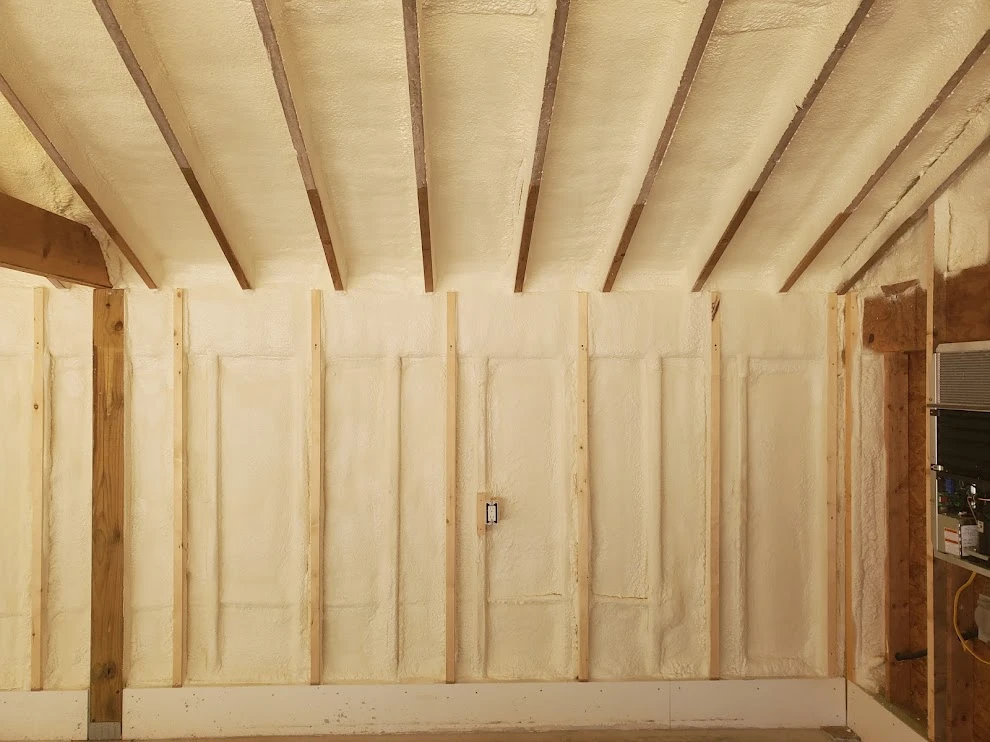
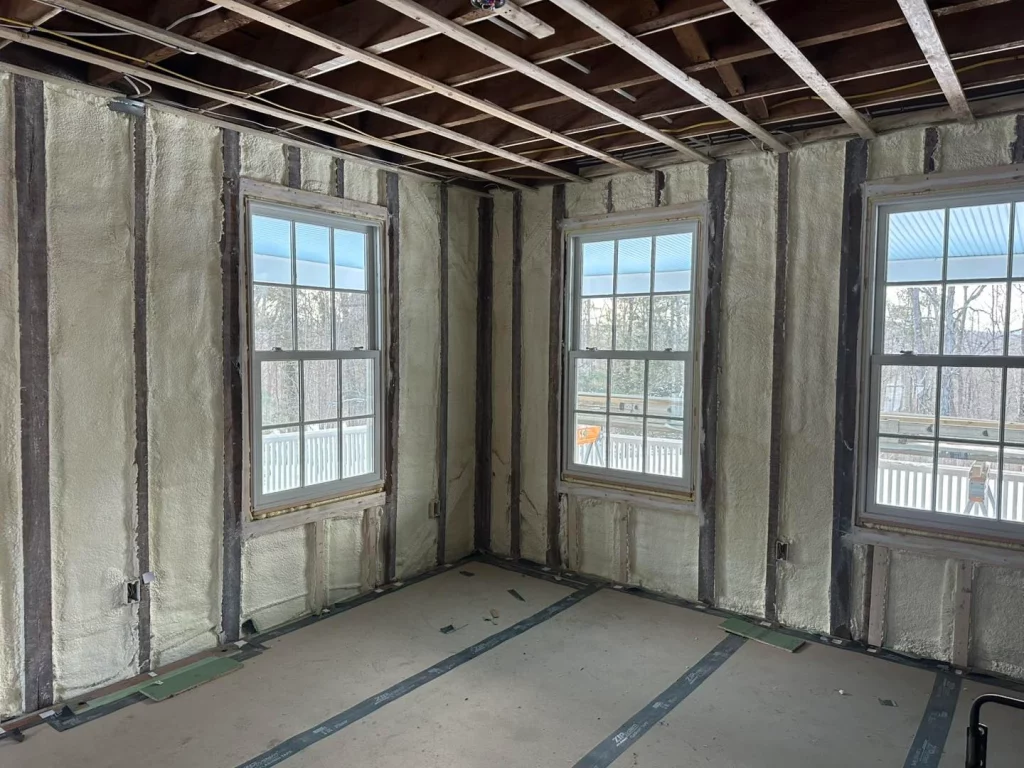
Spray foam insulation is the stronger all-around performer for extreme weather conditions, whether the priority is freezing winters or scorching summers. It provides measurable R-value (the standard for thermal resistance), seals air leaks, and resists moisture, making it effective across all climate zones. Reflective insulation, by contrast, works only by reflecting radiant heat and has no inherent R-value. It can reduce cooling costs by 5% to 10% in hot, sunny climates but provides almost no benefit in cold weather. For contractors and property owners dealing with genuine extreme weather, spray foam delivers the thermal resistance and moisture control needed to protect structures year-round, while reflective insulation is a useful supplementary strategy in specific hot-climate applications like attics.
Understanding the science behind these two insulation types is the first step toward making the right recommendation. Heat moves through buildings in three ways: conduction (through solid materials), convection (through air movement), and radiation (electromagnetic waves traveling in straight lines). Spray foam and reflective insulation address these mechanisms in fundamentally different ways.
Spray polyurethane foam (SPF) is applied as a liquid that expands and hardens to fill cavities, cracks, and gaps. According to the US Department of Energy‘s Building America program, spray foam is available in two categories, each with distinct properties:
Open-cell spray foam expands up to 150 times its original volume, is lightweight and flexible, and delivers roughly R-3.6 per inch. It blocks air infiltration effectively but allows water vapor to pass through, meaning it can absorb and hold liquid water. It is air-impermeable but not vapor-impermeable.
Closed-cell spray foam is about four times denser, expands 35 to 50 times its original volume, and delivers roughly R-6 per inch. It acts as both an air barrier and a vapor retarder, is hydrophobic (will not absorb water), and provides structural rigidity. Studies have documented that closed-cell foam can increase the racking strength of frame walls, offering additional value in seismic and hurricane zones.
The DOE’s Types of Insulation guide notes that foam insulation has higher R-values per inch than traditional batt insulation and forms an air barrier, which can eliminate weatherization tasks like caulking, housewrap application, and vapor barrier installation.
Reflective insulation systems use aluminum foils applied to substrates like kraft paper, plastic films, polyethylene bubbles, or cardboard. They are fitted between studs, joists, rafters, and beams. According to the DOE’s radiant barriers resource, these materials reflect radiant heat rather than absorbing it. They are most commonly installed in attics to reduce summer heat gain and lower cooling costs.
The DOE’s overview on insulation makes an important distinction: radiant barriers have no inherent R-value. Their effectiveness lies in reducing radiant heat gain by reflecting heat away from living spaces. To function, the reflective surface must face an air space. The DOE states that reflective insulation is “particularly useful in cooling climates” and that it does not reduce heat conduction the way traditional insulation materials do.
Virginia Tech’s Cooperative Extension publication on radiant barriers adds that if the reflective material does not have an air space next to it, it acts as a conductor and simply passes heat from a hot surface to a cooler one. The publication also notes that radiant barriers reduce only radiant heat transfer, while conventional insulation reduces conductive, convective, and radiant heat transfer.
| Factor | Spray Foam Insulation | Reflective / Radiant Barrier Insulation |
|---|---|---|
| Heat transfer addressed | Conduction, convection, and air leakage | Radiation only |
| R-value | R-3.6/inch (open-cell) to R-6/inch (closed-cell) | No inherent R-value |
| Air sealing | Yes, fills cracks and gaps | No |
| Moisture resistance | Closed-cell: hydrophobic and vapor-retardant. Open-cell: vapor-permeable, absorbs water | Not applicable (not designed for moisture control) |
| Cold climate effectiveness | High, rated “preferred” for walls and roofs in all climate zones | Minimal; DOE states more thermal insulation is more cost-effective in cool climates |
| Hot climate effectiveness | High, provides thermal resistance plus air sealing | Moderate; can reduce cooling costs 5% to 10% in warm, sunny climates |
| Installation requirement | Professional installation with specialized equipment | Can be DIY between standard framing; requires air space facing |
| Location in building | Walls, ceilings, attics, foundations, crawlspaces, band joists, roofs | Primarily attics; walls and floors require perforation for vapor passage |
When temperatures drop well below freezing, the priority shifts to preventing heat loss through conduction and air infiltration. Spray foam addresses both simultaneously. The Building America guide rates closed-cell spray foam as “preferred” for frame wall cavities in cold climates, noting that installed to full depth in a 5.5-inch cavity, R-values exceed R-30. Even open-cell spray foam, applied to full cavity depth, provides approximately R-20 and is rated “preferred” for cold-climate walls.
For foundations and below-grade spaces, the Building America guide rates open-cell spray foam as “not acceptable” due to its moisture-permeable nature, while closed-cell is rated “preferred.” In cold basements, ground-contact moisture is a constant concern, and closed-cell’s hydrophobic properties prevent water absorption and associated damage.
Reflective insulation offers almost no value in extreme cold. The DOE explicitly states that in cool climates, it is usually more cost-effective to install more thermal insulation than to add a radiant barrier. Virginia Tech’s publication notes that a radiant barrier in a cold climate “may block any winter radiant heat gain in the attic,” meaning it could actually work against passive solar warming during winter months.
In extreme heat, the sun’s radiant energy heats roof surfaces, and that heat conducts through roofing materials into the attic and then radiates down onto attic floors and ductwork. This is where reflective insulation and radiant barriers have a defined role. The DOE reports that radiant barriers can reduce cooling costs 5% to 10% in warm, sunny climates, and the reduced heat gain may allow for a smaller air conditioning system.
However, radiant barriers only address radiant heat transfer from the roof deck. They do nothing to stop heat gain through walls, windows, or foundation surfaces, and they do not seal air leaks that allow hot outside air to infiltrate the building envelope. Spray foam, by contrast, provides R-value resistance at walls, attics, and ceilings while simultaneously sealing the air leaks that drive infiltration.
For sloped roof assemblies in hot-humid climates, the Building America guide rates both open-cell and closed-cell spray foam as “acceptable,” with closed-cell rated “preferred” for its moisture control properties. The guide notes that closed-cell foam provides a “redundant moisture control layer” that keeps water out of wall and roof cavities even if exterior drainage planes fail.
| Scenario | Property Type | Recommended Insulation | Why |
|---|---|---|---|
| New construction warehouse in northern climate zone 6 | Commercial / Industrial | Closed-cell spray foam on walls and roof deck | Provides R-30+ in wall cavities, vapor barrier, air sealing, and moisture protection for extreme cold |
| Existing home retrofit in hot southern climate, open attic | Residential single-family | Spray foam at attic floor and ceiling plane + radiant barrier at roof rafters | Spray foam seals attic-floor air leaks and provides R-value; radiant barrier reduces radiant heat gain from roof |
| Basement finishing in mixed-humid climate | Residential basement | Closed-cell spray foam on foundation walls | Closed-cell is hydrophobic, rated “preferred” for below-grade; open-cell is “not acceptable” |
| Pole barn or metal building in hot-dry climate | Agricultural / Storage | Closed-cell spray foam on walls and roof + reflective insulation supplement | Spray foam provides thermal resistance and air sealing; reflective layer can supplement at roof if air space is maintained |
| Cathedral ceiling retrofit in cold climate | Residential renovation | Closed-cell spray foam applied to roof rafters | High R-value per inch works within limited rafter depth; acts as vapor retarder; rated “preferred” in all climates for roof applications |
Several variables determine which insulation type, or combination, delivers the best results:
Best for:
Not ideal for:
Best for:
Not ideal for:
Choosing between spray foam and reflective insulation is not a simple either-or decision. The right answer depends on your climate zone, building assembly, moisture exposure, and performance goals. Our team at Lamothe Insulation and Contracting evaluates each project individually, matching the insulation strategy to the specific demands of the structure and environment. We install both spray foam and reflective insulation systems and can recommend a layered approach when it makes sense for your building.
Request a Free Quote | Schedule an Insulation Assessment
Call us at (508) 847-0119 or email [email protected]. We serve residential and commercial properties throughout the region with professional insulation installation designed to perform in any weather.
Yes. In hot climates, spray foam applied at the ceiling plane or attic floor seals air leaks and provides R-value, while a radiant barrier at the roof deck reduces radiant heat gain from above. This layered approach addresses both conductive and radiant heat transfer.
It provides very little benefit in cold weather. The DOE states that in cool climates, it is more cost-effective to add thermal insulation than a radiant barrier. In fact, a radiant barrier may block beneficial winter radiant heat gain from the sun.
Open-cell foam is lighter, less expensive, vapor-permeable, and delivers approximately R-3.6 per inch. Closed-cell foam is denser, vapor-impermeable, hydrophobic, and delivers approximately R-6 per inch. Closed-cell also adds structural strength and is rated for foundation and below-grade use where open-cell is not.
For extreme cold or extreme heat, spray foam offers the combination of high R-value per inch, air sealing, and moisture control that no other single insulation material provides. The Building America program rates closed-cell spray foam as “preferred” for walls, roofs, and foundations across all climate zones.
It stops reflecting heat and begins conducting it instead. Virginia Tech’s Cooperative Extension states that without an adjacent air space, the reflective material acts as a conductor, passing heat directly from a hot surface to a cooler one, which defeats its purpose entirely.