Intumescent Coatings Explained: Benefits, Types, and Applications
Intumescent coatings are paint-like products that swell into an insulating char when fire heats them. That char slows the heat…

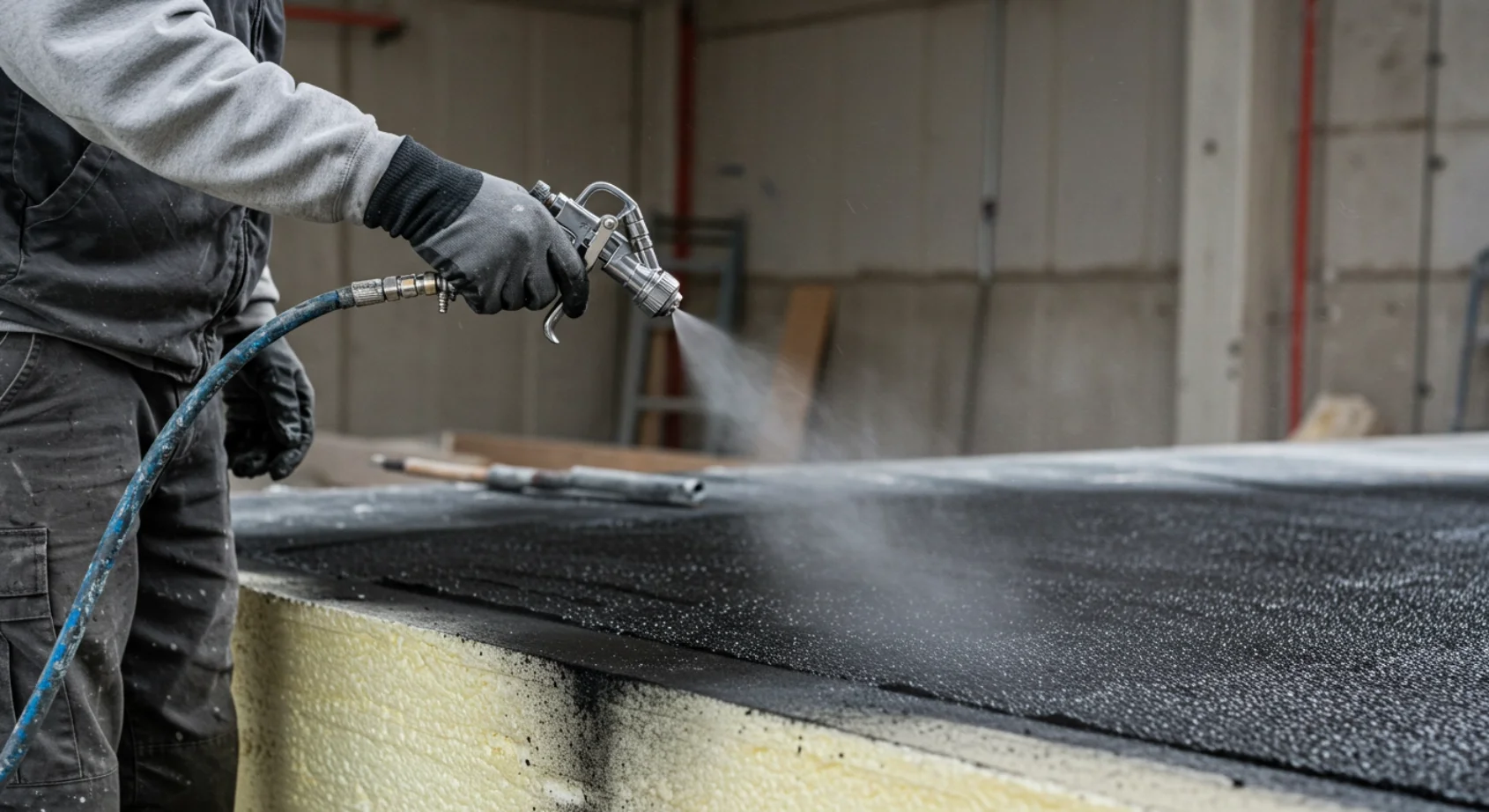
Intumescent coatings are paint-like products that swell into an insulating char when fire heats them. That char slows the heat reaching the steel, wood, or foam underneath. They don’t stop a fire. They buy time for people to get out and for the structure to hold up.
The coating sits dormant until a fire raises the temperature of the surface. Then it reacts, and the difference in how long a structure survives comes down to how much protective layer forms.
Heat triggers a chemical reaction that makes the coating swell and harden into a thick, porous char. Char conducts heat poorly, so it shields the material below. That matters most on structural steel, which softens as it heats and can lose its strength well before it melts.
Thickness controls how long the protection lasts. Thin-film products are typically rated in the range of 30 minutes up to about two hours, and every rating depends on the dry film thickness being right.
The two questions that sort the options are how thick the coating builds and what carries it, water or solvent or resin. Both answers decide where a product can safely go.
Thin-film coatings look and apply like paint. They’re usually water- or solvent-based and suit exposed steel inside buildings where appearance matters. Thick-film coatings are usually epoxy, and they grew out of offshore and industrial work where fires burn hotter and the environment is harsher.
| Type | Best Fit | Main Advantage | Main Limit |
| Water-based | Dry interiors | Low odor and VOCs | Slower cure; sensitive to humidity |
| Solvent-based | Semi-exposed or humid areas | Dries faster; handles weather better | Needs ventilation; higher VOCs |
| Epoxy | Chemical plants, harsh settings | Very tough and durable | Two-part mix; costs more |
Some manufacturers also sell hybrid products that build thickness in fewer coats. Ask for the test evidence on any specific product.
Most of the documented use is structural steel in commercial, industrial, and public buildings. The big draw is looks: a coated beam can pass for painted steel, where cementitious insulation fireproofing leaves a rough, bulky surface.
The tradeoff is cost and time. Intumescent coatings often cost more than cementitious products, and they go on in several coats that each need to dry. Price swings with steel size, required rating, and number of coats, so get a written quote for your project.
Timber is another use. Exterior wood is where things go wrong. When USDA Forest Service researchers reviewed earlier studies, they found service life on weathered wood was around one year. Their own cedar shingle tests showed no char expansion after a year of outdoor exposure, because sun and moisture broke down the topcoats.
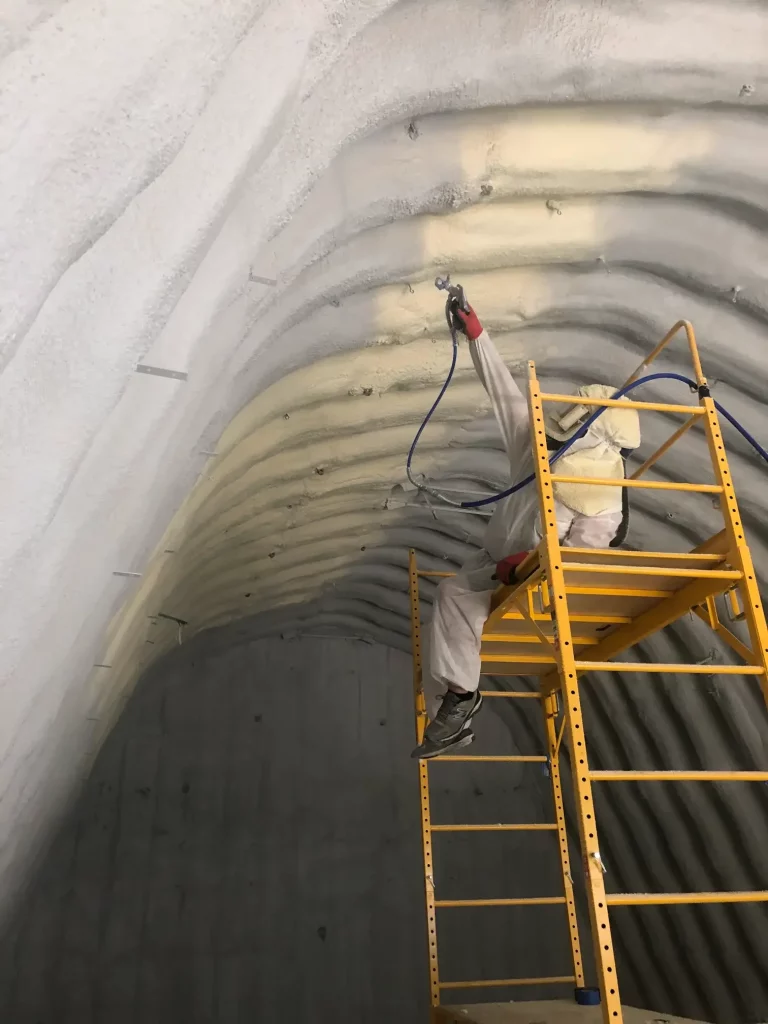
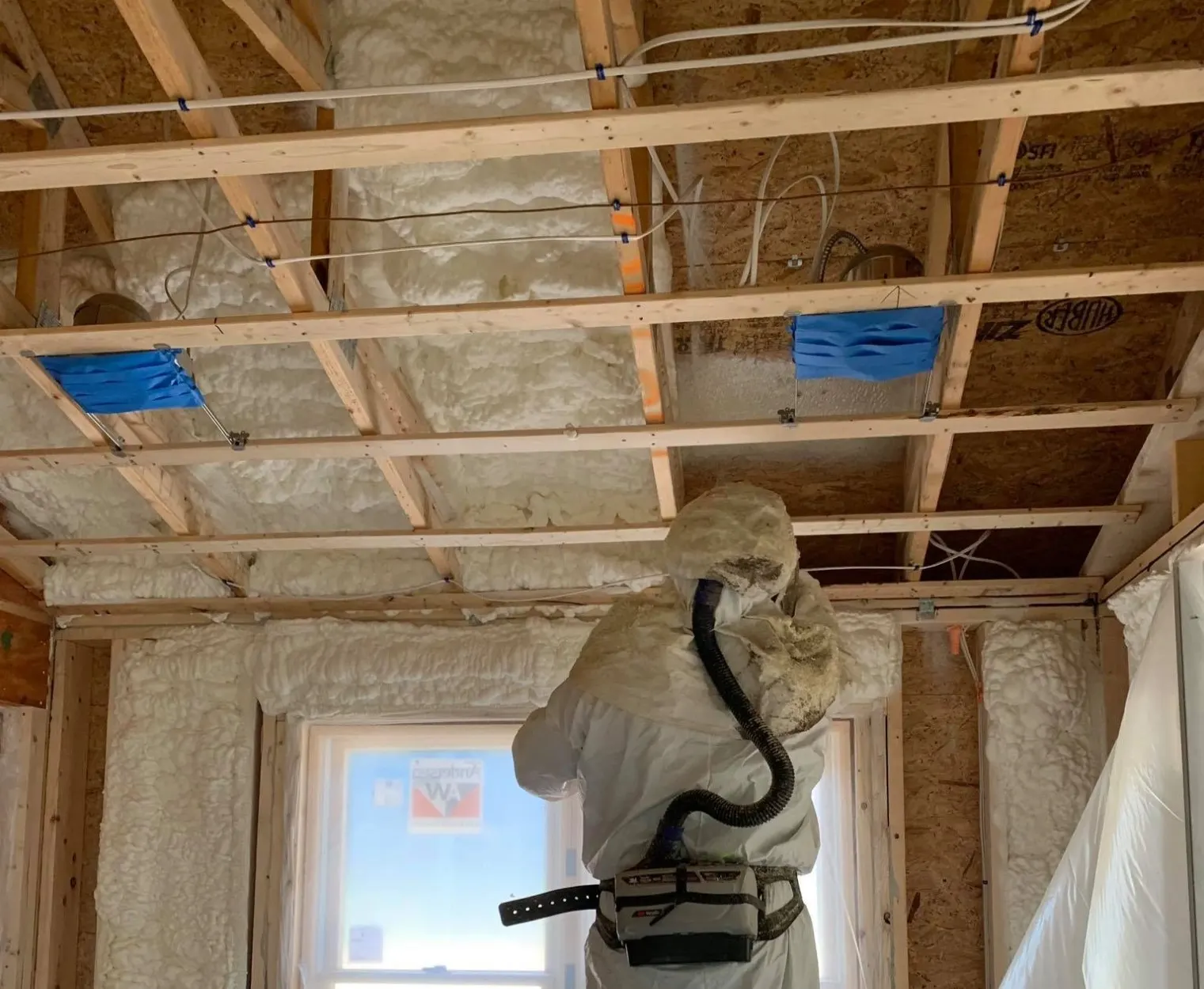
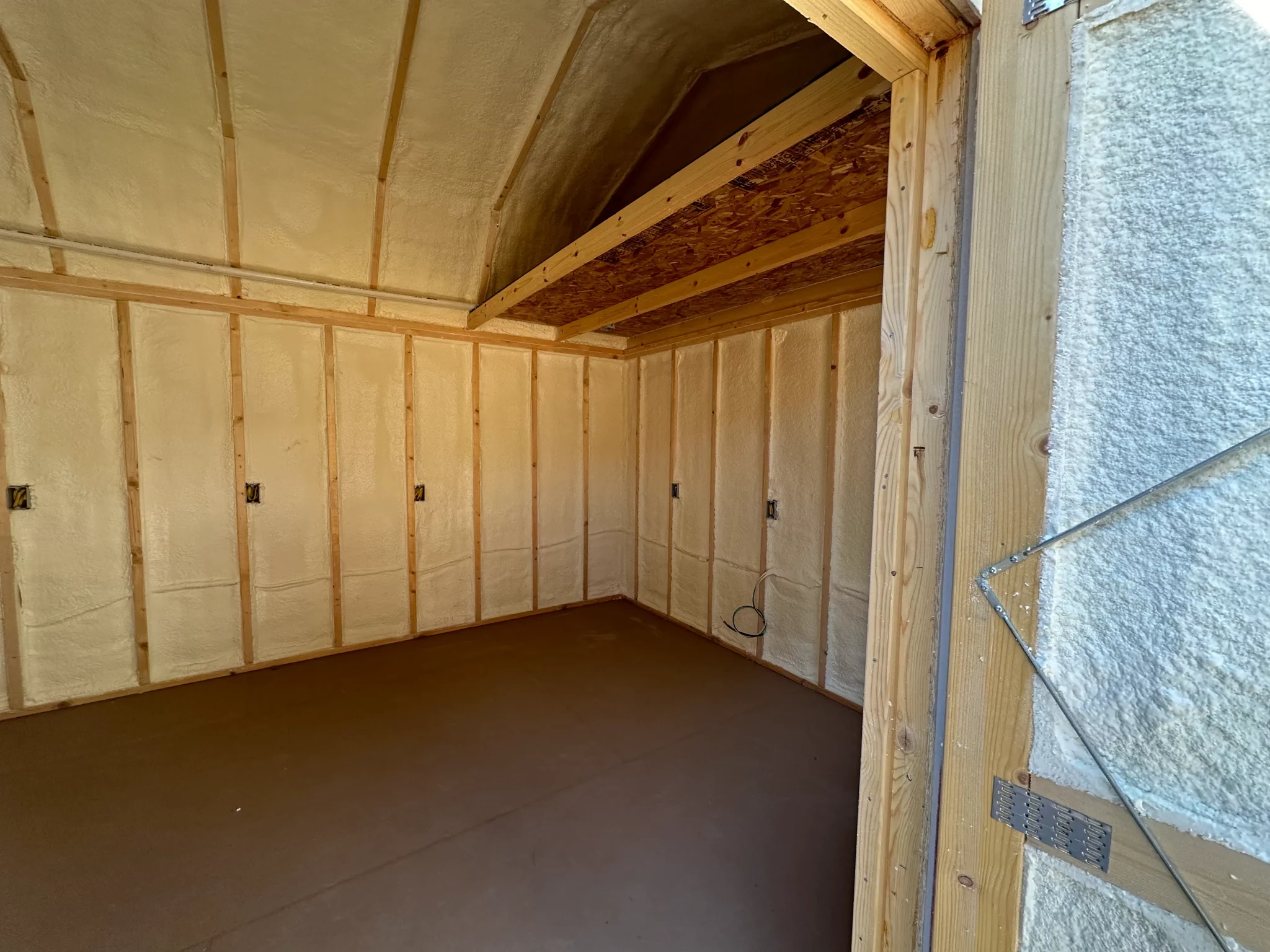
Codes separate spray foam from living space with a thermal barrier. In limited-access spaces such as unoccupied attics, a lighter ignition barrier can do the job. Some intumescent coatings qualify as alternatives to both.
An evaluation report from IAPMO Uniform Evaluation Service shows how narrow that approval is. It covers one coating, applied at set thicknesses over specific foam products that were tested together. It also says approval depends on each foam product’s own current approval, and it tells users to verify that every referenced report is still valid. Piling on extra coating doesn’t raise the rating, according to the same report.
Paint alone doesn’t earn a fire rating. A rating belongs to a tested assembly that includes the coating at a measured thickness, and inspectors commonly check that thickness on the job.
That’s why you shouldn’t assume a coat of paint can turn a door or a drywall wall into a rated assembly. Ask for the listing first. Check the manufacturer’s rules before painting or plastering over a coating too, because only approved topcoats are part of the tested system. And don’t confuse these products with heat-resistant paint, which doesn’t protect a structure from fire.
Start with the rating your engineer or local code requires, then work backward to the product. The setting matters just as much: a coating that suits a dry interior can fail in a humid or exposed one.
Compare alternatives before you commit. Cementitious spray and board systems often cost less, though they look different. Lifespan deserves a hard look too. BAM, Germany’s federal materials research institute, says established assessments target a 10-year working life, and Germany’s building authority later extended that to 25 years for coatings that pass a longer test concept. BAM also says the ageing process is complex and not fully understood, so ask any supplier for the durability evidence behind its claim.
The application itself decides the result. The surface gets cleaned, a compatible primer goes on, then the coating builds up in coats to the specified dry film thickness and cures before any topcoat. Because thickness drives the rating, this is work for a trained applicator.
We’re an insulation company, so questions about how a coating fits with the insulation in your walls, attic, or crawl space are a good place to start. Call us at (508) 847-0119 or email [email protected]. Tell us the surface, the rating you need, and where the building is, and we’ll say what we can help with and what needs an engineer or a specialty applicator.
Only use a topcoat approved by the coating manufacturer. Unapproved paint may interfere with the coating’s expansion and reduce its intended fire-protection performance during a fire.
Not for applications requiring a specific fire rating. Achieving the required coating thickness needs appropriate equipment, preparation, measurement, and application techniques to meet specifications.
Not reliably in all conditions. Exterior exposure can affect coating performance, so the specific product must be approved for outdoor wood and suitable weather conditions.
Service life depends on the product, substrate, environment, exposure, and application quality. Follow the manufacturer’s inspection, maintenance, and recoating recommendations to preserve intended performance.
Intumescent coatings are formulated for specific substrates, including structural steel and certain wood assemblies. Always confirm that the selected product is approved for your intended surface.