How Is Intumescent Coating Thickness Determined in Spencer, MA?
Determining the required thickness for an intumescent coating is not a matter of guesswork; it is an engineering calculation that…


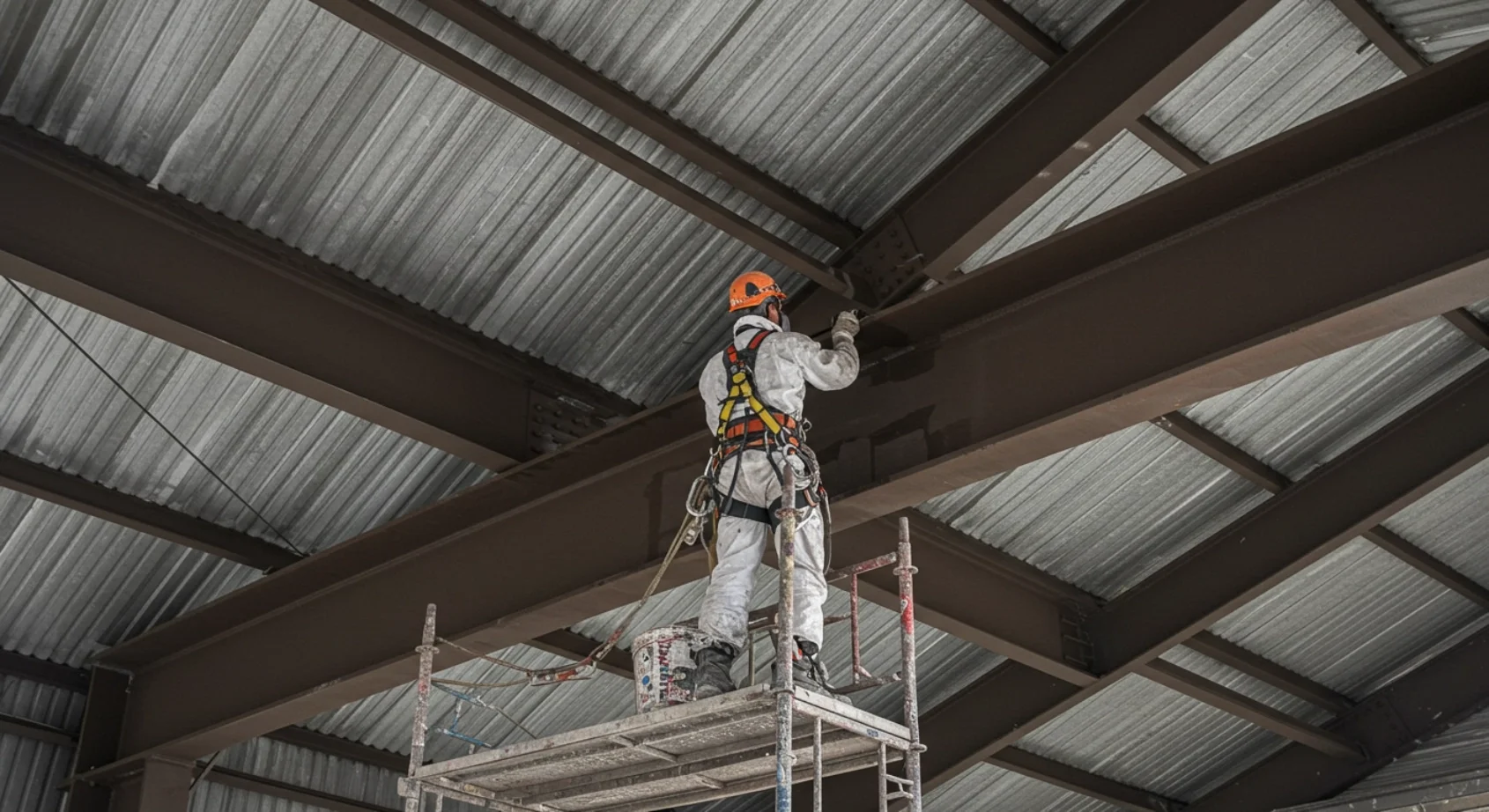
Determining the required thickness for an intumescent coating is not a matter of guesswork; it is an engineering calculation that dictates whether your structural steel meets local safety standards. The thickness is determined by the “Section Factor” of the steel, its shape and mass, and the specific fire-resistance rating required by building codes. In Spencer, MA, compliance with the Massachusetts State Building Code (780 CMR) means that every millimeter of thickness must be verified against manufacturer-certified tables to ensure the steel will hold up under extreme heat.
To understand how thickness is determined, you must first understand why not all steel requires the same amount of protection. Steel heats up at different rates depending on its surface area and its mass. This relationship is known as the Section Factor, or the Hp/A ratio.
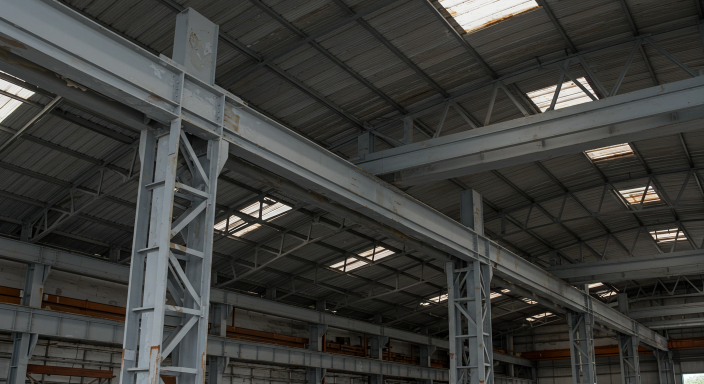
The “Hp” stands for the heated perimeter (the perimeter of the steel section exposed to fire), and the “A” stands for the cross-sectional area of the steel. A thin, lightweight steel beam has a high Hp/A ratio, meaning it will heat up very quickly and lose its structural strength faster. Consequently, it requires a thicker layer of intumescent coating services in Spencer, MA to provide the same level of protection as a heavy, thick steel column. Engineering resources from the American Institute of Steel Construction (AISC) can help professionals understand structural steel properties and member dimensions used in fire protection calculations.
Engineers use these ratios to consult manufacturer-specific fire-resistance tables. These tables dictate the exact Dry Film Thickness (DFT) needed to achieve a 1-hour, 2-hour, or 3-hour fire rating. If you do not have the correct Hp/A ratio for your specific beam, you cannot determine the correct thickness.
One of the most common mistakes during application is confusing Wet Film Thickness (WFT) with Dry Film Thickness (DFT). Understanding this distinction is vital for field compliance.
| Measurement | Definition | Why It Matters |
|---|---|---|
| WFT | Thickness while the coating is still liquid. | This is what the applicator measures during the job to ensure they are on track. |
| DFT | Thickness after the solvents/water evaporate. | This is the official measurement that inspectors check for code compliance. |
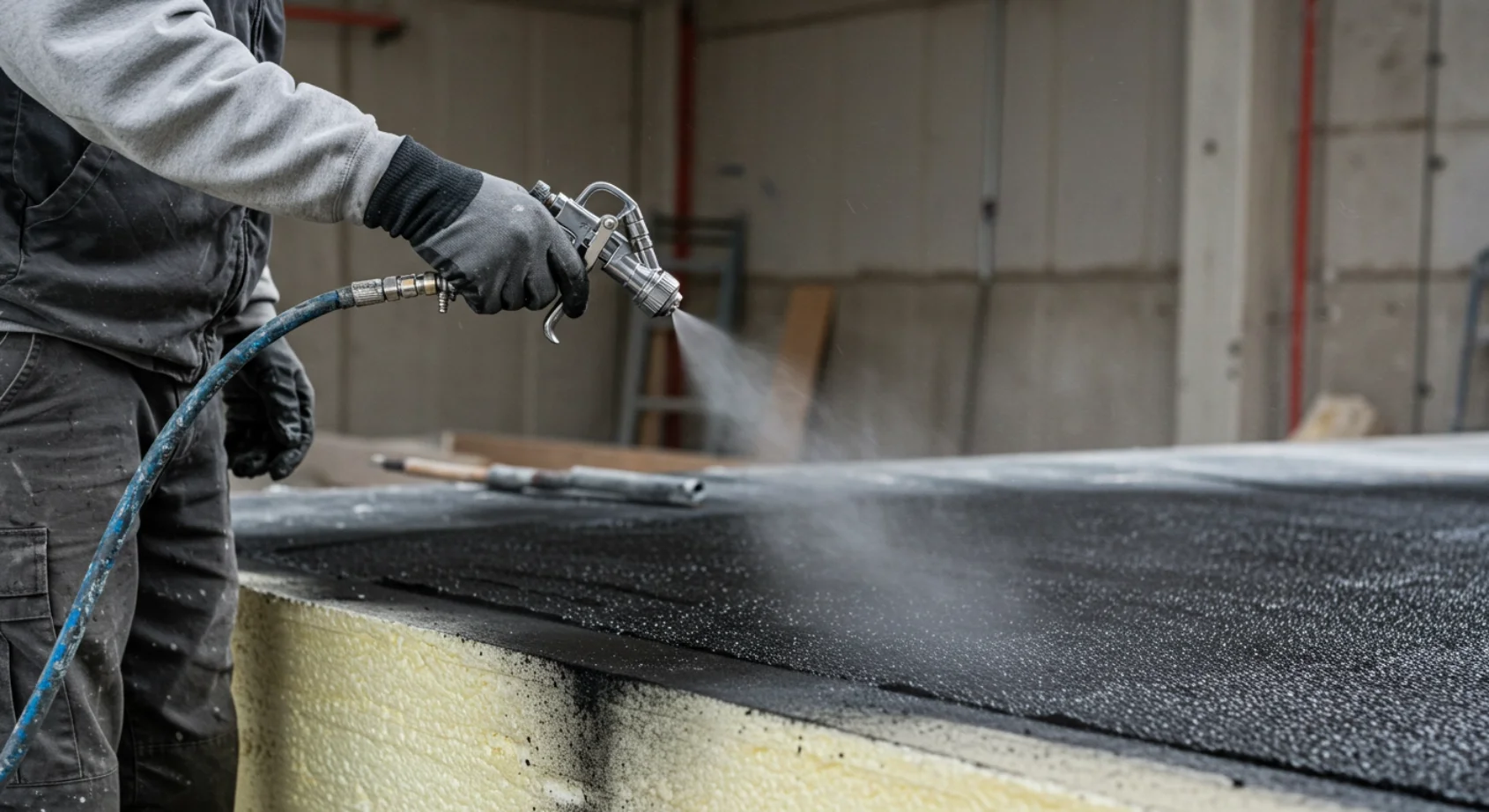
Because intumescent coatings solutions contain liquids that evaporate as they cure, the final dry coating will always be thinner than the wet coating applied. Every product has a specific “shrinkage ratio.” For example, if a product has a 2:1 ratio, you must apply 20 mils of wet coating to achieve 10 mils of dry protection. If you only measure WFT and ignore the product’s specific ratio, you will end up with a dry thickness that fails to meet code requirements, forcing expensive and time-consuming rework.
Determining the required thickness follows a strict, three-step logic chain. This process ensures that every steel element in your building is protected according to its specific load and shape.
In Spencer, building officials perform inspections to ensure that the installed fireproofing matches the approved design specifications. The inspector is not just looking for “paint”; they are verifying that the thickness matches the engineering requirements.
To support a successful inspection, you should maintain a detailed thickness log throughout the application process. This log records the date, the location, the WFT measurements taken during application, and the final DFT readings once the product has cured. The National Institute of Building Sciences provides technical resources on building design and fire protection that can help professionals understand the importance of proper installation and compliance. If an inspector finds that the DFT is too low in certain areas, corrective work may be required. Consistently insufficient coating thickness can result in failed inspections and costly project delays.
At Lamothe Insulation, we specialize in passive fire protection and structural steel coating. We understand that in Spencer, compliance with local building codes is non-negotiable. We provide onsite WFT monitoring throughout the application process to ensure your project meets the required DFT standards before the official inspection takes place.
If you are planning a project and need a site-specific assessment or help with thickness verification, call us at (508) 847-0119 or email us at [email protected].
No. Over-application can lead to cracking, sagging, or poor adhesion, which may actually reduce the effectiveness of the coating during a fire.
Surface preparation is critical. Rust and mill scale can interfere with adhesion, so steel must be properly cleaned and primed before the intumescent coating is applied.
The property owner is ultimately responsible for code compliance, though professional applicators typically provide the documentation and thickness logs needed for the inspector.
While the calculation remains the same, high humidity or cold temperatures can affect the curing process and the shrinkage ratio, which must be accounted for during application.
For WFT, you need a wet film thickness comb gauge. For DFT, you need an electronic ultrasonic or magnetic gauge calibrated for the specific substrate.
International Building Code (IBC) – The standard regulatory framework governing fire-rated construction in Massachusetts.
American Institute of Steel Construction (AISC) – Provides authoritative engineering resources on calculating Section Factors (Hp/A) for structural steel.
National Institute of Building Sciences – Offers government-backed technical guidance on passive fire protection systems, thickness verification, and inspection standards.