How to Address Uneven Insulation Coverage With Open-Cell Spray Foam in Worcester, MA
Fixing uneven insulation coverage with open-cell spray foam in Worcester, MA starts with diagnosis, not with more foam. Our team…


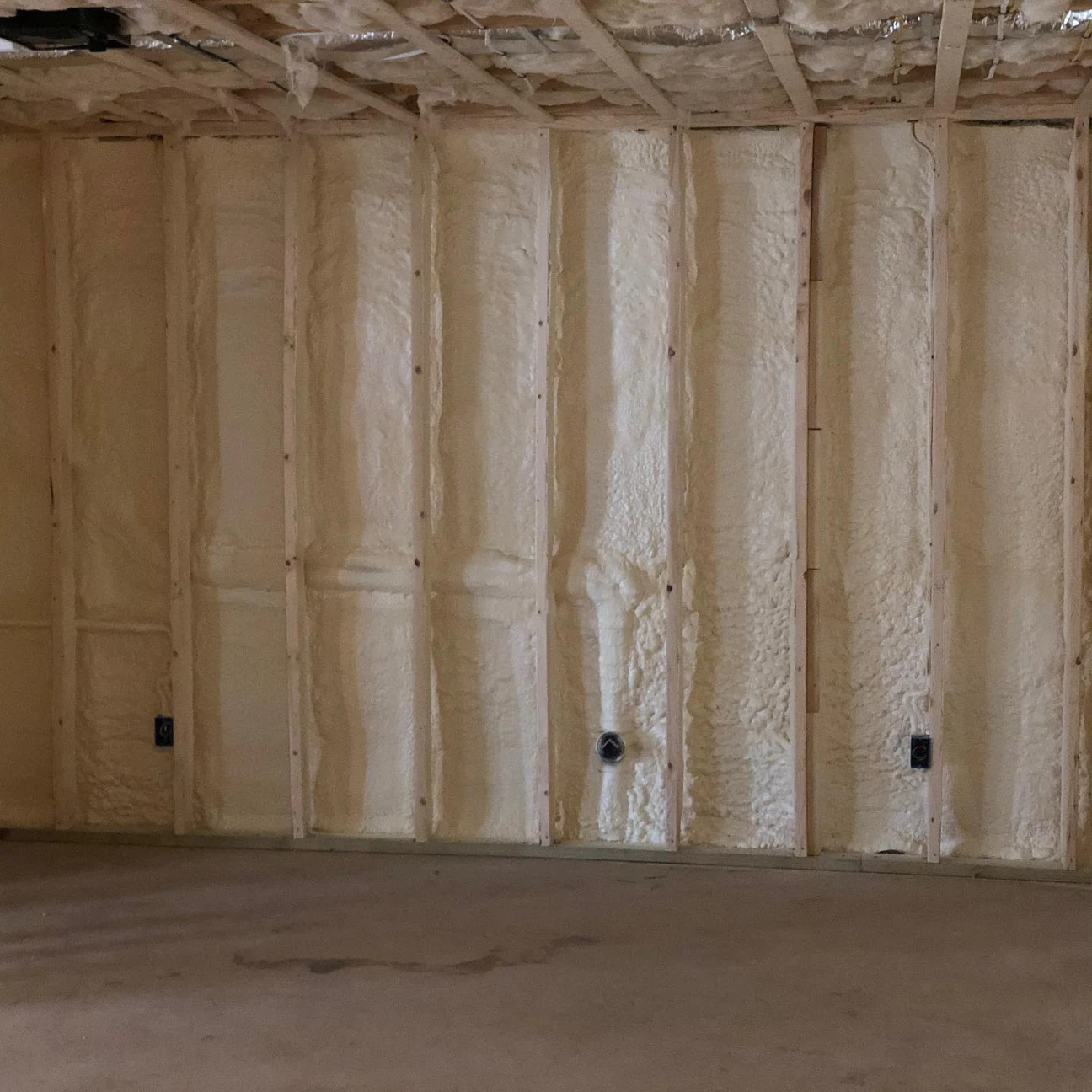
Closed-cell spray foam delivers roughly double the R-value per inch (R-6.0 to R-7.0) compared to open-cell spray foam (R-3.5 to R-3.8), making it the stronger performer for thermal resistance, structural reinforcement, and moisture control. Open-cell foam costs significantly less upfront and excels at sound dampening, filling large cavities quickly, and providing a high-performance air seal in interior applications where moisture exposure is minimal. For maximum energy efficiency in moisture-prone or space-constrained areas like basements, crawl spaces, and exterior walls, closed-cell is the clear choice, especially when combined with strategies outlined in spray foam insulation energy efficiency guide. For large open areas like attics and interior partitions where budget and sound control matter more, open cell delivers strong value.
Understanding how these two foam types differ at a technical level helps determine which product delivers the best return on investment for each specific application. The differences go well beyond R-value and affect moisture management, structural performance, and long-term durability.
| Property | Open Cell Spray Foam | Closed Cell Spray Foam |
|---|---|---|
| R-Value per Inch | R-3.5 to R-3.8 | R-6.0 to R-7.0 |
| Density | ~0.5 lb/cu ft | ~2.0 lb/cu ft |
| Vapor Permeability | High (vapor permeable) | Low (Class II vapor retarder) |
| Air Barrier | Yes | Yes |
| Sound Dampening | Excellent (~70% at 3″) | Moderate |
| Structural Strength | None | Adds wall rigidity |
| Expansion Rate | Very high | Moderate |
| Installed Cost (per sq ft) | $1.50 to $3.50 | $2.50 to $7.50 |
| Best Applications | Attics, interior walls, sound control | Basements, crawl spaces, exterior walls |
According to the U.S. Department of Energy’s Energy Saver program, R-value measures thermal resistance, and the higher the R-value, the greater the insulating effectiveness. The required R-value depends on your climate zone, the type of heating and cooling system, and the part of the building being insulated.
Open-cell spray foam is a low-density, semi-rigid material that expands dramatically during application, often reaching 100 times its original volume. The cells within the foam are left open, which gives the material its soft, spongy texture and allows moisture vapor to pass through. This high expansion rate means it fills wall cavities and attic spaces thoroughly with relatively little material, which contributes to its lower cost. The open cell structure also gives it strong sound-absorbing properties, with a Noise Reduction Coefficient (NRC) of approximately 0.70 at 3 inches of thickness U.S. DOE Building America.
Closed-cell spray foam is a medium-density, rigid material with cells that are completely sealed off from one another. This closed-cell structure traps a gas within the foam, which provides its significantly higher R-value per inch. The rigid nature of the foam also adds measurable structural strength to the assembly. Research from the Building Science Corporation confirms that closed-cell foam applied at thicknesses over 2 inches provides sufficient vapor diffusion control for even very cold climates, eliminating the need for a separate polyethylene vapor barrier in most wall assemblies.
Cost is often the deciding factor for property owners and contractors, especially on larger projects. While closed-cell foam delivers superior performance in several categories, it comes at a premium that needs to be weighed against the specific requirements of each project.
| Cost Factor | Open Cell | Closed Cell |
|---|---|---|
| Material Cost | $0.45 to $0.75 per sq ft | $1.20 to $1.75 per board foot |
| Installation Cost | $1.50 to $3.50 per sq ft | $2.50 to $7.50 per sq ft |
| Thickness Needed (2×4 wall) | Full cavity fill (~3.5″) | 2.5 to 3 inches |
| Typical Total R-Value (wall) | R-13 | R-15 to R-21 |
According to HomeGuide’s spray foam insulation cost guide, open cell spray foam costs $1.50 to $3.50 per square foot with installation, while closed cell ranges higher depending on thickness and project complexity. This Old House reports that material and labor for closed-cell can run $1.25 to $1.50 per square foot for the foam itself, with total project costs climbing based on preparation, cavity depth, and access challenges.
The right choice depends on the specific building assembly, climate conditions, and project priorities. Here are the scenarios where each foam type delivers the strongest results.
Open-cell spray foam is the better choice when:
Closed-cell spray foam is the better choice when:
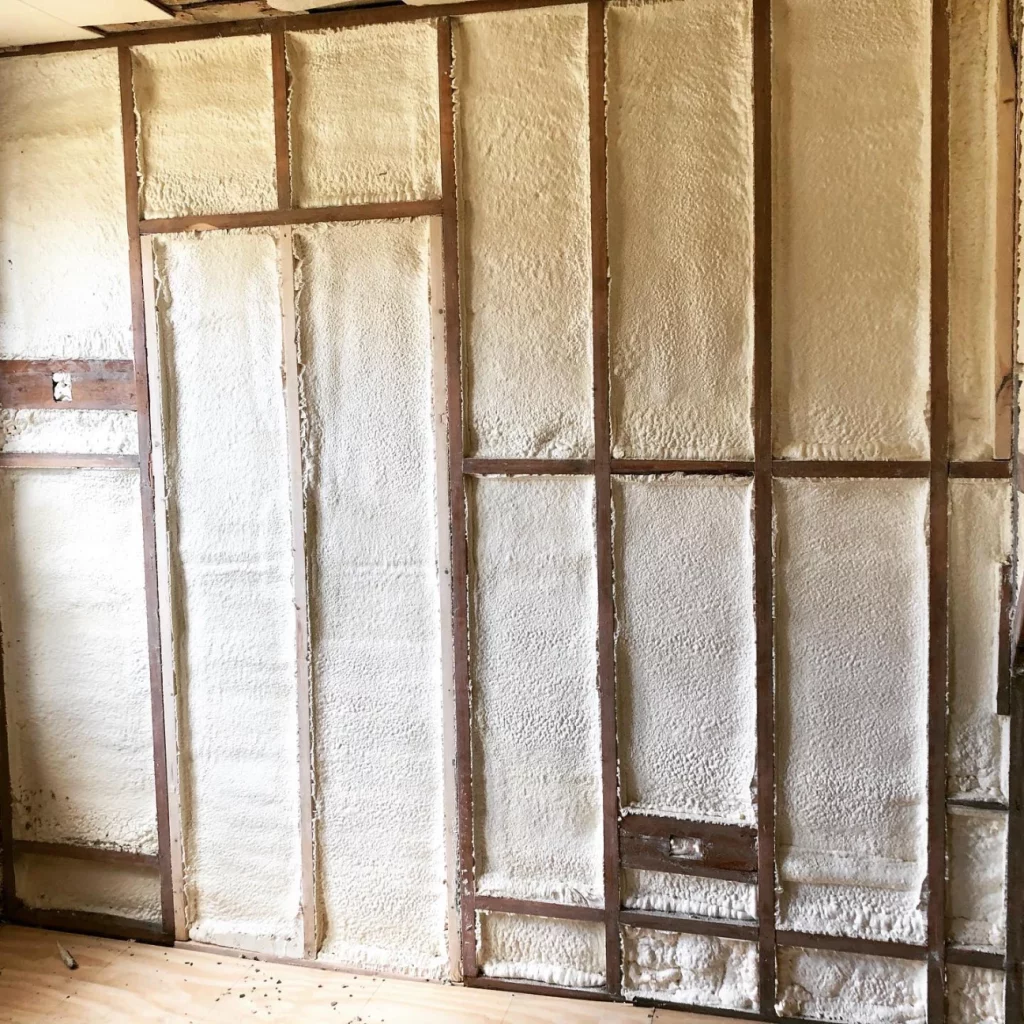
The following examples illustrate how foam type selection plays out across different project types and conditions.
| Scenario | Property Type | Recommended Option | Reasoning |
|---|---|---|---|
| New construction attic insulation | Single-family home, climate zone 5 | Open cell | Large open cavity, cost efficiency matters, sound control for the second floor is a bonus |
| Basement rim joist insulation | Existing home, cold climate | Closed cell | Moisture resistance and high R-value in shallow cavities are essential |
| Office build-out partition walls | Commercial space | Open cell | Sound-dampening between offices and a cost-effective full cavity fill |
| Exterior wall retrofit, 2×4 framing | Older home, limited cavity depth | Closed cell | The maximum R-value per inch needed to meet current energy code requirements |
| Crawl space encapsulation | Flood-prone area | Closed cell | Vapor barrier properties prevent moisture-driven damage and mold risk |
Several variables beyond R-value and cost affect which spray foam type delivers the best long-term performance and value. Our team evaluates each of these on every project before recommending a product.
Spray foam insulation is the right choice for:
Spray foam may NOT be the best fit for:
Choosing between open-cell and closed-cell spray foam is not a one-size-fits-all decision. The right product depends on your building’s specific assembly details, climate zone, moisture exposure risk, and performance priorities. Our team at Lamothe Insulation & Contracting evaluates every project individually to recommend the foam type and application method that delivers the best efficiency, durability, and value for your situation.
Contact us today at (508) 847-0119 or [email protected] to discuss your project and get a detailed, no-surprise quote tailored to your property.
Open-cell foam is generally not recommended for basement walls because it absorbs and retains moisture. Closed-cell foam’s low vapor permeability and rigid structure make it the better choice for below-grade and basement rim joist applications where moisture is a persistent concern.
Both open-cell and closed-cell spray foam are designed to last the lifetime of the building when properly installed. Neither type settles, sags, or degrades over time like fiberglass or cellulose, making them a long-term investment in energy efficiency.
Closed-cell spray foam applied at 2 inches or thicker functions as its own vapor retarder, eliminating the need for a separate polyethylene barrier in most wall assemblies. Open-cell foam does not control vapor diffusion and may require an additional vapor control layer in colder climates.
Spray foam delivers a significantly higher R-value per inch, creates a complete air seal, and does not settle or degrade. For homeowners targeting maximum energy efficiency, lower utility bills, and improved indoor comfort, spray foam typically pays for itself through energy savings over time.
Spray foam can be installed in existing walls through small access holes, but the process is more invasive and costly than in new construction. Rim joists, attics, and crawl spaces are the most common and cost-effective retrofit locations for spray foam insulation.