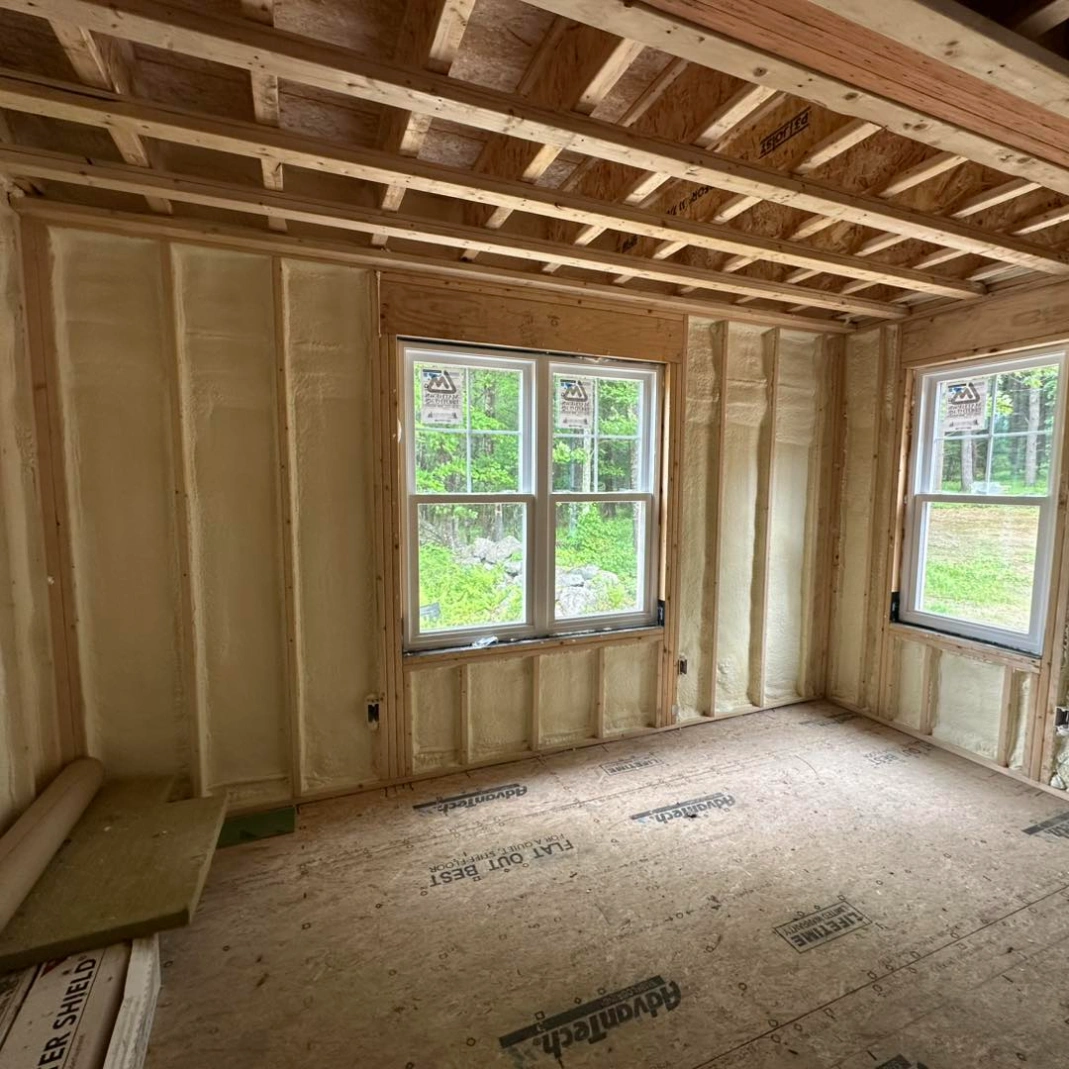
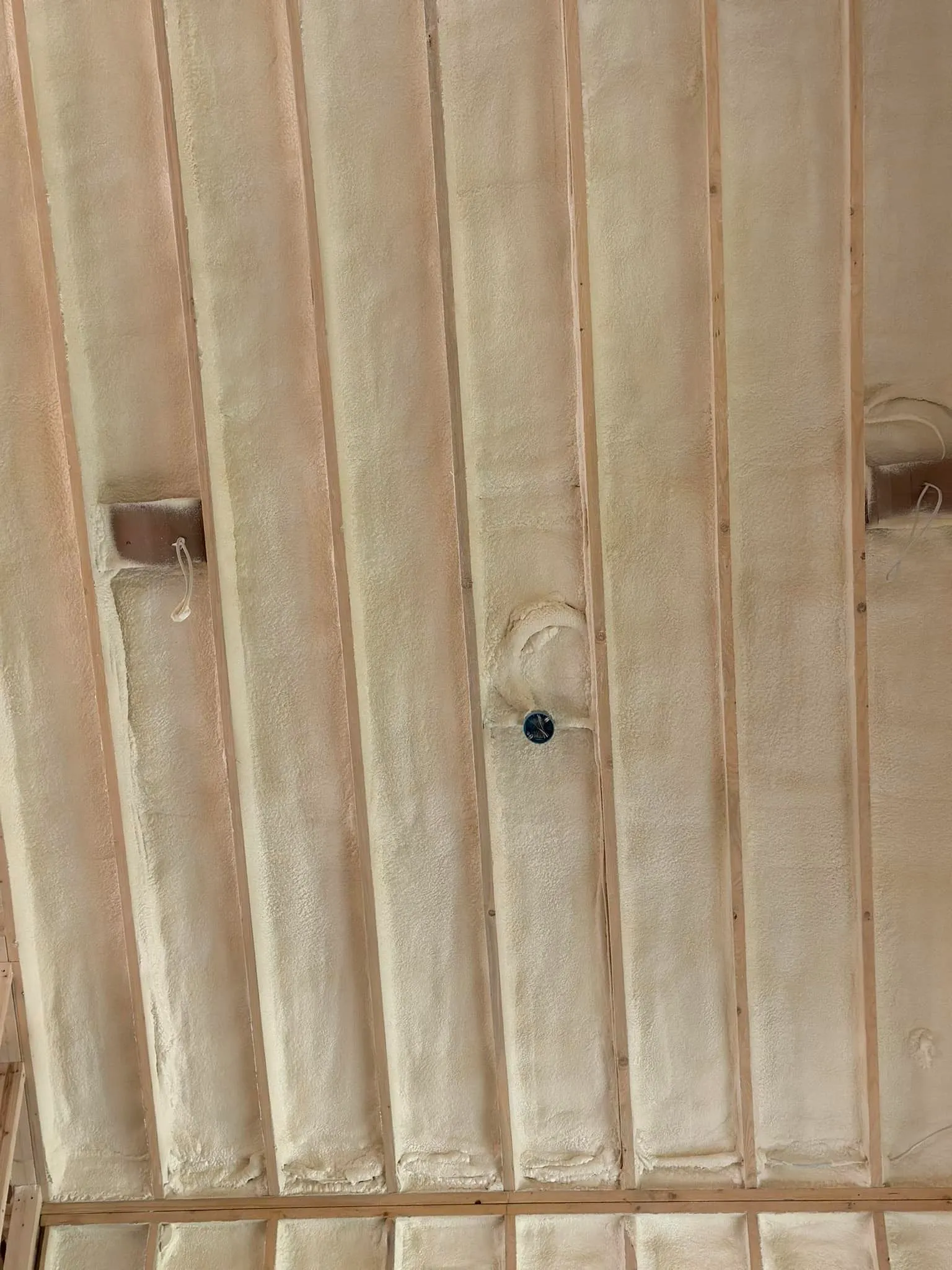
How Closed-Cell Spray Foam Creates a Continuous Air Seal in Worcester, MA
Closed-cell spray foam creates a continuous air seal by applying liquid polyurethane that expands up to 60 times its original…


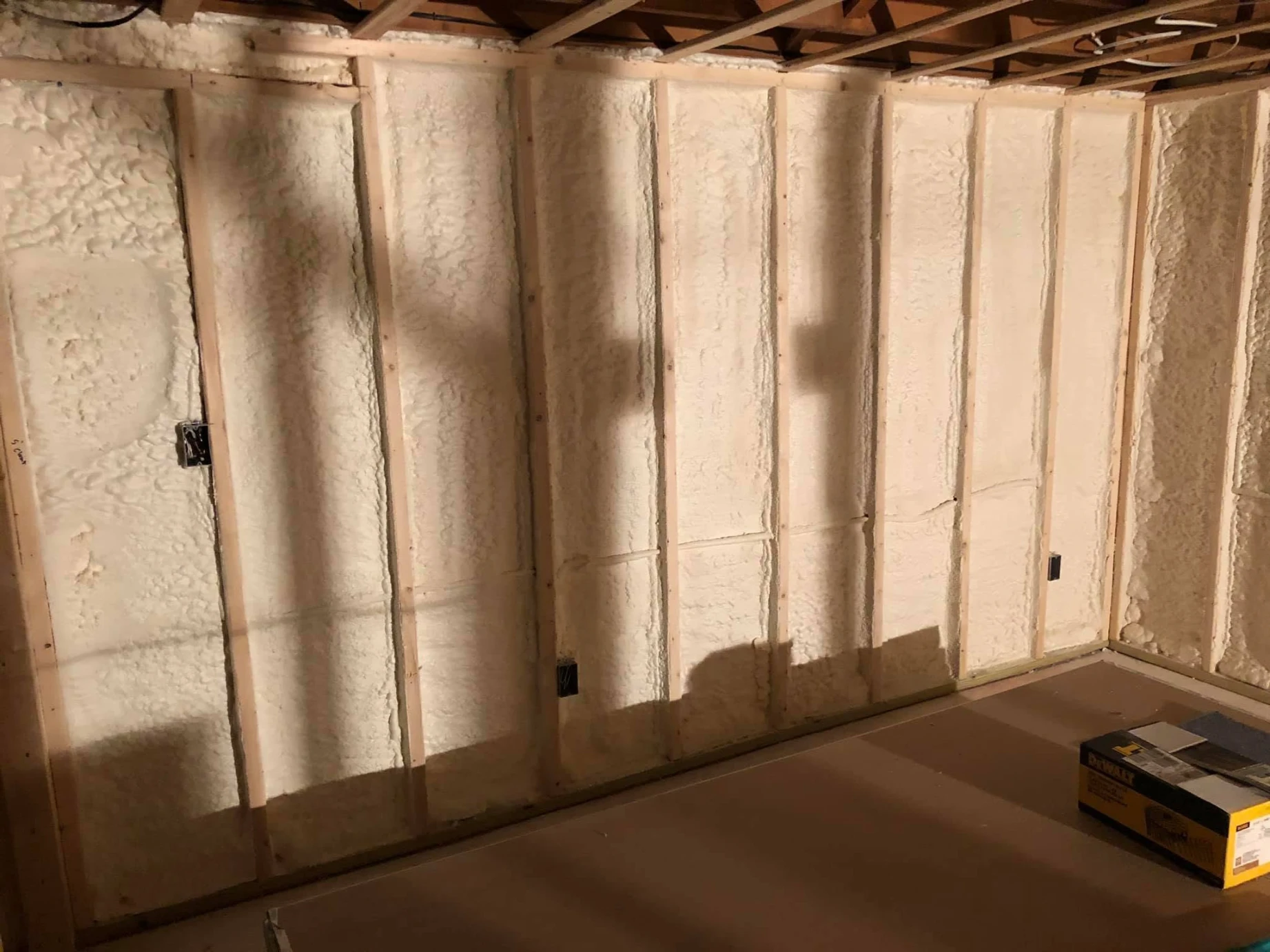
Spray foam insulation that fails early in Worcester, MA is almost always the result of using the wrong foam type for Climate Zone 5A, improper installation, or moisture mismanagement. Worcester sits in IECC Climate Zone 5, which demands specific insulation performance to handle cold winters and humid summers. When spray foam is applied incorrectly or the wrong product is selected, homeowners face moisture damage, mold growth, wood rot, and energy bills that climb instead of dropping. Recognizing the early warning signs and understanding the right corrective approach can prevent thousands in structural damage and keep your home performing the way it was designed.
Worcester winters regularly drop below freezing, and summers bring significant humidity. That combination creates a demanding environment for any insulation system. According to the Massachusetts Energy Code, Worcester falls under Climate Zone 5, which mandates specific minimum R-values for ceilings, walls, basement walls, crawlspaces, and floors. When spray foam fails to meet these thresholds, or worse, when the wrong type is installed, the building envelope cannot manage the temperature and moisture gradients it faces.
The most common failures we see across Worcester are not caused by the product itself but by poor specification and installation. A crew may install open-cell spray foam directly to the underside of a roof deck without accounting for vapor diffusion requirements. In Climate Zone 5, interior moisture will pass through the vapor-permeable open-cell foam (approximately 50 perms per inch) and condense on the cold roof sheathing. Over time, this leads to sheathing rot, mold, and compromised structural integrity.
Understanding the physical differences between the two spray foam types is the first step to avoiding early failure. The table below highlights the key distinctions that matter in a Worcester climate:
| Property | Closed-Cell Spray Foam | Open-Cell Spray Foam |
|---|---|---|
| R-Value per Inch | R-6.5 | R-3.5 |
| Density | ~2.0 lb/ft3 | ~0.5 lb/ft3 |
| Vapor Permeability | ~3 perms/inch (Class II retarder at 1.5″) | ~50 perms/inch (vapor-permeable) |
| Air Barrier | Yes, at minimum sprayed depth | Yes, at minimum sprayed depth |
| Moisture Barrier | Yes, acts as vapor retarder | No |
| Best For (Zone 5) | Unvented attics, basements, rim joists, crawlspaces | Interior wall cavities with separate vapor control |
According to Building Science Corporation’s Residential Spray Foam Guide, high-density closed-cell spray foam is the preferred choice in IECC Climate Zones 5 through 8. It meets code requirements for both condensation control and Class II vapor retarder classification. Open-cell foam can work in wall cavities when paired with a separate interior vapor retarder, such as vapor retarder paint on gypsum board, but it should never be used alone on unvented roof assemblies in Worcester’s climate.
Identifying problems early can mean the difference between a straightforward correction and a full structural remediation. Here are the warning signs we look for during inspections:
1. Discolored or Damp Roof Sheathing If you can see the roof deck through an access hatch or after pulling back insulation, look for dark staining, water droplets, or fuzzy growth. In cold climates, reports of damp sheathing behind spray foam date back 15 years or more, especially where open-cell foam was applied to unvented attic roof decks.
2. Persistent Musty Odors A home that smells musty even after cleaning likely has moisture trapped within the building envelope. Spray foam that was applied without a proper vapor control strategy can create a pocket where condensation accumulates silently behind finished surfaces.
3. Shrinking, Cracking, or Separating Foam Spray foam that pulls away from framing members, develops visible cracks, or appears to have shrunk indicates a curing problem. Off-ratio mixing during installation, application in temperatures outside the manufacturer’s recommended range, or improper substrate preparation all cause premature curing failures.
4. Ice Dams Forming Despite New Insulation If ice dams appeared or worsened after spray foam installation, the attic thermal envelope is not performing as designed. Warm air from the living space may be bypassing the foam layer through gaps, plumbing penetrations, or chimney chases, melting snow on the roof surface.
5. Rising Energy Bills Spray foam should reduce heating and cooling loads. According to the Department of Energy’s Guide to Home Insulation, proper insulation can save homeowners up to 20% on heating and cooling costs. If bills are climbing after installation, the foam may have been applied at insufficient thickness, or air sealing was incomplete.
These examples illustrate the types of failures our team encounters regularly in Central Massachusetts:
| Home Type | Problem | Solution | Outcome |
|---|---|---|---|
| 1920s Colonial, 3-BR | Open-cell foam sprayed to underside of roof deck in unvented attic; sheathing rot discovered after roof leak | Removed failed foam, replaced rotted sheathing, re-insulated with closed-cell foam meeting IRC condensation control thickness | Dry attic, no mold recurrence, stable indoor humidity |
| 1970s Ranch, 2-BR | Closed-cell foam at rim joist applied too thin (under 1 inch), failing to act as vapor retarder | Added closed-cell foam layer to achieve proper thickness and Class II vapor retarder classification | Eliminated condensation at floor framing, reduced drafts |
| New Construction, 2,400 sq ft | Mixed foam types in walls without proper vapor control at sheathing; moisture trapped in wall cavity | Installed vapor-retarder paint on interior drywall, added dehumidification to ventilation system | No further condensation, wall moisture levels returned to normal range |
| Cape Cod, 1,800 sq ft | Crawl space insulated with open-cell foam; moisture from ground migrating through foam into floor framing | Replaced with closed-cell foam, added ground vapor barrier, sealed vents to create conditioned crawlspace | Floor temperature evened out, musty smell eliminated |
| Split-Level, 2,200 sq ft | Spray foam in attic pulling away from rafters due to off-ratio mixing during installation | Removed and replaced failed foam sections, corrected application technique and substrate prep | Complete adhesion, no shrinkage after two full heating seasons |
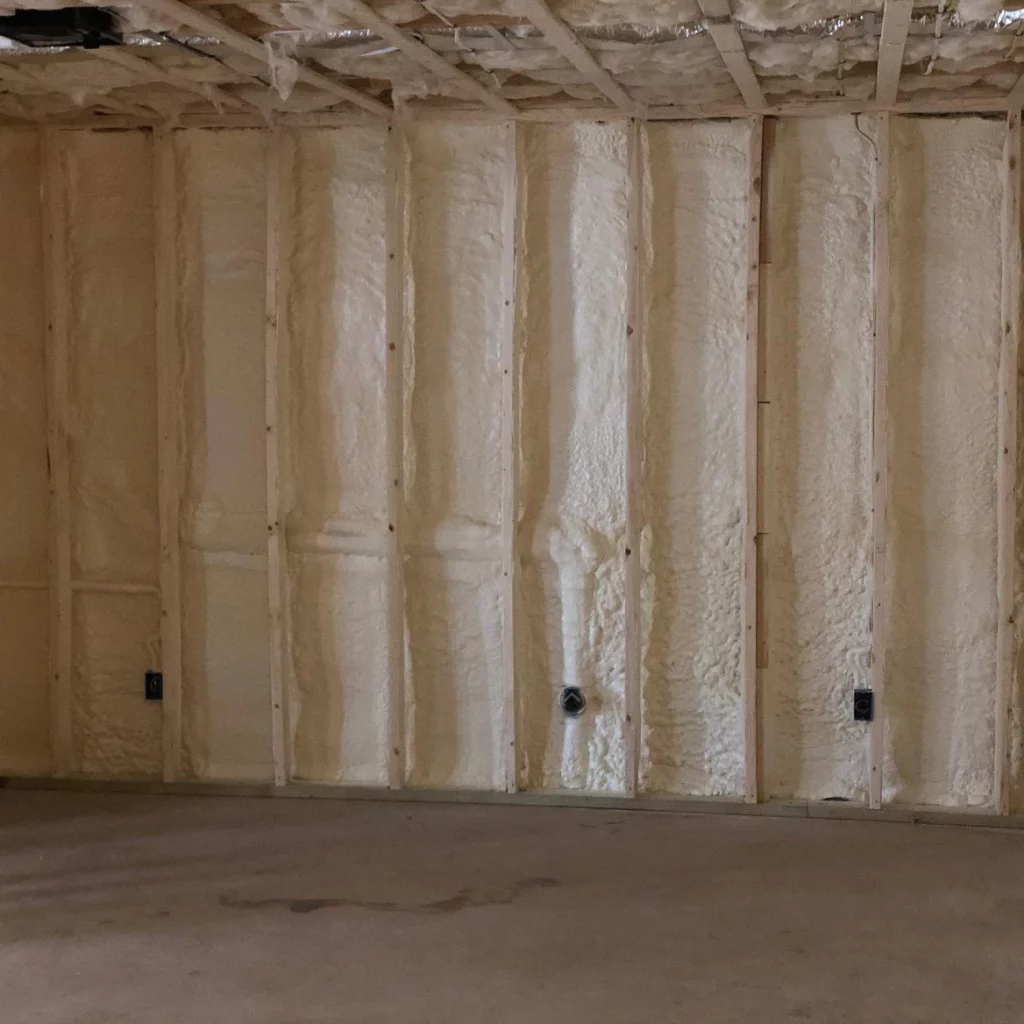
Identify what was installed and where. Closed-cell foam needs to meet minimum thickness requirements per the IRC for condensation control in Climate Zone 5. For unvented attics, the foam layer must provide enough thermal resistance to keep the roof sheathing above the dew point during winter. If you are unsure what product or thickness was used, a professional inspection can determine this quickly.
Every wall and roof assembly needs a defined vapor control approach. In Climate Zone 5, closed-cell foam provides inherent vapor retarder properties at thicknesses above 1.5 inches. If open-cell foam was used, a separate vapor retarder must be present on the warm side of the assembly. Without this, moisture from daily activities like cooking, showering, and breathing will migrate through the foam and condense on cold surfaces.
Spray foam’s greatest strength is its ability to serve as a continuous air barrier. That only works if the application is continuous. Gaps around electrical boxes, plumbing runs, duct penetrations, and framing intersections undermine the entire system. These bypasses allow warm indoor air to reach cold surfaces, bypassing the insulation layer entirely.
When spray foam creates a near-airtight envelope, Building Science Corporation recommends mechanical ventilation to manage indoor moisture and air quality. In unvented conditioned attics, air change through balanced ventilation with an exhaust fan at the attic peak and supply air to the return side of the air handler is an effective approach. Without ventilation, moisture from daily living accumulates and has nowhere to go.
Check your attic, crawlspace, and basement at least twice a year. Look for discoloration on framing, musty smells, or any change in the foam’s appearance. Early detection makes corrective work far less involved.
Several variables determine whether spray foam will perform as intended or fail prematurely:
Climate Zone Classification: Worcester’s Zone 5A designation dictates minimum R-values and vapor control requirements. Materials and assemblies rated for warmer zones may not perform adequately here.
Foam Thickness: Both closed-cell and open-cell foam must be applied at depths that meet or exceed minimum R-value requirements. Thin applications compromise thermal performance and, in the case of closed-cell foam, may fail to achieve Class II vapor retarder classification.
Substrate Temperature at Installation: Spray foam requires specific substrate and ambient temperature ranges for proper curing. Cold surfaces during winter installations can cause poor adhesion, incomplete expansion, and weak cell structure.
Mix Ratio and Application Technique: Off-ratio mixing during spraying leads to foam that never cures properly. Inconsistent spray patterns leave voids and thin spots that break the air barrier continuity.
Building Age and Assembly Design: Older Worcester homes with balloon framing, rubble-stone foundations, or single-wythe brick walls present different challenges than modern construction. The foam assembly must account for existing vapor barriers, ventilation paths, and structural conditions.
Ventilation System Design: Airtight building envelopes require purposeful ventilation. Without it, humidity builds indoors and finds its way into wall and roof cavities through any available path.
Homeowners addressing spray foam failures may qualify for federal incentives. The ENERGY STAR Insulation Tax Credit covers 30% of product costs up to $1,200 for qualifying insulation materials installed in existing primary residences through 2025. Spray foam insulation, rigid foam boards, and air sealing materials all qualify when installed with a Manufacturer’s Certification Statement. This credit applies to corrective work as well as new installations, which can offset a significant portion of remediation costs.
If you suspect your spray foam insulation is underperforming or showing signs of early failure, our team at Lamothe Insulation and Contracting provides thorough inspections, accurate diagnosis, and proven corrective solutions tailored to Worcester’s Climate Zone 5A conditions. We have the experience and training to identify exactly where and why your insulation is failing and what it takes to fix it properly the first time.
Request a Free Quote | Schedule an Inspection
Call us at (508) 847-0119 or email [email protected] to get started. We serve Worcester and the surrounding Central Massachusetts communities with honest assessments and reliable results.
Yes. Spray foam can degrade if installed with off-ratio chemicals, applied in temperatures outside manufacturer specifications, or exposed to UV light without protective coating. Properly installed and protected foam has a very long service life, but installation quality is the deciding factor.
Open-cell foam is vapor-permeable (around 50 perms per inch), which means interior moisture passes through it and condenses on the cold roof sheathing above. In Climate Zone 5, this condensation leads to wood rot and mold. Closed-cell foam acts as a vapor retarder and prevents this moisture drive.
Look for complete coverage without gaps, consistent color and texture throughout, firm adhesion to framing and sheathing, and no signs of shrinkage or cracking. A blower door test can also confirm whether the foam layer is providing an effective air barrier.
It depends on the severity and location of the failure. Small areas of poor adhesion can sometimes be re-sprayed. However, if the wrong foam type was used for the assembly, or if moisture damage has already occurred in the sheathing or framing, removal and replacement is usually the safest approach.
For older homes with irregular framing, balloon cavities, or leaky rim joists, closed-cell spray foam offers air sealing and vapor control that other insulation types cannot match in a single application. In Climate Zone 5, the condensation control and vapor retarder properties make it the technically appropriate choice for basements, crawlspaces, and unvented attic assemblies.