How to Address Uneven Insulation Coverage With Open-Cell Spray Foam in Worcester, MA
Fixing uneven insulation coverage with open-cell spray foam in Worcester, MA starts with diagnosis, not with more foam. Our team…


Closed-cell spray foam delivers superior overall protection for Worcester, MA properties, thanks to its ability to seal air leaks, resist moisture infiltration, and provide high R-value per inch. Rigid foam board remains a strong option for continuous exterior insulation and new construction projects where full cavity access is available. The better choice depends on your property type, existing conditions, budget, and whether air sealing is a priority alongside thermal resistance.
For Worcester homeowners and contractors, the decision between closed-cell spray foam and rigid foam board is not simply about R-value. Both materials offer high thermal resistance, but they function in fundamentally different ways. Closed-cell spray foam expands on application to fill every gap and crack, creating an airtight seal that rigid foam boards cannot match on their own. Rigid foam board, on the other hand, delivers consistent R-value across large surface areas when installed continuously and is well suited for exterior sheathing, basement walls, and retrofit projects where cavity injection is not practical.
Worcester sits in a cold climate zone (IECC Climate Zone 5), which demands wall assemblies rated at R-20 plus R-5 continuous insulation or equivalent performance. Choosing the right material has a direct impact on heating costs, indoor comfort, and long-term building durability.
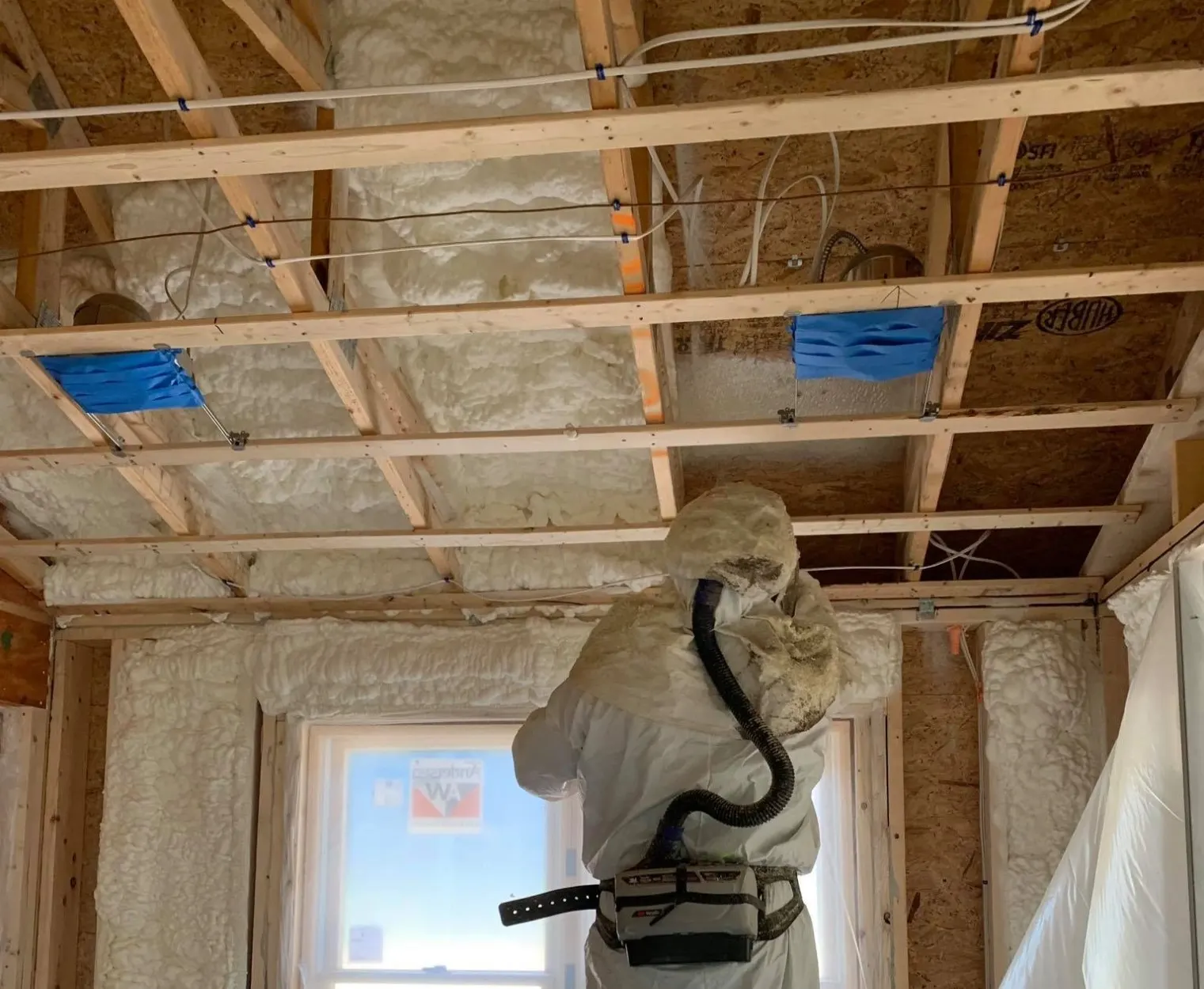
Closed-cell spray foam is a liquid polyurethane product applied through specialized equipment that causes it to expand and harden in place. The cells are dense and filled with a low-conductivity gas, which gives it one of the highest R-values per inch among common insulation materials. According to the U.S. Department of Energy, closed-cell foam provides greater R-value and stronger resistance against moisture and air leakage compared to open-cell alternatives, though it is denser and carries a higher material cost.
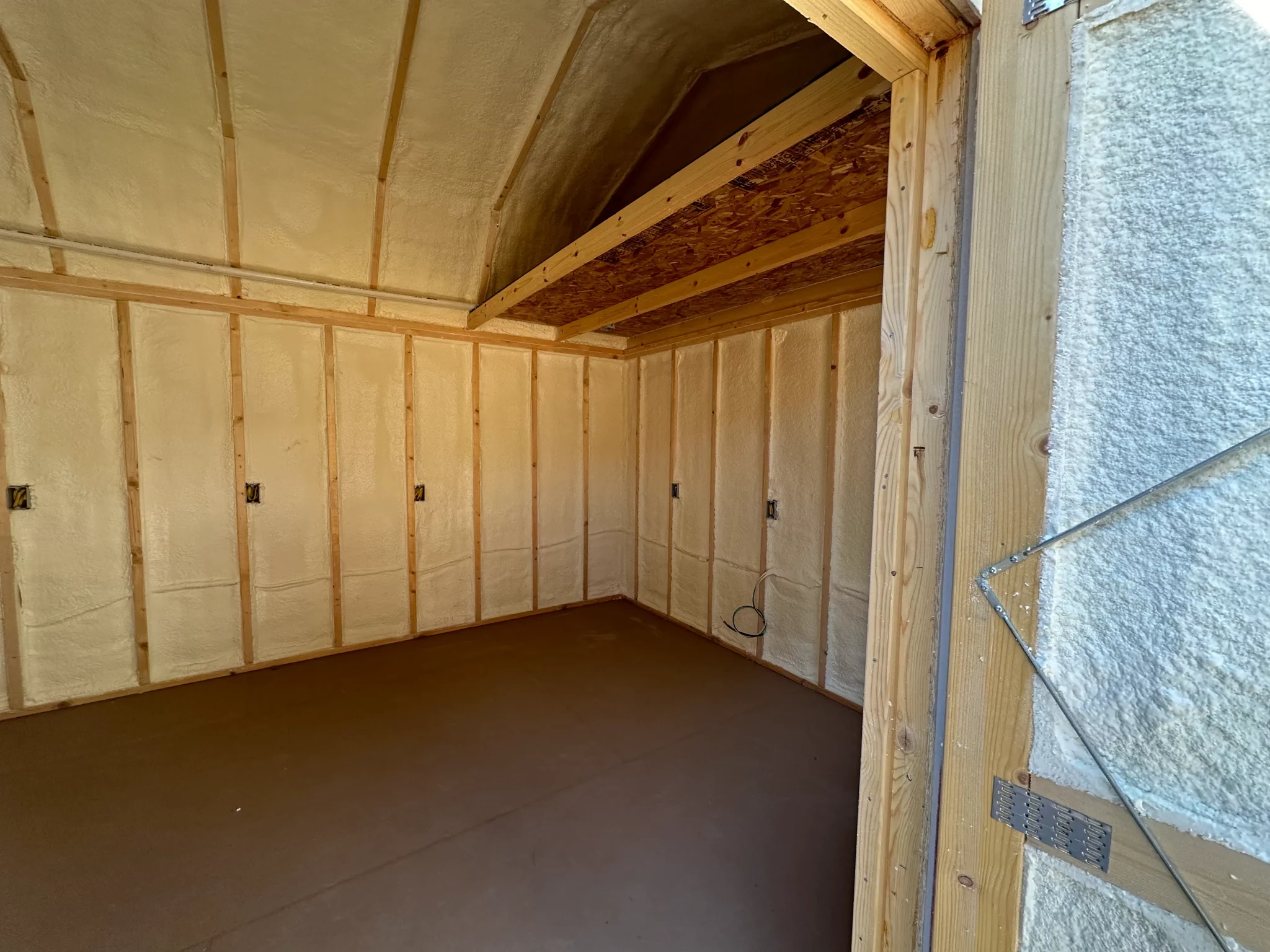
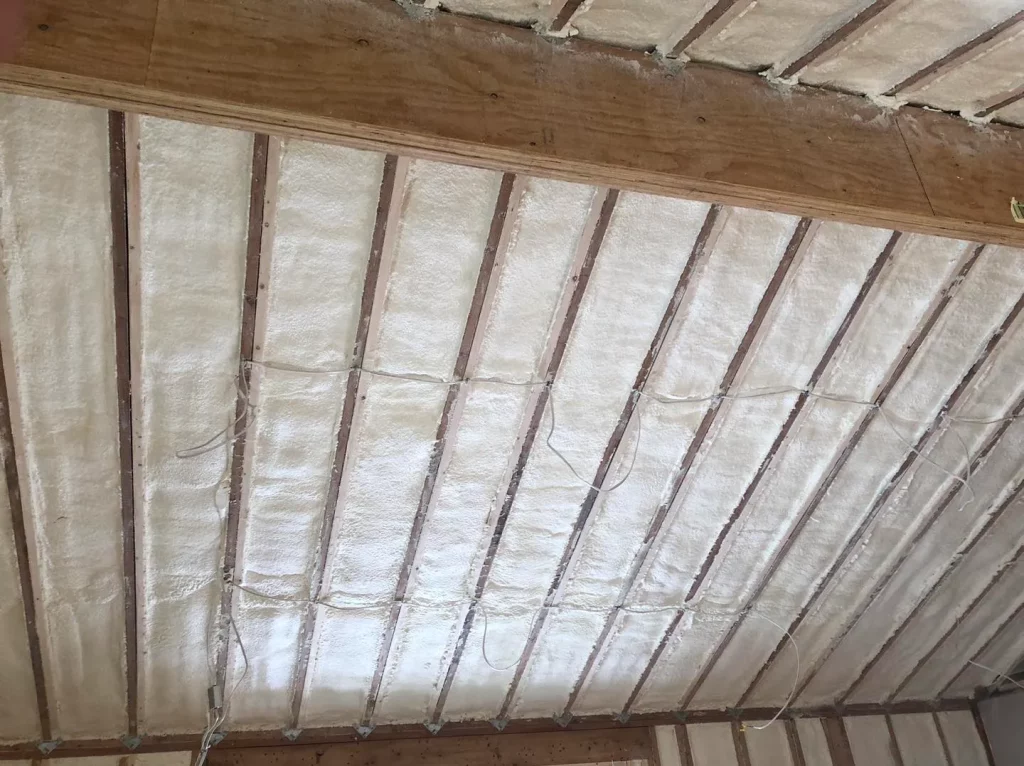
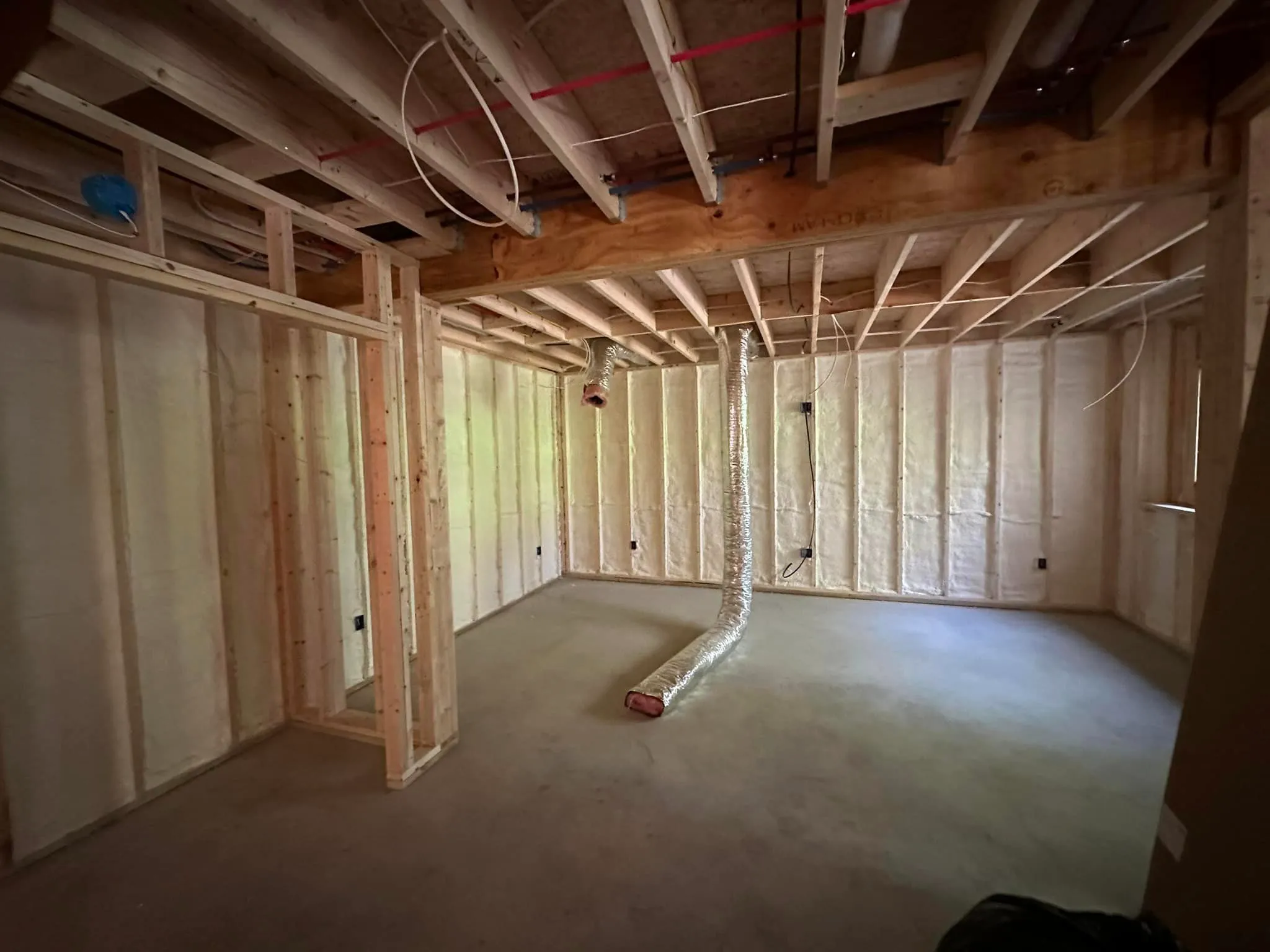
Because spray foam expands into the cavity, it conforms to every surface, filling gaps around framing, wiring, plumbing penetrations, and irregular shapes that rigid boards cannot cover. This creates an effective air barrier in a single application step.
Rigid foam boards are manufactured panels made from polystyrene (EPS or XPS), polyisocyanurate (polyiso), or polyurethane. They are installed as flat boards over surfaces or within cavities. The DOE notes that foam boards provide good thermal resistance up to two times greater than most other insulating materials of the same thickness, and they can block thermal bridging when installed continuously over framing.
Rigid foam board does not expand or self-seal. Each joint between panels must be taped and sealed with spray foam or mastic to prevent air movement. When properly detailed, foam board systems perform well, but they rely on the quality of joint sealing for their air barrier function.
| Factor | Closed-Cell Spray Foam | Rigid Foam Board |
|---|---|---|
| R-Value per Inch | R-6.0 to R-7.0 | R-3.8 (EPS) to R-6.5 (polyiso) |
| Air Barrier | Yes, inherent | No, requires taping and sealing |
| Vapor Retarder | Yes, Class II vapor retarder | Varies by facing and type |
| Moisture Resistance | High, does not absorb water | High for XPS and polyiso; EPS can absorb |
| Thermal Drift | Minor after first 2 years | XPS and polyiso lose R-value over time |
| Best Application | Wall cavities, attics, crawlspaces | Exterior sheathing, basements, foundations |
| Installation | Professional only | Professional or skilled DIY for some types |
| Fire Code | Requires thermal barrier (gypsum board) | Requires thermal barrier for interior use |
Worcester experiences cold, snowy winters and humid summers. This combination means buildings need insulation that handles both heat loss and moisture control. The DOE recommends Climate Zone 5 attics reach a minimum of R-60 and uninsulated wood-frame walls achieve R-30 total. For insulated wood-frame walls, the prescriptive path requires R-20 cavity insulation with R-5 continuous insulation, or R-13 cavity insulation with R-10 continuous insulation.
Air sealing matters significantly in cold climates. The DOE’s research shows that air movement accounts for more than 98% of water vapor movement in building cavities. This makes the air barrier quality of closed-cell spray foam particularly relevant for Worcester properties. When warm indoor air leaks through gaps in insulation during winter, it condenses on cold surfaces inside wall cavities, leading to mold, rot, and reduced insulation effectiveness.
Rigid foam board can address this when used as continuous exterior insulation, because it covers the entire wall surface including framing members, reducing thermal bridging. But it must be supplemented with cavity insulation and meticulous joint sealing to match the air-tightness of spray foam.
Closed-cell spray foam is the stronger option in these situations:
Rigid foam board makes more sense in these applications:
| Scenario | Property Type | Recommended Option | Reasoning |
|---|---|---|---|
| Drafty 1960s colonial with no wall insulation | Existing single-family home | Closed-cell spray foam | Seals air leaks and fills irregular cavities without removing interior finishes |
| New custom build with 2×6 framing | New construction | Rigid foam board (exterior CI) + cavity insulation | Continuous exterior board reduces thermal bridging; pairs with cavity fill for full R-value |
| Finished basement with cold floors and condensation | Existing single-family home | Closed-cell spray foam on rim joists + rigid board on walls | Spray foam seals rim joist air leaks; board provides basement wall moisture resistance |
| Commercial warehouse addition | New commercial construction | Closed-cell spray foam | Maximizes R-value in limited cavity space; adds structural rigidity |
| Gut renovation of a triple-decker | Existing multifamily | Rigid foam board (exterior) + cavity insulation | Exterior continuous insulation during re-siding; cavity fill addresses code requirements |
Several variables determine which material delivers better protection for a specific project:
Choosing between closed-cell spray foam and rigid foam board is not a one-size-fits-all decision. Every building in Worcester has different framing, existing insulation conditions, moisture profiles, and performance goals. Our team at Lamothe Insulation and Contracting evaluates each project individually and recommends the insulation strategy that delivers the best protection and long-term value.
Call us at (508) 847-0119 or email [email protected] to discuss your project with our experienced insulation professionals.
Request a Free Quote | Schedule an Insulation Assessment
Only if every joint, seam, and penetration is meticulously taped and sealed with spray foam or mastic. Even then, foam board does not expand into irregular cavities the way spray foam does, so small gaps around framing and penetrations may remain.
In most Worcester applications, closed-cell spray foam acts as a Class II vapor retarder on its own, eliminating the need for a separate polyethylene vapor barrier. Local building codes and specific assembly designs should always be verified by a qualified installer.
Yes, combining them is common and often recommended. Rigid foam board can serve as continuous exterior insulation while closed-cell spray foam fills the wall cavity, achieving high total R-values and excellent air sealing simultaneously.
Both closed-cell spray foam and rigid foam boards like XPS and polyiso experience some R-value loss over time as trapped gas escapes and air replaces it. Most of this drift occurs within the first two years, after which the R-value stabilizes.
No. Rigid foam board requires open access to wall cavities or exterior surfaces. For existing finished walls, closed-cell spray foam or blown-in insulation injected through small openings are the practical options.