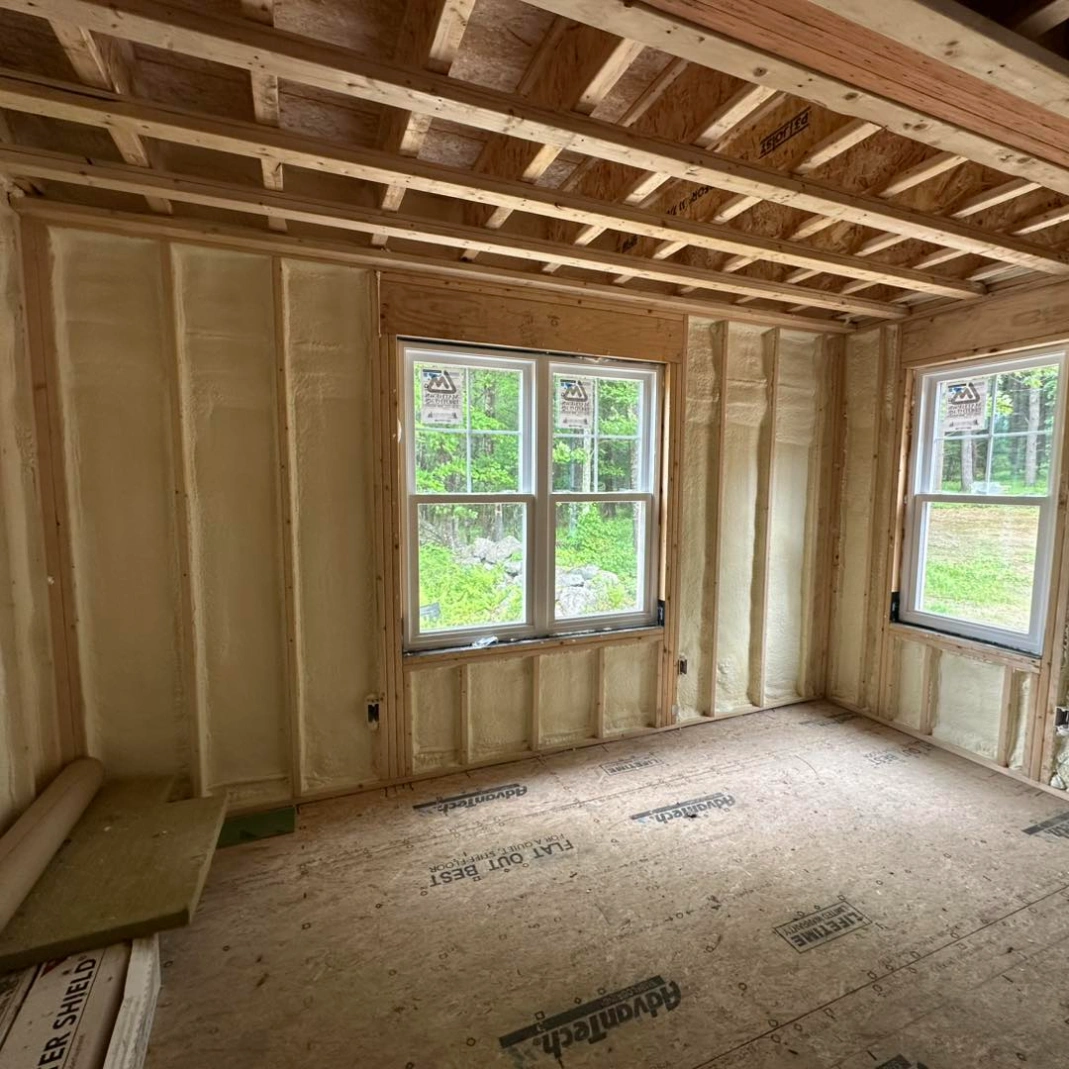
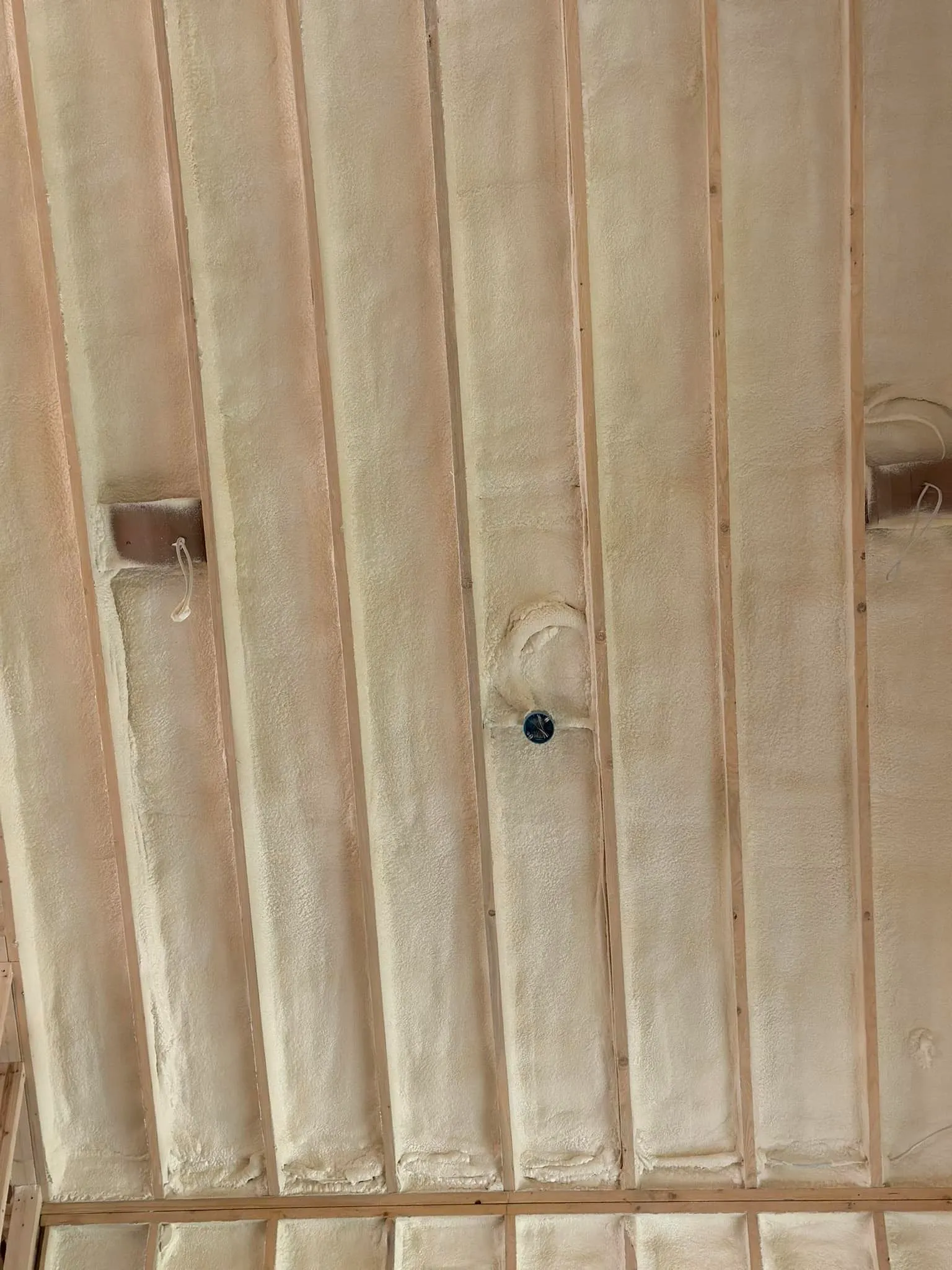
How Closed-Cell Spray Foam Creates a Continuous Air Seal in Worcester, MA
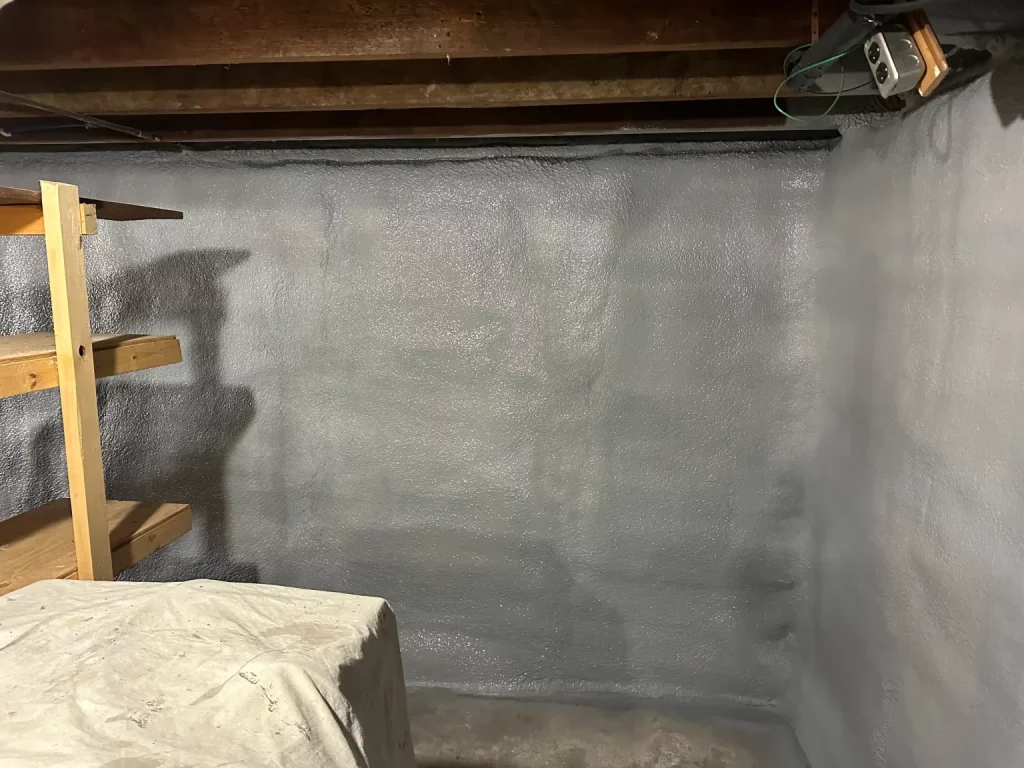
Closed-cell spray foam creates a continuous air seal by applying liquid polyurethane that expands up to 60 times its original…

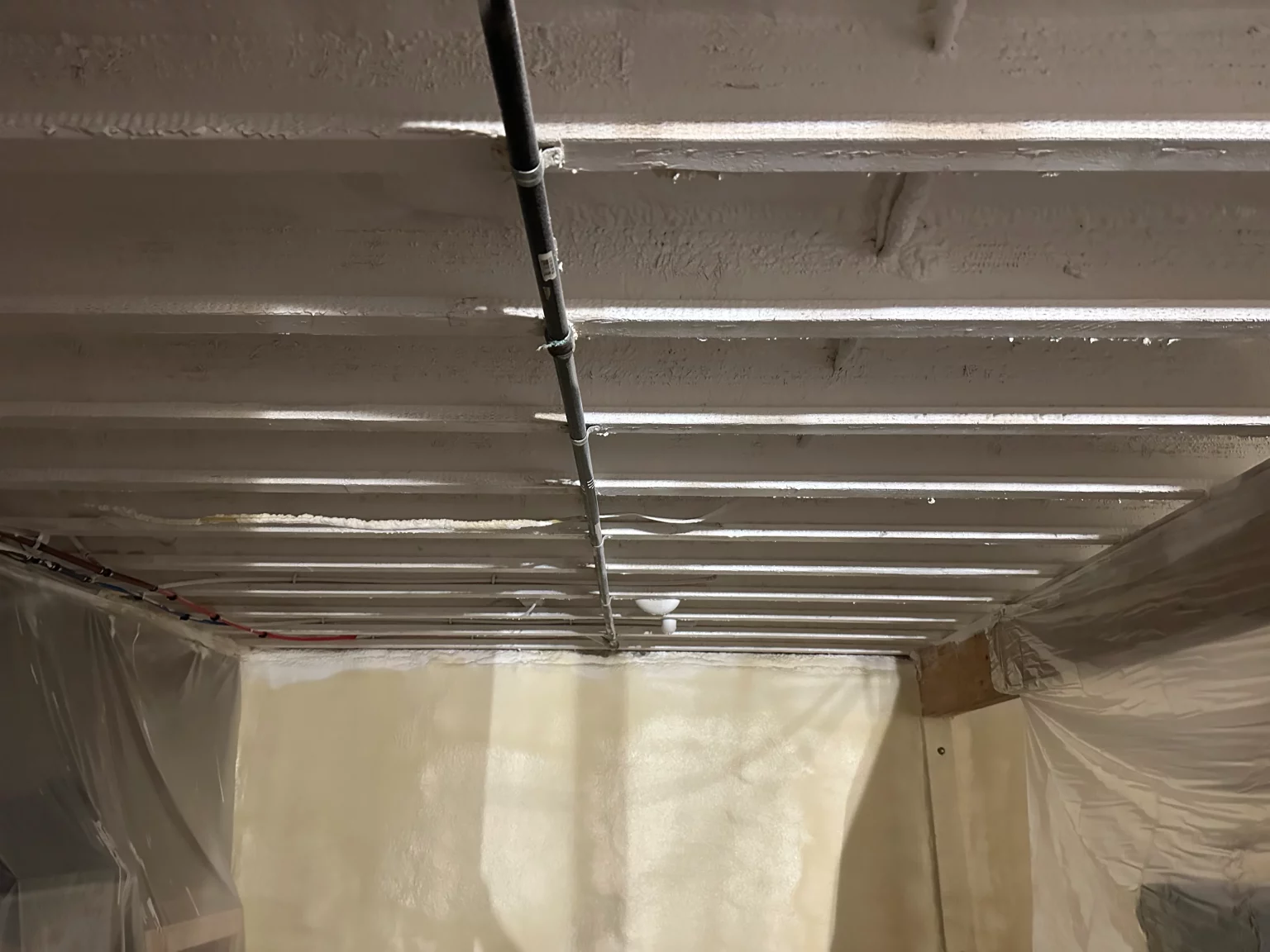
The thickness of intumescent paint required for maximum fire resistance depends on several interrelated factors, including the substrate type (steel, wood, or gypsum), the steel section’s weight-to-heated-perimeter ratio (W/D), the desired fire-resistance rating (typically 60 to 180 minutes), and the specific product’s tested performance data per ANSI/UL 263 and ASTM E119 standards. There is no single universal thickness. For structural steel in Worcester, MA, dry film thickness (DFT) typically ranges from 0.8 mm to 13 mm (30 to 500 mils), depending on those variables. The right thickness must align with Massachusetts building code requirements under 780 CMR and the Massachusetts Comprehensive Fire Safety Code (527 CMR 1.00), which is based on NFPA 1 – 2021 edition with state-specific amendments. Working with experienced professionals who understand how to match coating thickness to UL-listed steel sections is the most reliable way to achieve full code compliance and genuine fire protection in Worcester buildings.
Intumescent paint is a passive fire protection coating that looks like ordinary paint but contains a complex blend of chemicals held in a binder. When exposed to the heat of a fire, that binder melts and triggers a chemical reaction: the thin coating rapidly expands into a thick, insulating char layer. According to the Construction Specifier, these coatings swell to approximately 50 times their dry film thickness, forming a protective char up to 50 mm (2 inches) thick that insulates the underlying steel from heat.
Structural steel loses strength rapidly at high temperatures. Without fire protection, steel can reach its critical failure temperature and buckle or collapse, potentially bringing down an entire building. The intumescent char layer slows heat transfer, buying critical time for occupants to evacuate and for firefighters to respond. The key to that performance is applying the coating at the correct DFT, as specified by tested data. Too thin, and the char will not provide enough insulation. Too thick, and the expanded char may become too heavy, causing the coating to delaminate and fall away, leaving the steel completely exposed.
Building codes and fire safety standards dictate how intumescent coatings must perform and be applied. In Worcester and throughout Massachusetts, the relevant standards include:
ASTM E84 measures the flame-spread and smoke-development characteristics of the coating material itself. Intumescent paints typically achieve a Class A rating, the highest classification for flame resistance.
ASTM E119 and ANSI/UL 263 evaluate how long a building assembly, such as a coated steel beam or column, can endure fire before losing structural integrity. These are the standards that actually define the relationship between coating thickness and fire-resistance duration. UL 263 lists specific DFT requirements for various steel section sizes and shapes.
NFPA 251 and UL 1709 provide additional testing methods, with UL 1709 specifically addressing rapid-rise fire scenarios that reach 2,000°F within five minutes.
In Massachusetts, the Massachusetts State Building Code (780 CMR) adopts and amends the International Building Code, and all fire-resistance-rated construction must comply with its provisions. The Worcester Fire Department also enforces its own design standards, which reference 780 CMR, 527 CMR 1.0, and all standards contained therein.
The most important variable in determining how thick an intumescent coating needs to be is the steel member’s section factor, commonly expressed as the W/D ratio. As explained in research published by Structure Magazine, W/D is the ratio of the steel section’s weight (W, in pounds per lineal foot) to its heated perimeter (D, the total surface area exposed to fire, in inches).
The shape and orientation of the steel also matter. A fully exposed I-beam column has a different heated perimeter than the same I-beam used as a beam supporting a concrete slab, because the concrete acts as a heat sink on one face. Hollow structural sections (HSS) generally require significantly higher DFTs than similarly sized I-beams due to their thinner walls and different heat-transfer characteristics.
The table below illustrates how DFT requirements change based on the fire rating, steel profile, and section factor. Values are representative of typical UL 263 listings and will vary by specific product.
| Steel Profile | Section Orientation | W/D Ratio | 60-Min Rating DFT (mils) | 120-Min Rating DFT (mils) | 180-Min Rating DFT (mils) |
|---|---|---|---|---|---|
| I-beam Column (fully exposed) | Column Y | 0.40 | ~130 mils | ~230 mils | ~320 mils |
| I-beam Column (fully exposed) | Column Y | 0.80 | ~90 mils | ~160 mils | ~220 mils |
| I-beam Beam (concrete slab above) | Beam N | 0.55 | ~80 mils | ~200 mils | ~260 mils |
| I-beam Column (fully exposed) | Column Y | 1.20 | ~70 mils | ~120 mils | ~170 mils |
| HSS Column (fully exposed) | HSS Column Y | ~0.50 | ~150 mils | ~309 mils | ~400+ mils |
These figures demonstrate why accurate steel section identification is essential. A W10x39 used as a fully exposed column requires a 198-mil DFT for a 120-minute rating, while the same W10x39 used as a beam with a concrete slab above needs only 161 mils. That 23% difference comes entirely from orientation and heat exposure.
One of the most serious mistakes in fireproofing specification is using extrapolated DFT data for steel sections that are not explicitly listed in UL 263 or ASTM E119 test reports. When a steel section falls outside the tested range, some suppliers may estimate thickness requirements by interpolating between listed values. UL has explicitly stated that this practice falls outside its certification program scope and is not safe.
There are two dangerous outcomes from extrapolation:
When a steel section is not listed in UL 263, the correct approach is to select a different steel size or profile that is listed, or to use advanced fire engineering analysis to demonstrate that an alternate design meets the required performance. Structure Magazine notes that UL permits applying the minimum listed DFT for a specific steel section to a larger section (greater W/D), but never the reverse.
Different building types and occupancies in Worcester demand different fire-resistance ratings, which in turn drive coating thickness. The requirements below are based on typical code scenarios.
| Application Context | Typical Fire Rating Required | Coating Thickness Range | Key Considerations |
|---|---|---|---|
| New commercial construction (Type I-A) | 3 hours (180 min) | 200-500+ mils | Heaviest coating; requires multiple application passes |
| New commercial construction (Type I-B) | 2 hours (120 min) | 100-350 mils | Most common rating for mid-rise commercial buildings |
| Existing building retrofit / upgrade | 1-2 hours | 80-300 mils | Existing conditions may limit access and application methods |
| Light commercial / storage buildings | 1 hour (60 min) | 30-200 mils | Lighter coating loads; easier to apply in tight spaces |
| Residential (townhouse, 3+ units per Worcester FD) | 1 hour | 30-130 mils | Sprinkler requirements may also apply per 780 CMR |
| Exposed architectural steel | Varies | Per UL listing | Aesthetic topcoat applied over intumescent base |
Applying intumescent coating at the correct thickness is only half the equation. Verification is equally important. According to DeFelsko, a leading manufacturer of coating thickness measurement instruments, coating thickness for intumescent fire-resistive materials typically ranges from 30 to 500 mils, and the final DFT must be measured with a calibrated gauge after the coating has cured.
The National Fireproofing Contractors Association (NFCA) publishes quality assurance procedures requiring that final thickness be measured with a dry film thickness gauge in accordance with AWCI Technical Manual 12-B. Applicators use wet film gauges during application to check thickness before curing, then confirm with electronic dry film thickness gauges afterward. If the DFT falls short, additional coats are applied until the specified minimum is achieved.
Environmental conditions at the time of application also matter. Manufacturers specify acceptable ranges for temperature, relative humidity, and surface-to-dew-point differential. Applying coatings outside these ranges can compromise adhesion, which directly affects the coating’s ability to stay in place and expand properly during a fire.
New commercial construction in Worcester: Engage a fireproofing specialist during the design phase, before steel sections are finalized. This allows the structural engineer to select steel sizes that are UL-listed for the required fire rating, avoiding costly redesigns if certain sections fall outside the tested range.
Existing building retrofits: Have the current steel inventory surveyed and compared against UL listings. Existing conditions like limited access, surface condition, and proximity to other building systems will affect application method and achievable thickness.
Residential and light commercial: Verify whether the Worcester Fire Department requires sprinkler systems in addition to fire-resistive coatings. Townhouses with three or more units require automatic sprinkler systems per the Worcester FD design standards, which may reduce the fire-resistance rating required for structural elements.
Finding a contractor who understands intumescent coating thickness requirements, rather than one who simply applies paint, makes a significant difference in fire protection outcomes. Look for these indicators:
Lamothe Insulation and Contracting provides expert intumescent paint application services for commercial, residential, and industrial buildings throughout Worcester, MA. Our team understands the relationship between steel section profiles, coating thickness, and fire-resistance ratings, and we follow all applicable UL 263 listings and Massachusetts building code requirements to ensure your building meets compliance. Whether you are constructing a new facility or upgrading fire protection on an existing structure, we can assess your project and deliver results backed by proper testing and documentation.
Request a Free Quote | Schedule a Fire Protection Assessment
Call us at (508) 847-0119 or email [email protected] to discuss your fire protection needs.
The fire-resistance rating is determined by the dry film thickness applied to the steel member. Thicker coatings produce more insulating char during a fire, which delays the steel from reaching its critical failure temperature. Each product has specific DFT requirements tested per ASTM E119/UL 263 for each rating duration, from 30 minutes up to 4 hours.
No. Different steel section sizes, shapes, and orientations require different coating thicknesses even within the same building. A light HSS column and a heavy wide-flange beam will need different DFTs to achieve the same fire rating because their W/D ratios differ.
Yes. Excessive thickness can cause the expanded char to become too heavy during a fire, leading to coating delamination that exposes the steel with no protection. UL guidelines warn against exceeding the maximum published DFT for any listed steel section.
Massachusetts follows 780 CMR (State Building Code) and 527 CMR 1.00 (Comprehensive Fire Safety Code, based on NFPA 1, 2021 edition). Coatings must also comply with ASTM E84 for flame spread, ASTM E119 and ANSI/UL 263 for fire endurance, and any Worcester-specific fire prevention requirements.
After the coating cures, inspectors use calibrated electronic dry film thickness gauges to take measurements at multiple points on each steel member. The readings are compared against the specified DFT range from the UL listing, and results are documented for code compliance records.