How to Address Uneven Insulation Coverage With Open-Cell Spray Foam in Worcester, MA
Fixing uneven insulation coverage with open-cell spray foam in Worcester, MA starts with diagnosis, not with more foam. Our team…

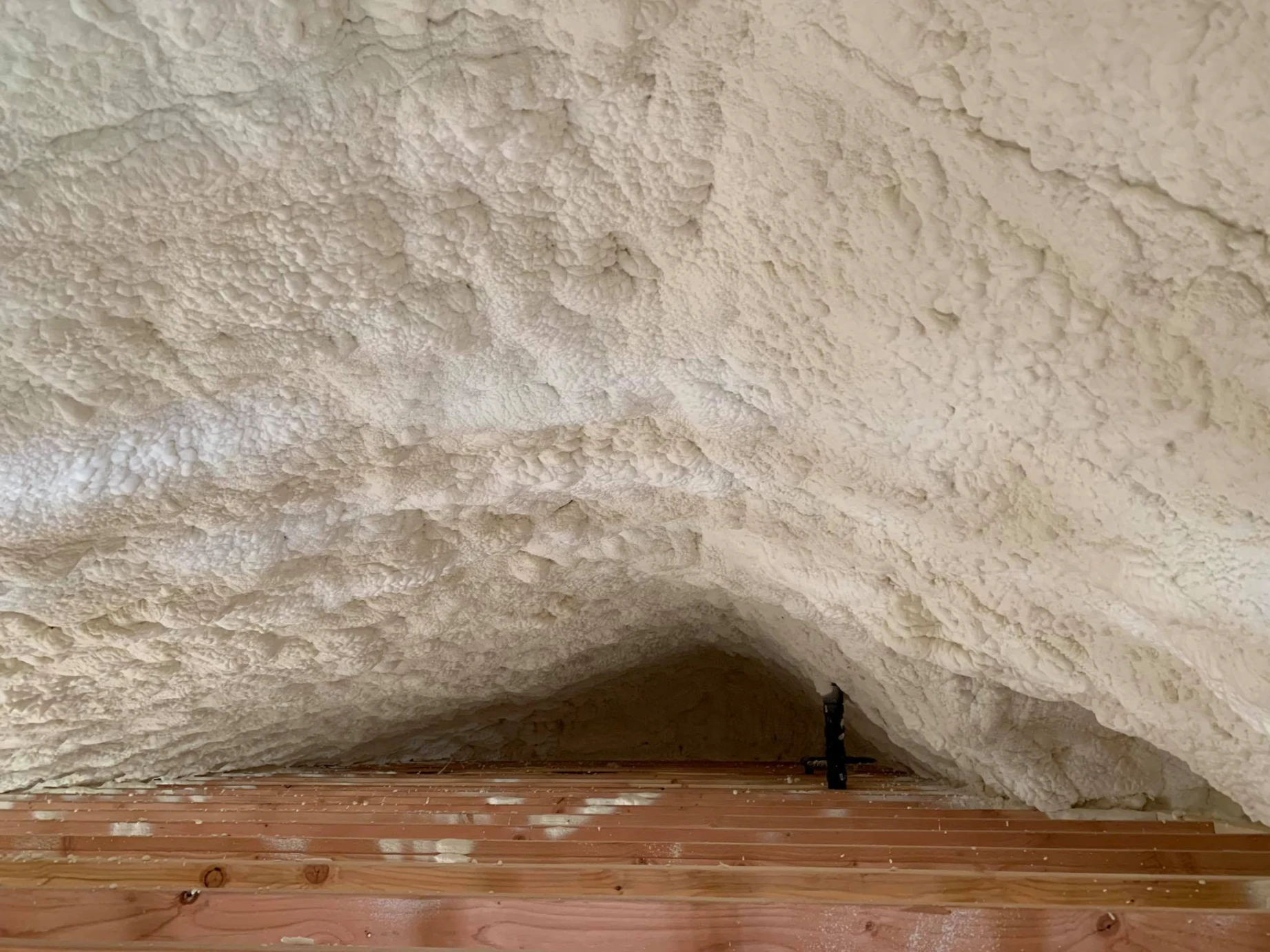
R-value is the standard measurement for how effectively insulation resists heat flow. The higher the R-value, the better the material slows down the transfer of heat between the inside and outside of a building. But R-value alone does not tell the full story of insulation performance. The right R-value for your project depends on your climate zone, the area of the home being insulated, the type of material installed, and whether air sealing and proper installation are part of the plan. Understanding these factors helps homeowners, builders, and contractors make decisions that lead to real energy savings, improved comfort, and long-term building durability.
R-value stands for thermal resistance. It quantifies how well a material or building assembly resists the flow of heat from a warm side to a cool side. According to the U.S. Department of Energy, an insulating material’s resistance to conductive heat flow is rated in terms of its thermal resistance, and the higher the R-value, the greater the insulating effectiveness. This rating depends on the type of insulation, its thickness, and its density.
Heat moves through buildings in three ways: conduction through solid materials, convection through air movement, and radiation across open spaces. Most common insulation materials work primarily by slowing conductive and convective heat flow. When you see an R-value printed on a product label, it represents the material’s performance under specific laboratory conditions. In practice, factors like temperature, moisture accumulation, aging, and installation quality all affect whether that rated R-value is actually achieved in the field.
Not all insulation materials deliver the same thermal resistance at the same thickness. The R-value per inch varies significantly between material types, which affects how much space is needed to reach a target R-value in a given wall cavity, attic, or floor assembly.
| Insulation Material | R-Value Per Inch | Common Applications | Notes |
|---|---|---|---|
| Closed-cell spray polyurethane foam | R-5.5 to R-6.5 | Walls, crawlspaces, rim joists | Also acts as an air and vapor barrier |
| Polyisocyanurate (rigid foam board) | R-5.6 to R-6.8 | Exterior continuous insulation, roofs | Face varies; foil-faced offers radiant benefit |
| Extruded polystyrene (XPS) | R-5.0 | Below-grade walls, foundations | Moisture resistant |
| Expanded polystyrene (EPS) | R-3.6 to R-4.2 | Exterior sheathing, insulated concrete forms | Lower-cost rigid foam option |
| Fiberglass batts | R-3.1 to R-4.3 | Wall cavities, attics, and floors | Most common residential insulation |
| Fiberglass loose-fill (blown) | R-2.2 to R-3.7 | Attics, existing wall cavities | Settling can reduce the effective R-value |
| Rock wool batts | R-3.0 to R-3.85 | Walls, fire-rated assemblies | Naturally fire-resistant |
| Cellulose loose-fill | R-3.1 to R-3.8 | Attics, dense-pack wall retrofits | Made from recycled paper |
| Open-cell spray foam | R-3.6 to R-3.7 | Wall cavities, sound isolation | Good air sealing, lower R per inch than closed-cell |
Data sourced from the Wikipedia R-value reference and the Department of Energy insulation materials guide.
The R-value you need is not uniform across the country. Colder climates demand higher insulation levels to prevent excessive heat loss, while milder climates require less. The ENERGY STAR recommended home insulation R-values provide a clear framework based on the International Energy Conservation Code climate zones.
| Climate Zone | Attic (Uninsulated) | Attic (3-4 Inches Existing) | Floor | Wall Cavity |
|---|---|---|---|---|
| 1 (Hot, humid) | R-30 to R-49 | R-19 to R-38 | R-13 | R-13 |
| 2 (Hot) | R-49 to R-60 | R-38 to R-49 | R-13 | R-13 |
| 3 (Warm) | R-49 to R-60 | R-38 to R-49 | R-19 | R-20 or R-13 + R-5 CI |
| 4 (Mixed) | R-60 | R-49 | R-19 | R-20 + R-5 CI or R-13 + R-10 CI |
| 5 (Cool) | R-60 | R-49 | R-30 | R-20 + R-5 CI or R-13 + R-10 CI |
| 6 (Cold) | R-60 | R-49 | R-30 | R-20 + R-5 CI or R-13 + R-10 CI |
| 7-8 (Very Cold) | R-60 | R-49 | R-38 | R-20 + R-5 CI or R-13 + R-10 CI |
CI stands for continuous insulation, applied to the exterior of wall framing to reduce thermal bridging through studs. Massachusetts, where Lamothe Insulation and Contracting operates, falls primarily in Climate Zones 5 and 6, meaning attics should target R-60, floors R-30, and walls should include both cavity insulation and continuous exterior insulation.
A common mistake is treating R-value as the single factor that determines insulation quality. As covered in Focus on Energy’s guide to R-values, the rated R-value is based on the type, thickness, and density of the insulation material, as well as temperature, moisture levels, and age. In real-world conditions, several factors can reduce the effective R-value well below what the label claims.
Thermal bridging occurs when heat bypasses insulation through framing members like wood studs and metal fasteners. A 2×4 wood stud has an R-value of about R-4.2, far lower than the insulation in the cavity next to it. Over a full wall assembly, thermal bridging can reduce effective R-value by 15 to 25 percent. Adding continuous insulation on the exterior of the framing interrupts this path and brings the overall assembly closer to the rated cavity R-value.
Compression dramatically reduces performance. If you stuff R-19 fiberglass batts designed for a 2×6 cavity into a 2×4 cavity, you compress the material and lower its effective R-value below what the label states. The same principle applies to any material: when insulation is compressed below its intended thickness, it cannot perform at its rated level.
Moisture and aging also degrade R-value over time. Some foam insulations are blown with gases that have lower thermal conductivity than air. As these gases diffuse out and are replaced by regular air, the R-value decreases. The insulation industry adopted the Long-Term Thermal Resistance (LTTR) method to account for this, rating foam products based on a 15-year weighted average rather than initial performance.
Air leakage is the factor that most often undermines insulation performance. Even a well-insulated wall with high R-value materials will underperform if air moves freely through gaps, cracks, and penetrations. Convective heat loss through air leaks can account for a significant portion of total energy loss, which is why air sealing is considered an essential companion to insulation. Learn more about how air movement impacts efficiency in our guide on preventing air intrusion with open-cell spray foam.
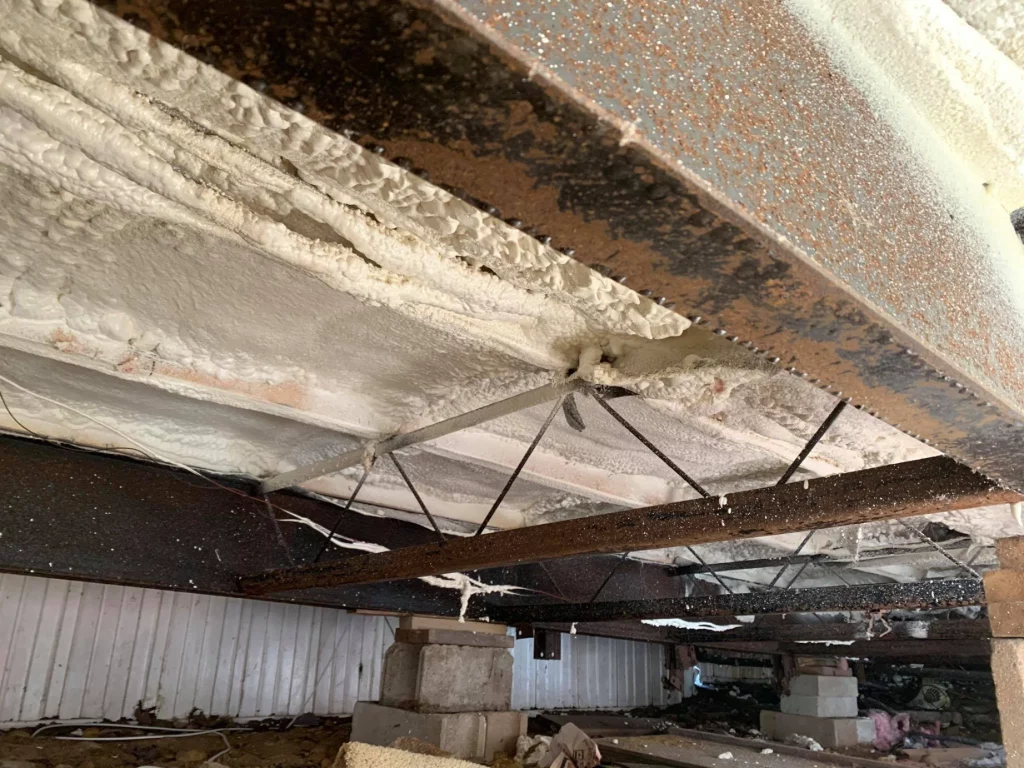
The practical impact of R-value shows up in monthly energy bills and day-to-day comfort. When insulation resists heat flow effectively, heating and cooling systems run less frequently and for shorter durations. The EPA estimates that homeowners can save an average of 15% on heating and cooling costs, or about 11% on total energy costs, by combining air sealing with proper insulation.
Beyond dollar savings, proper R-values improve comfort in ways that are harder to measure but immediately noticeable. Rooms feel more evenly heated or cooled, cold floors and drafty walls are reduced, and temperature swings between seasons are less severe. Buildings with appropriate R-values also experience fewer problems with condensation, which can lead to mold growth and structural damage over time.
Different situations call for different insulation strategies. Here is how R-value priorities shift depending on the project type.
| Scenario | Priority Areas | Recommended R-Value Targets | Best Material Choices |
|---|---|---|---|
| New construction | Attic, walls, foundation | R-49 to R-60 attic, R-20+ walls with CI | Spray foam, rigid foam CI, fiberglass batts |
| Existing home retrofit | Attic first, then walls | R-38 to R-60 attic, dense-pack walls | Blown cellulose or fiberglass, dense-pack cellulose |
| Basement/crawlspace | Rim joist, walls, floor | R-15 walls, R-19 floor, sealed rim joist | Closed-cell spray foam for rim joist, rigid foam walls |
| Renovation with siding removal | Wall cavities, continuous insulation | R-13 cavity + R-5 to R-10 CI | Blown-in cavity fill + rigid foam exterior |
| Attached garage or bonus room | Ceilings, shared walls | R-38 ceiling, R-19 walls | Fiberglass batts, blown insulation |
The single most impactful upgrade for most existing homes is adding insulation to an uninsulated or under-insulated attic. Because heat rises, the attic is often the largest source of energy loss, and it is also one of the most accessible areas to upgrade.
Choosing the right insulation approach is not just about hitting a number. A solid strategy shows up in several practical ways. A good insulation contractor will outline R-value goals and justify them based on your climate and construction type. We are addressing air sealing as part of the scope, not treat it as a separate concern. The materials and methods specified should be appropriate for the application, such as using closed-cell foam in areas prone to moisture and avoiding compressible batts in tight cavities.
You should expect clear documentation of the installed R-value, either through product labels, manufacturer data sheets, or blown-in density calculations. A reputable contractor will also discuss potential issues like thermal bridging, ventilation requirements in attic spaces, and vapor barrier placement based on your climate zone. Transparency about what the insulation can and cannot do, along with realistic expectations for energy savings, are strong indicators that you are working with professionals who understand building science.
Understanding R-values is the foundation of making smart insulation decisions, but translating those numbers into a properly installed, high-performing building envelope requires experience and expertise. Our team at Lamothe Insulation & Contracting evaluates each project individually, matching the right materials and R-value targets to your specific building, climate zone, and budget. We handle residential and commercial insulation projects throughout Massachusetts with a focus on quality installation and long-term performance.
Request a Quote | Schedule an Insulation Assessment
Call us at (508) 847-0119 or email [email protected] to discuss your project. The right insulation choices pay for themselves in comfort and savings year after year.
R-value stands for thermal resistance and is calculated by dividing the thickness of the insulation material by its thermal conductivity. It measures how effectively a material resists the flow of heat through it.
Not necessarily. Once you meet the recommended R-value for your climate zone and building area, the return on investment from adding more insulation diminishes. Proper installation, air sealing, and addressing moisture are often more important than exceeding R-value targets.
For most dense, non-compressible materials, R-values are additive, so doubling the thickness roughly doubles the R-value. However, for loose-fill insulation, compression under its own weight can cause the R-value per inch to decrease as thickness increases.
The Department of Energy and ENERGY STAR provide climate zone maps that divide the U.S. into eight zones based on temperature data. Massachusetts falls primarily in zones 5 and 6, which require higher R-values than warmer regions.
Yes. Some materials, particularly foam insulations that rely on blowing gases, lose R-value as those gases diffuse out and are replaced by air. Moisture accumulation, settling of loose-fill materials, and physical damage can also reduce effective R-value over the life of the building.