How Does Safe Insulation Disposal Protect Your Spencer Home During a Removal Project?
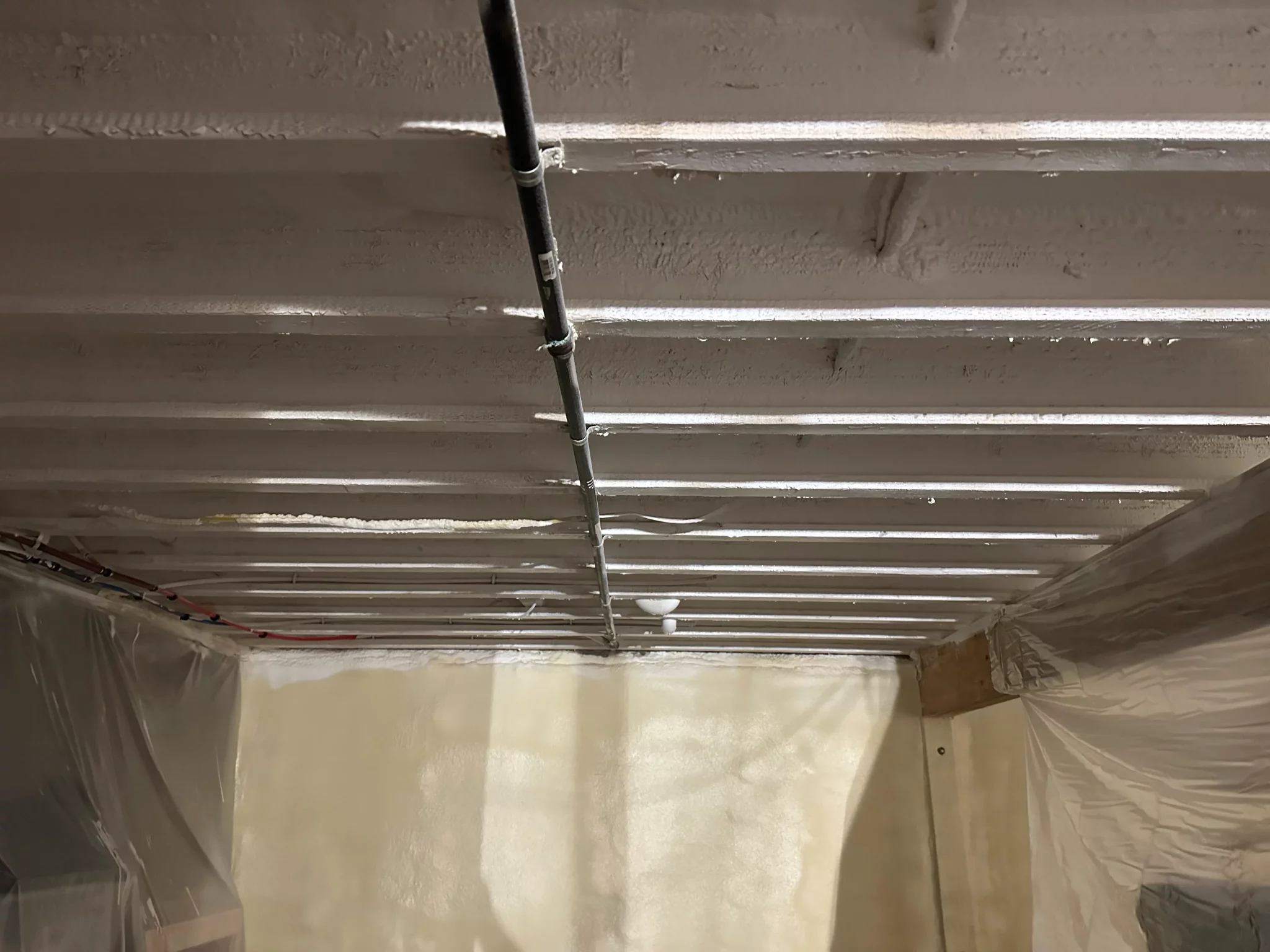
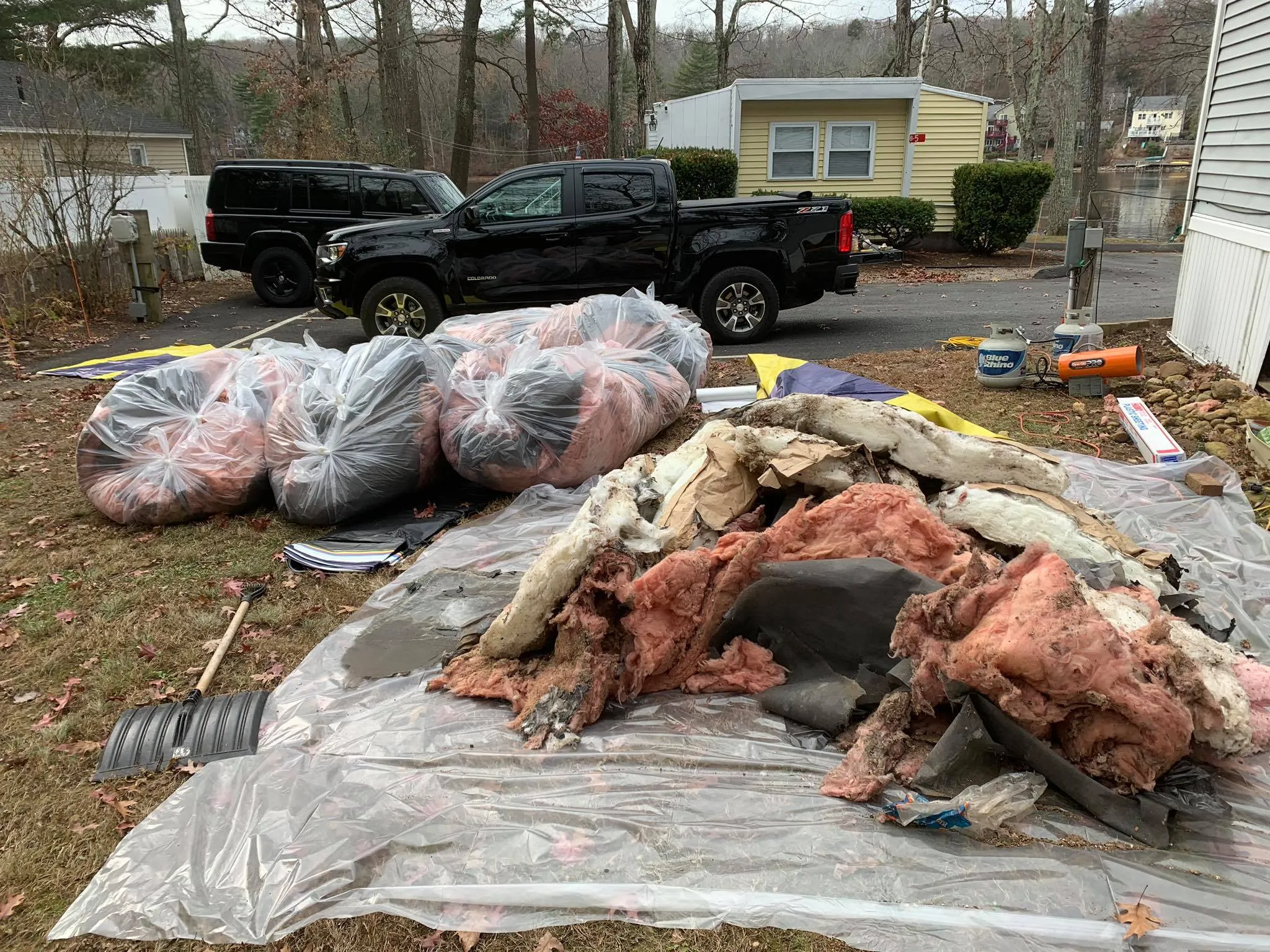
Safe insulation disposal keeps harmful fibers, dust, and possible asbestos out of your living space once the old material comes…


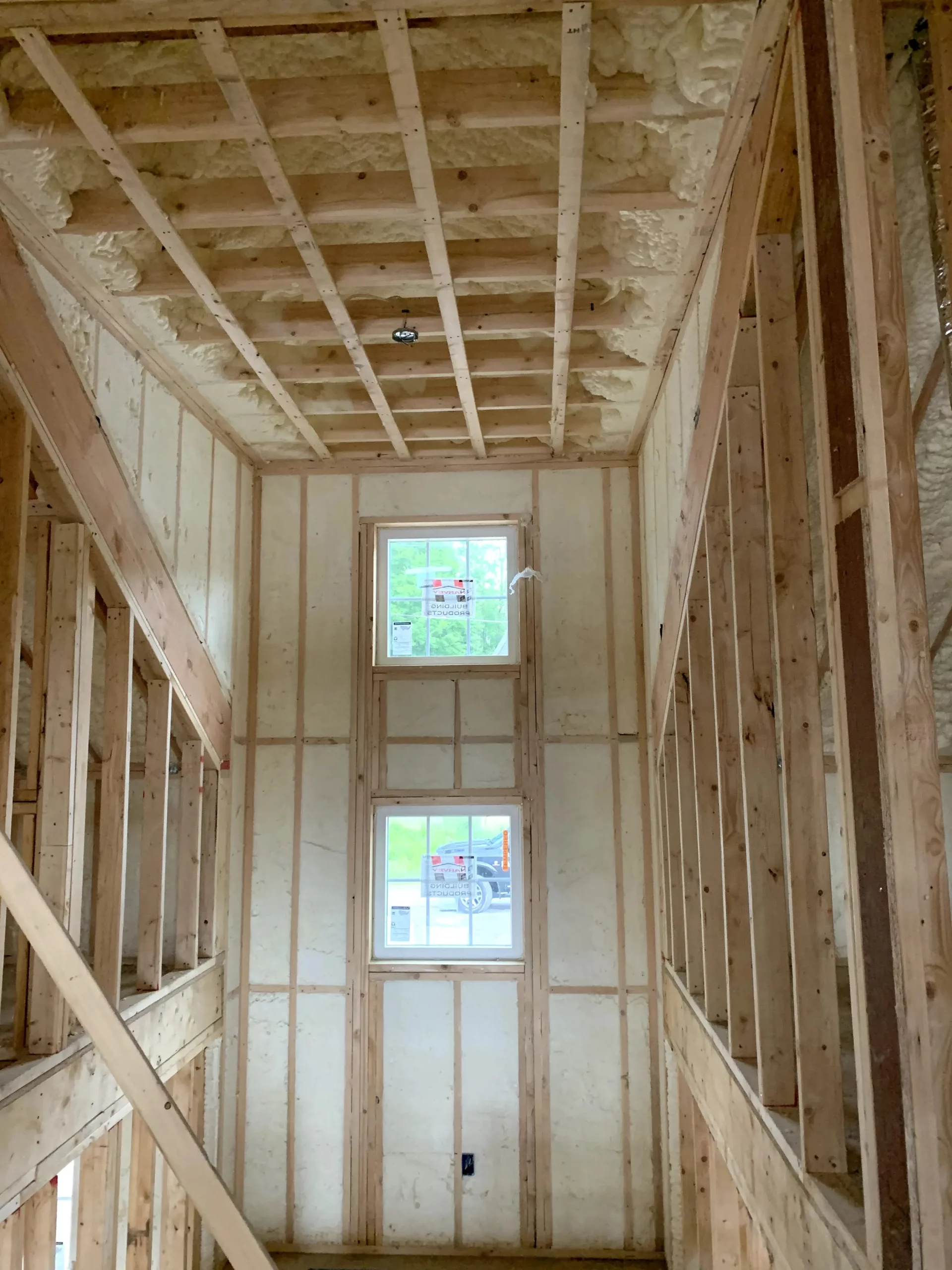
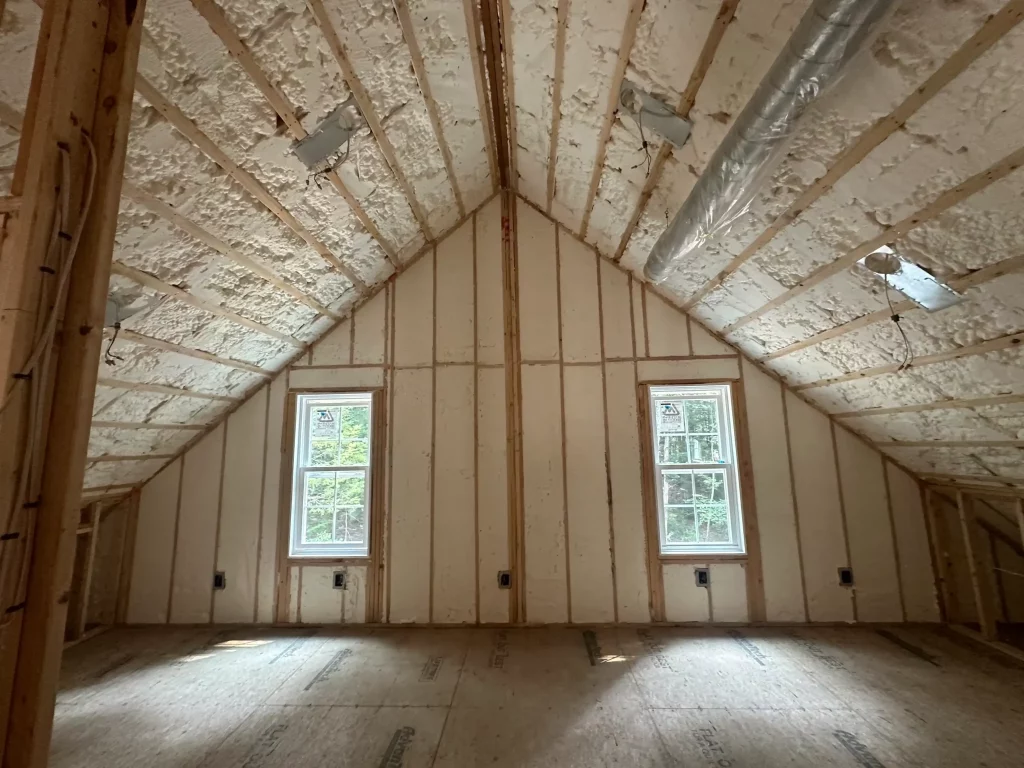
Open-cell spray foam insulation slows heat transfer through attic rooflines by creating a continuous air barrier and high-performance thermal seal directly against the underside of the roof deck. Applied as a liquid, it rapidly expands into hard-to-reach rafter bays, gaps, and crevices to stop warm air exfiltration and reduce conductive heat loss in one step. This effective thermal envelope cuts winter heat loss, maintains more consistent indoor temperatures, and minimizes the roofline warm spots that lead to ice dams in Brimfield homes.
Heat leaves a house through the roofline in two ways. Warm indoor air leaks upward through recessed lights, attic hatches, and gaps where walls meet the ceiling. Heat also conducts outward through thin or settled spray foam insulation in Brimfield, MA, and into the roof deck. Once that warmth reaches snowy shingles from below, it melts snow, and the meltwater refreezes along the cold eaves as ice dams. Building Science Corporation notes that in cold climates, this heat loss is typically a mix of air leakage and conduction. It’s a familiar winter cycle in Brimfield, where long freezes, heavy snow, and older capes, farmhouses, and colonials with unfinished attics give it every chance to repeat.
Sprayed as a liquid, open-cell foam expands on contact and bonds to sheathing, rafters, and every corner between them. Here’s what that does to heat movement.
Most winter heat loss is moving air, so foam’s first job is shutting airflow down. As it expands, it fills rafter bays and closes the bypasses that loose-fill batts and blown material leave around wiring, chases, and framing. Unlike cut batts, open-cell insulation flows into odd corners and irregular bays, keeping coverage continuous where roof framing gets tricky. Conduction slows too. The U.S. Department of Energy lists open-cell polyurethane spray foam at about R-12.6 at 3.5 inches, roughly R-3.6 per inch, and we size the final depth to the R-value your roof assembly needs and what current code asks for.
Spraying the roofline instead of the attic floor moves the thermal boundary up to the roof deck, an unvented design Building Science Corporation credits with comfort, energy, and durability benefits. That matters because leaky attic ductwork alone can waste about 20 percent of the air moving through a system. Indoors, the payoff shows up as fewer cold ceilings, steadier room-to-room temperatures, and second-floor rooms that stop swinging cold.
Foam at the roofline isn’t the only way to insulate an attic, and it isn’t always the right one. Here’s how the main options stack up.
| Option | Where It Insulates | Air Sealing | Approx. R-Value | Best Fit |
|---|---|---|---|---|
| Open-cell foam at the roofline | Underside of roof deck | Continuous seal | R-3.6 per inch | Attics with ducts, ice dam trouble, finished spaces |
| Blown-in at the attic floor | Attic floor | Minimal | Set by depth | Simple, open attics without ductwork |
| Closed-cell foam at the roofline | Underside of roof deck | Continuous seal | R-6.5 per inch | Tight bays needing high R per inch |
Blown-in material on the attic floor stays the sensible call for plain, open attics. The roofline approach earns its cost when ductwork runs overhead, knee-wall rooms stay cold, or ice dams keep coming back. Closed-cell packs more R-value per inch, though U.S. Department of Energy cost figures show it generally costs more per unit of R-value than open-cell.
Cold-climate rooflines need more than foam in the bays. These points separate a job that lasts from one that causes trouble later.
Run through this list before anyone signs a contract.
If you’ve been searching for an open-cell spray foam insulation contractor Brimfield MA homeowners can actually reach, we’re close by. Lamothe Insulation & Contracting is family-owned, based in nearby Spencer, insulating Central Massachusetts homes since 2019.
Every quote is free, and our open-cell foam services cover attics, walls, and crawl spaces across the region. Call (508) 847-0119 or email [email protected] to book a free attic walkthrough.
In most cases, 24 to 48 hours, once the foam has cured and the space has been ventilated.
Installed correctly, it can last for the life of the home, often 20 to 30 years or more.
Yes. Its soft, open structure absorbs sound, so many homeowners notice less street, storm, and room-to-room noise.
While open-cell foam can absorb moisture if directly exposed to standing water, proper installation with appropriate vapor retarders prevents water penetration and moisture buildup.
Yes, open-cell foam can be applied year-round, provided the substrate and ambient temperatures meet the manufacturer’s specifications during installation.