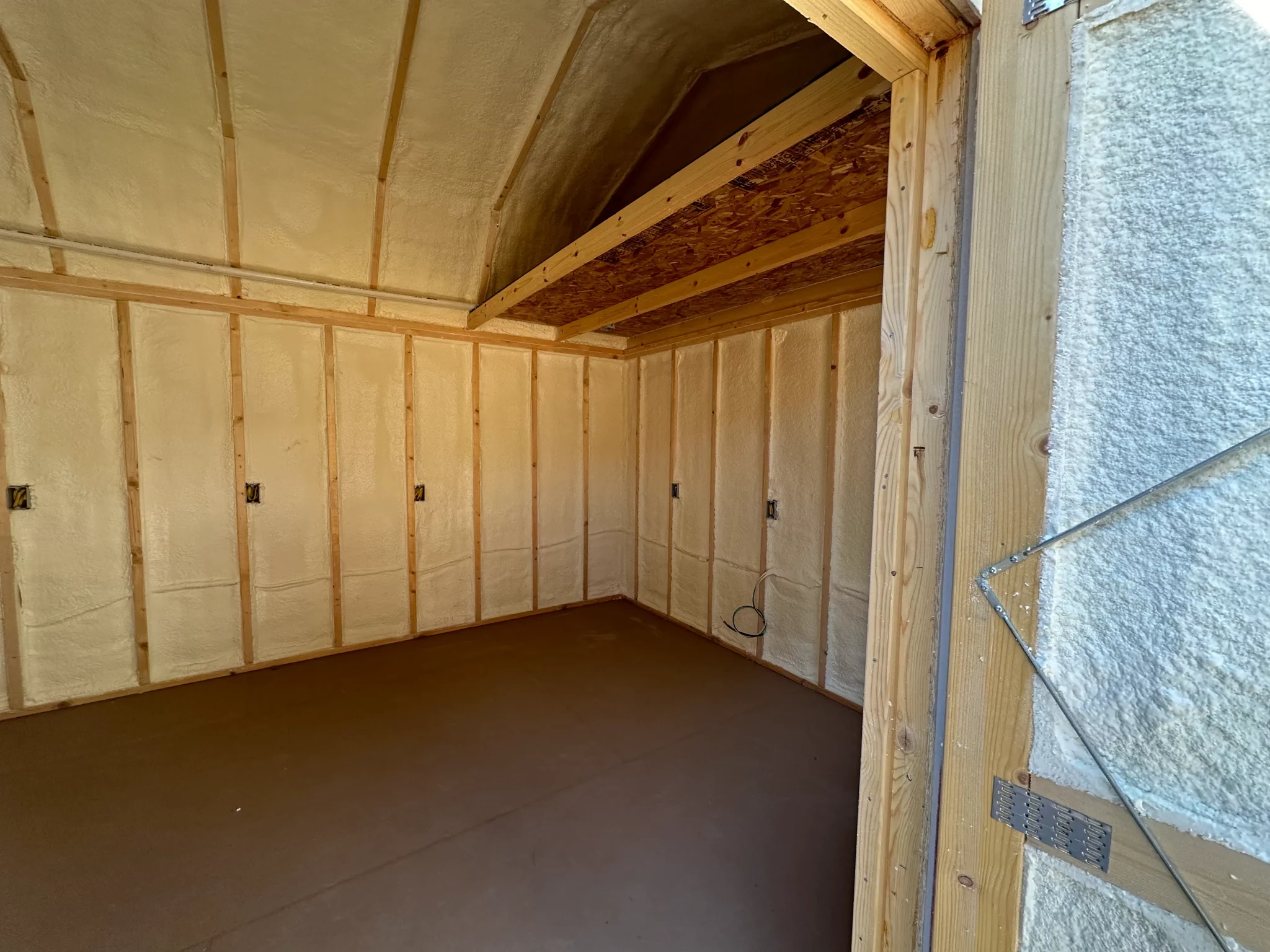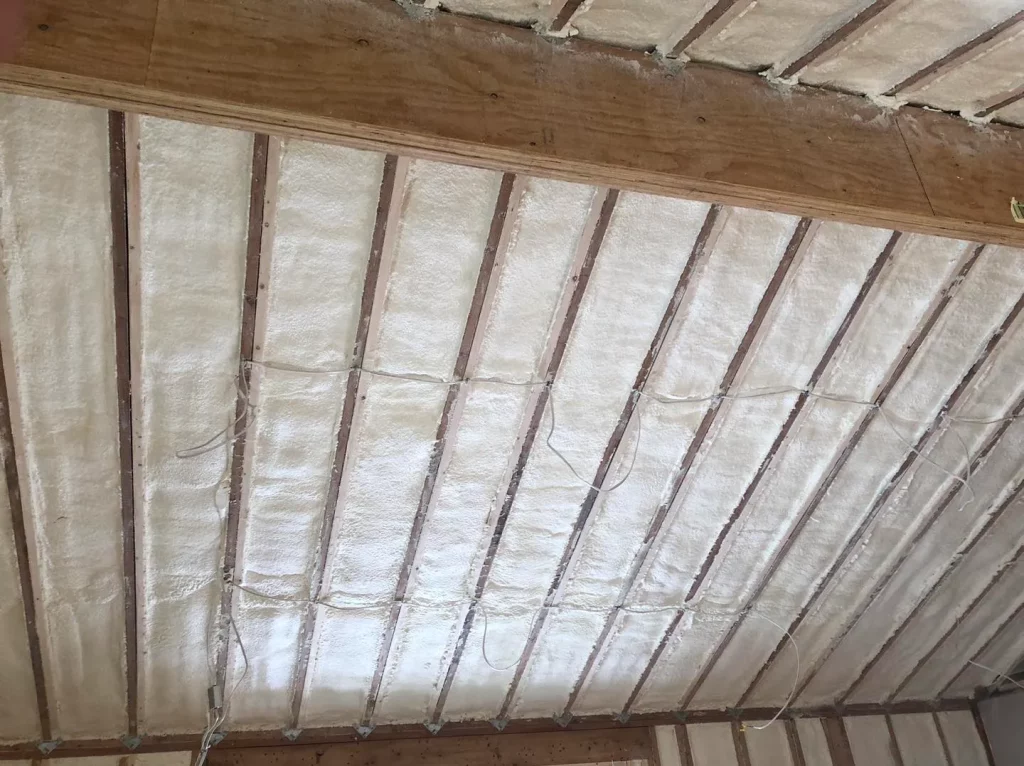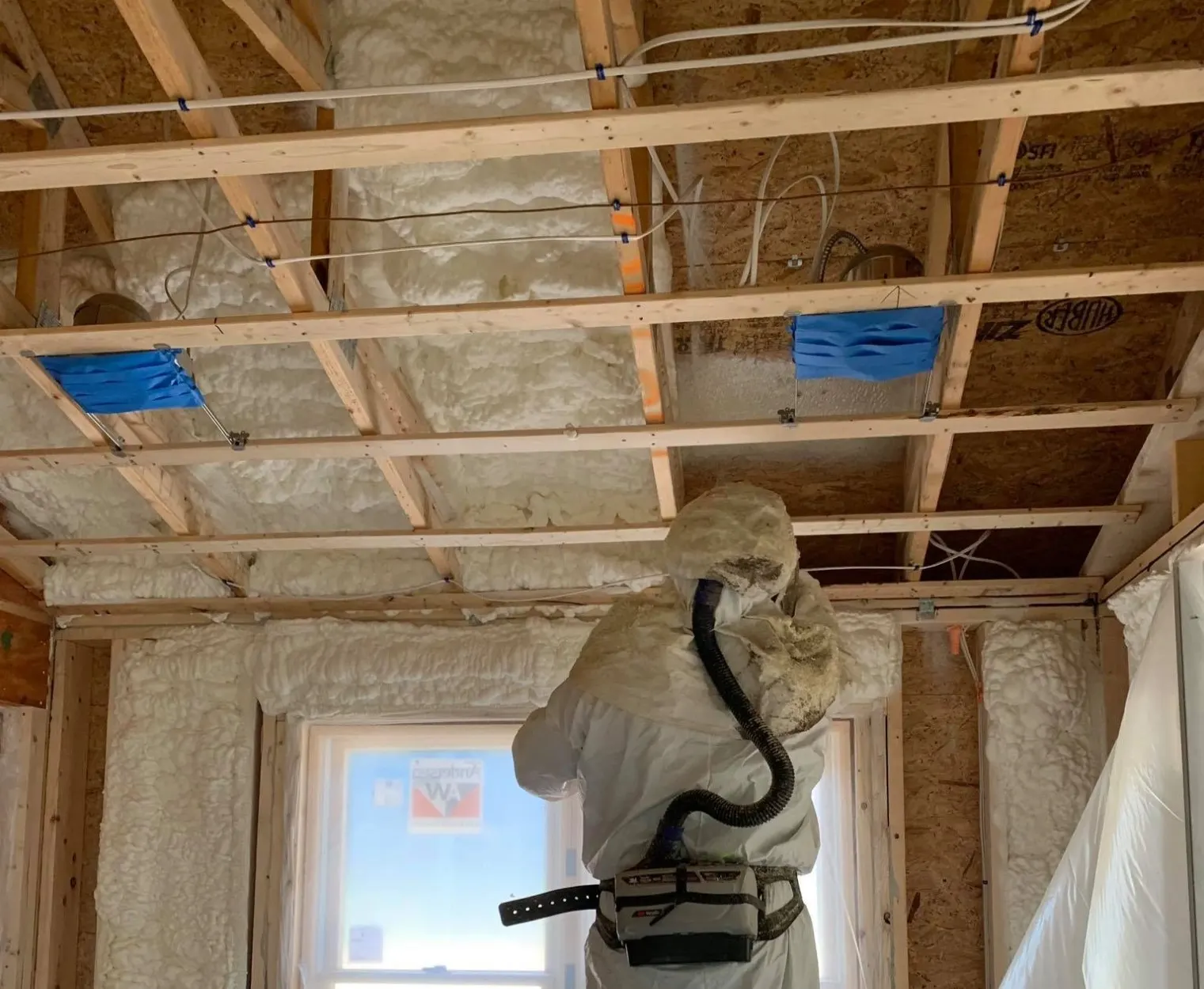
How to Address Uneven Insulation Coverage With Open-Cell Spray Foam in Worcester, MA
Fixing uneven insulation coverage with open-cell spray foam in Worcester, MA starts with diagnosis, not with more foam. Our team…


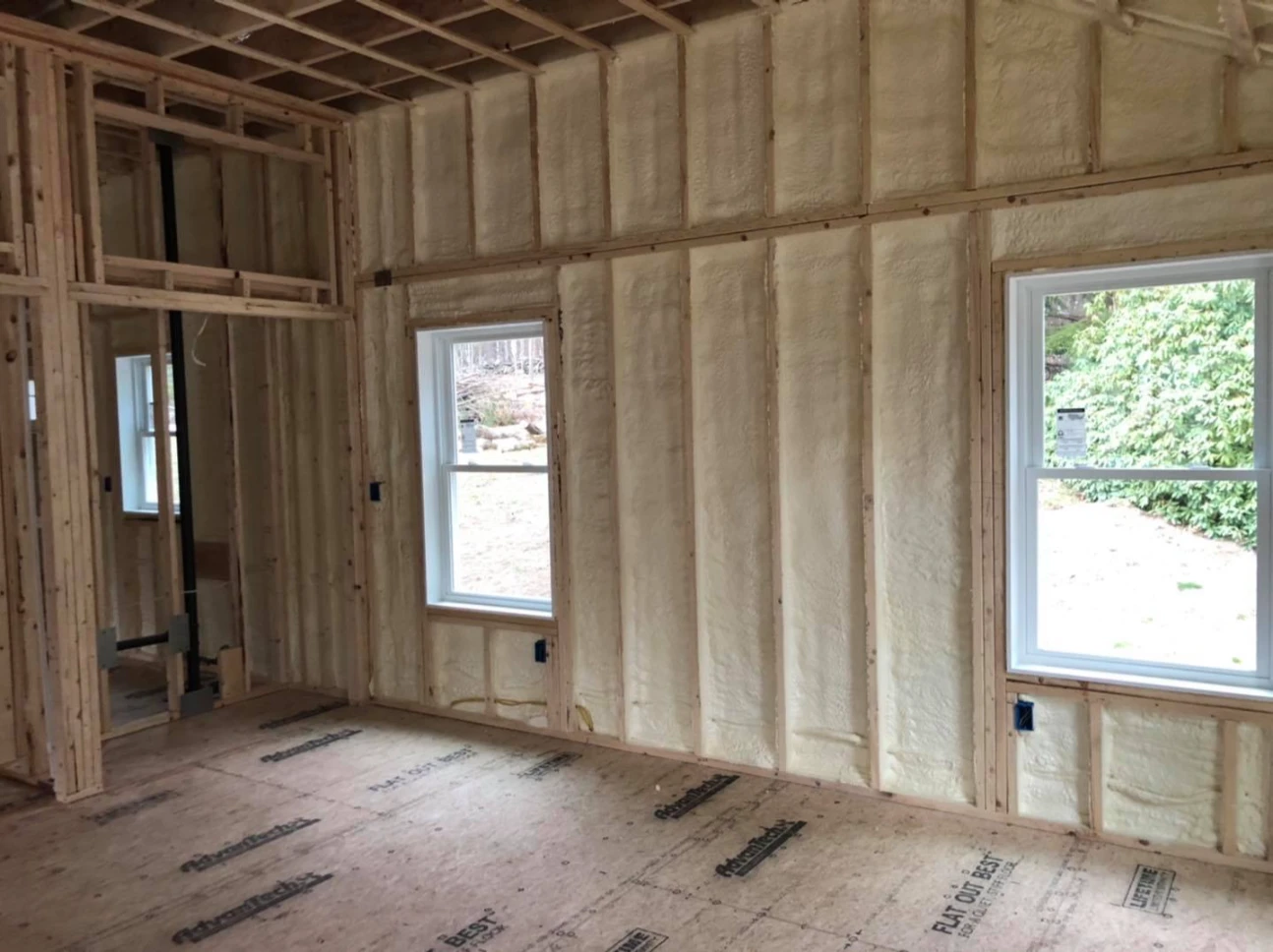
Closed-cell spray foam insulation protects properties in Putnam, CT, from moisture damage by creating an airtight seal and acting as a Class I vapor retarder, preventing water vapor from passing through walls, ceilings, and crawl spaces where it can condense, promote mold growth, and rot structural wood. This aligns with proven methods of moisture control with spray foam, which focus on stopping vapor at the source. Because Putnam sits in Climate Zone 5, where winter temperatures regularly drop below freezing, the interior-exterior temperature differential drives moisture from warm indoor air into wall cavities. Closed-cell spray foam, with its dense cellular structure and permeance rating below 1.0 perm at just 1.5 to 2 inches of thickness, blocks that vapor diffusion at the source while also insulating the assembly to keep wall cavities above the dew point.
Putnam, Connecticut, experiences the full range of New England weather: cold, dry winters with temperatures frequently in the 20s and teens Fahrenheit, humid summers, and seasonal rain events that saturate the ground around foundations. The combination of heating indoors during winter and cold exterior surfaces creates a strong vapor drive from the interior of the home outward through the building envelope.
When warm, moist indoor air contacts cold surfaces inside a wall cavity, it reaches its dew point and condenses into liquid water. This condensation accumulates on framing, sheathing, and insulation. Over time, that moisture leads to wood rot, degraded insulation performance, and mold growth. The Department of Energy confirms that air sealing and moisture control are critical to home energy efficiency, health, and comfort, noting that insulation must work alongside proper moisture management strategies.
Older homes in northeastern Connecticut are particularly vulnerable because many were built before modern vapor barrier requirements existed. These homes often have balloon framing, no sill plate sealing, and fiberglass batt insulation that does little to stop air movement or vapor diffusion.
Closed-cell spray foam is a two-component polyurethane system applied on-site that expands and cures into a rigid, dense material with gas-filled closed cells. The cell walls are intact, meaning water vapor cannot pass through them the way it passes through the open, interconnected cells of open-cell foam or the loose fibers of fiberglass batts.
According to Building Science Corporation research, closed-cell spray foam applied at densities of approximately 2 pounds per cubic foot or more, in thicknesses over 2 inches, will effectively control vapor diffusion condensation. The foam achieves this by bringing its permeance rating well below 1.0 perm, which places it in Class I vapor retarder territory (0.1 perms or less).
For context, the Insulation Institute explains that Class I vapor retarders include materials like 0.002-inch polyethylene sheeting (0.16 perms) and aluminum foil (0.01 perms). Closed-cell spray foam at adequate thickness matches or exceeds these performance levels while also providing thermal insulation, something a sheet of polyethylene cannot do.
Moisture moves through building assemblies by two primary mechanisms: vapor diffusion and air leakage. Air leakage is actually the larger moisture transport mechanism in most homes. Warm indoor air leaking through gaps around windows, electrical boxes, rim joists, and framing carries significant amounts of water vapor into wall and ceiling cavities.
Closed-cell spray foam adheres directly to the substrate it is sprayed against, whether that is wood framing, concrete, masonry, or metal. This adhesion seals cracks, gaps, and penetrations that would otherwise allow air (and the moisture it carries) to pass through. The foam simultaneously serves as insulation, air barrier, and vapor retarder in a single application.
Beyond vapor diffusion and air leakage, closed-cell spray foam also resists bulk liquid water. The closed-cell structure means the foam itself does not absorb water. If a pipe leaks inside a wall insulated with closed-cell foam, the foam will not soak up and retain the water the way fiberglass, cellulose, or open-cell foam would. This characteristic limits the spread of water damage and gives homeowners a longer window to discover and repair leaks before structural damage occurs.
The table below compares how common insulation types perform against moisture in cold climates like Putnam’s:
| Insulation Type | R-Value per Inch | Air Barrier | Vapor Barrier | Absorbs Water | Best For |
|---|---|---|---|---|---|
| Closed-Cell Spray Foam | R-6 to R-7 | Yes | Yes (Class I at 2″) | No | Walls, crawlspaces, basements, rim joists |
| Open-Cell Spray Foam | R-3.5 to R-3.7 | Yes | No (vapor permeable) | Yes | Interior walls, sound control |
| Fiberglass Batts | R-2.9 to R-3.8 | No | No | Yes | Non-moisture-critical cavities |
| Mineral Wool Batts | R-3.3 to R-4.2 | No | No | Minimal (drains) | Fire-rated assemblies, walls |
| Extruded Polystyrene (XPS) | R-5.0 | No (depends on sealant) | Yes (Class II) | No | Below-grade, foundation walls |
| Cellulose (blown-in) | R-3.1 to R-3.8 | No | No | Yes (absorbs heavily) | Attics, existing wall cavities |
As the comparison shows, closed-cell spray foam is the only material that provides high R-value per inch, air barrier properties, vapor retarder capabilities, and water resistance in a single product. This makes it particularly well-suited for the moisture challenges in Climate Zone 5.
Putnam County falls squarely within Climate Zone 5 under the DOE climate zone map, which governs insulation and vapor retarder requirements in the International Energy Conservation Code (IECC) and the International Residential Code (IRC).
For moisture control specifically, the IRC requires either a Class I or Class II vapor retarder on the interior side of frame walls in Climate Zones 5 through 8. The Insulation Institute confirms that Class I vapor retarders are rated at 0.1 perms or less, while Class II covers materials rated between 0.1 and 1.0 perms.
Closed-cell spray foam at 1.5 to 2 inches of thickness meets both Class I and Class II requirements, meaning it satisfies the code-mandated vapor retarder without needing a separate layer of polyethylene, kraft facing, or vapor-retardant paint. For builders and homeowners in Putnam, this simplifies construction and reduces the risk of installation errors where a vapor barrier sheet is torn, incompletely sealed, or installed on the wrong side of the wall.
The ENERGY STAR recommended R-values for Climate Zone 5 are:
Closed-cell spray foam can help achieve these targets in thinner profiles than competing materials, which is valuable in older Putnam homes with shallow wall cavities or limited attic space.
| Scenario | Home Type | Problem | Solution | Outcome |
|---|---|---|---|---|
| 1940s Colonial in Putnam | Two-story, balloon-framed | Moisture staining on first-floor ceiling, musty odor from crawl space | 2 inches of closed-cell foam on crawl space walls and rim joist | Eliminated moisture intrusion, musty odor resolved within weeks |
| 1980s Ranch near Woodstock | Single-story, basement | Condensation on basement walls in winter, efflorescence on concrete | Closed-cell foam is directly applied to the basement walls from floor to ceiling | The wall surface temperature rose above the dew point, and condensation stopped |
| New Construction in Pomfret | Custom home, 2×6 walls | Builder wants to meet IECC 2021 and avoid a separate vapor barrier | Closed-cell foam in wall cavities combined with R-5 mineral wool continuous insulation | Single-pass vapor retarder and air barrier, passed code inspection |
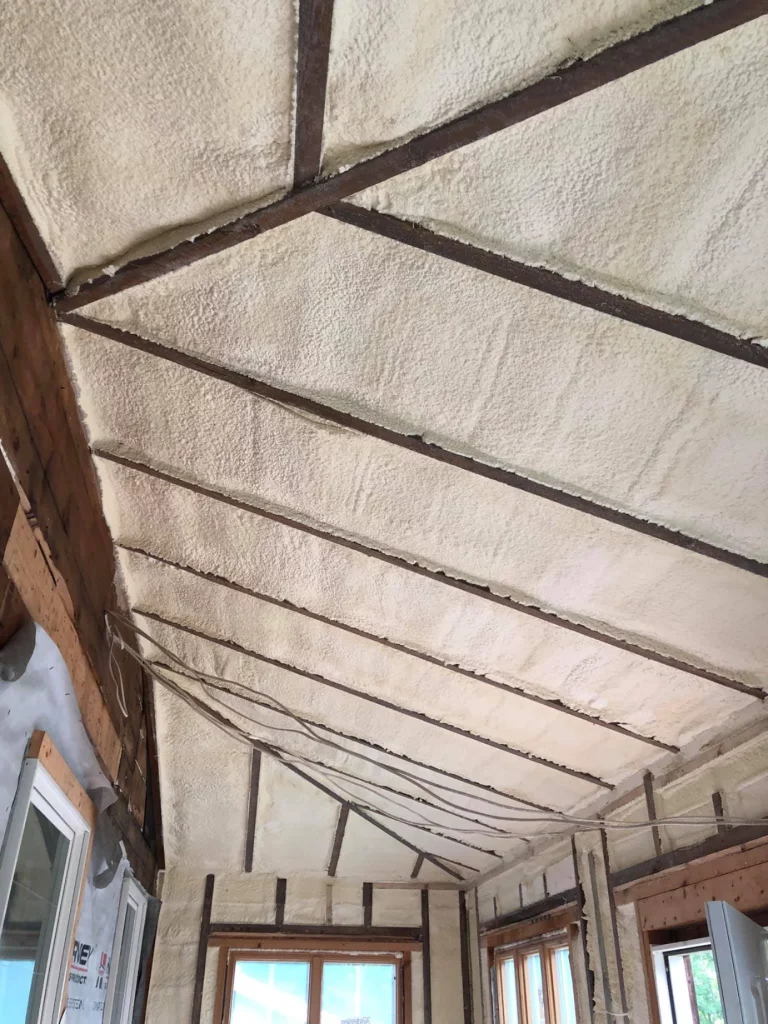
| Cape near Danielson | Partially finished attic | Ice dams are forming, attic insulation is compressed fiberglass | Closed-cell foam at the roof deck line (hot roof approach) | Ice dams eliminated, attic space became usable conditioned storage |
| 1970s Split-Level in Thompson | Unconditioned crawlspace | High humidity, damp fiberglass insulation, visible mold on joists | Removed old insulation, applied 2 inches of closed-cell foam to the crawlspace walls and subfloor | Humidity dropped below 50%, mold growth stopped, floor above warmed noticeably |
The effectiveness of closed-cell spray foam as a moisture barrier depends on several variables that our team evaluates on every project:
1. Foam Thickness
Thickness is the single most important variable. Closed-cell spray foam below 1 inch of thickness does not achieve low enough permeance to qualify as an effective vapor retarder. At 1.5 to 2 inches, the foam drops below 1.0 perm. At thicknesses beyond 2 inches, it enters Class I territory (below 0.1 perm). Our crews measure thickness during and after application to verify compliance.
2. Installation Quality
Proper surface preparation and temperature control during application are non-negotiable, as detailed in the Building Science Corporation Residential Spray Foam Guide.
3. Application Location
The moisture challenge varies by location within the building. Rim joists, crawl spaces, basement walls, and roof decks each present different vapor drive conditions. In Putnam’s Climate Zone 5, rim joists are one of the most common sources of air leakage and moisture intrusion because they are often left uninsulated or insulated with fiberglass that allows air to pass through.
4. Building Age and Construction Type
Older homes with balloon framing, no vapor barriers, and degraded sheathing need a comprehensive approach. Closed-cell foam can address many of these issues, but existing water damage, insect activity, or structural rot must be resolved before insulation is applied. Spraying foam over rotted wood traps moisture against the failing material and accelerates deterioration.
5. Ventilation and Mechanical Systems
Any home that receives closed-cell spray foam must have adequate mechanical ventilation. The airtight seal that makes the foam so effective at moisture control also means the home no longer gets “accidental” ventilation through gaps and cracks. Without planned ventilation, indoor humidity can build from cooking, bathing, and breathing, creating moisture problems on the interior side of the envelope.
Based on our experience insulating homes across Windham County, here are the steps homeowners and builders should follow:
1. Assess the building envelope before insulating
Conduct a thorough inspection of all areas to be insulated. Look for existing water damage, active leaks, pest activity, and structural issues. Address every deficiency before foam is applied. Applying closed-cell foam over a damp surface or against rotting wood traps moisture and compounds the problem.
2. Prioritize rim joists and crawl spaces
These areas are the weakest links in most northeastern Connecticut homes. Rim joists at the top of the foundation are often insulated with fiberglass that sags and does not seal. Two inches of closed-cell spray foam applied to the rim joist band eliminates the air leakage pathway and provides both the insulation R-value and the vapor retarder needed in one pass.
3. Match foam thickness to the application
For rim joists and crawl space walls, a minimum of 2 inches provides adequate vapor retarder performance and roughly R-12 to R-14 of insulation. For basement walls where a finished interior is planned, 2 to 3 inches provides a combination of insulation, air sealing, and moisture control that eliminates the need for separate framing and fiberglass batts.
4. Plan for mechanical ventilation
After air sealing with closed-cell foam, the home’s natural air exchange rate drops significantly. Install or verify the operation of mechanical ventilation, such as an ERV (energy recovery ventilator) or HRV (heat recovery ventilator), to manage indoor humidity levels and maintain healthy air quality year-round.
5. Coordinate with other building envelope improvements
Closed-cell spray foam works as part of a system. Pair it with proper drainage around the foundation, functional gutters and downspouts, and well-maintained exterior cladding. No insulation product can compensate for water management failures outside the building envelope.
Lamothe Insulation & Contracting has extensive experience installing closed-cell spray foam in Putnam, CT, and the surrounding Windham County communities. Our team evaluates each building’s specific moisture risks, recommends the right foam thickness for every application, and installs according to the standards required in Climate Zone 5. We combine building science knowledge with hands-on installation expertise to protect your home from condensation, mold, and rot for the long term.
Request a Quote for your insulation project by calling (508) 847-0119 or emailing [email protected]. We provide detailed assessments and transparent pricing tailored to your home’s needs.
Schedule a Moisture Assessment to identify where your home is vulnerable to moisture intrusion and learn exactly how closed-cell spray foam can address those problem areas before damage progresses.
At what thickness does closed-cell spray foam become a vapor retarder?
Closed-cell spray foam achieves a permeance rating below 1.0 perm (Class II vapor retarder) at approximately 1.5 to 2 inches of thickness, and qualifies as a Class I vapor retarder (below 0.1 perm) at thicknesses beyond 2 inches.
Can closed-cell spray foam be installed over existing fiberglass insulation?
We generally recommend removing old fiberglass insulation before applying spray foam, especially if the existing insulation shows signs of moisture damage, mold, or pest activity, because spray foam over compromised materials can trap moisture and conceal worsening conditions.
Does closed-cell spray foam prevent mold growth?
Closed-cell spray foam itself does not support mold growth because it is an inert plastic material that does not provide a food source for mold, and by blocking moisture entry into wall cavities, it removes the primary condition mold needs to develop on surrounding wood and building materials.
Is closed-cell spray foam worth the higher cost compared to fiberglass?
For homes in Putnam’s Climate Zone 5, closed-cell spray foam provides vapor retarder, air barrier, and insulation in a single application that fiberglass cannot match, making it a cost-effective choice when factoring in moisture damage prevention, energy savings, and reduced need for additional building materials.
Can closed-cell spray foam be used in vented attics?
Closed-cell spray foam is most commonly used in unvented attic assemblies (applied directly to the roof deck) where it creates an air-sealed and insulated envelope, but in vented attics it is more typically applied at the attic floor and rim joist areas rather than the roof deck.