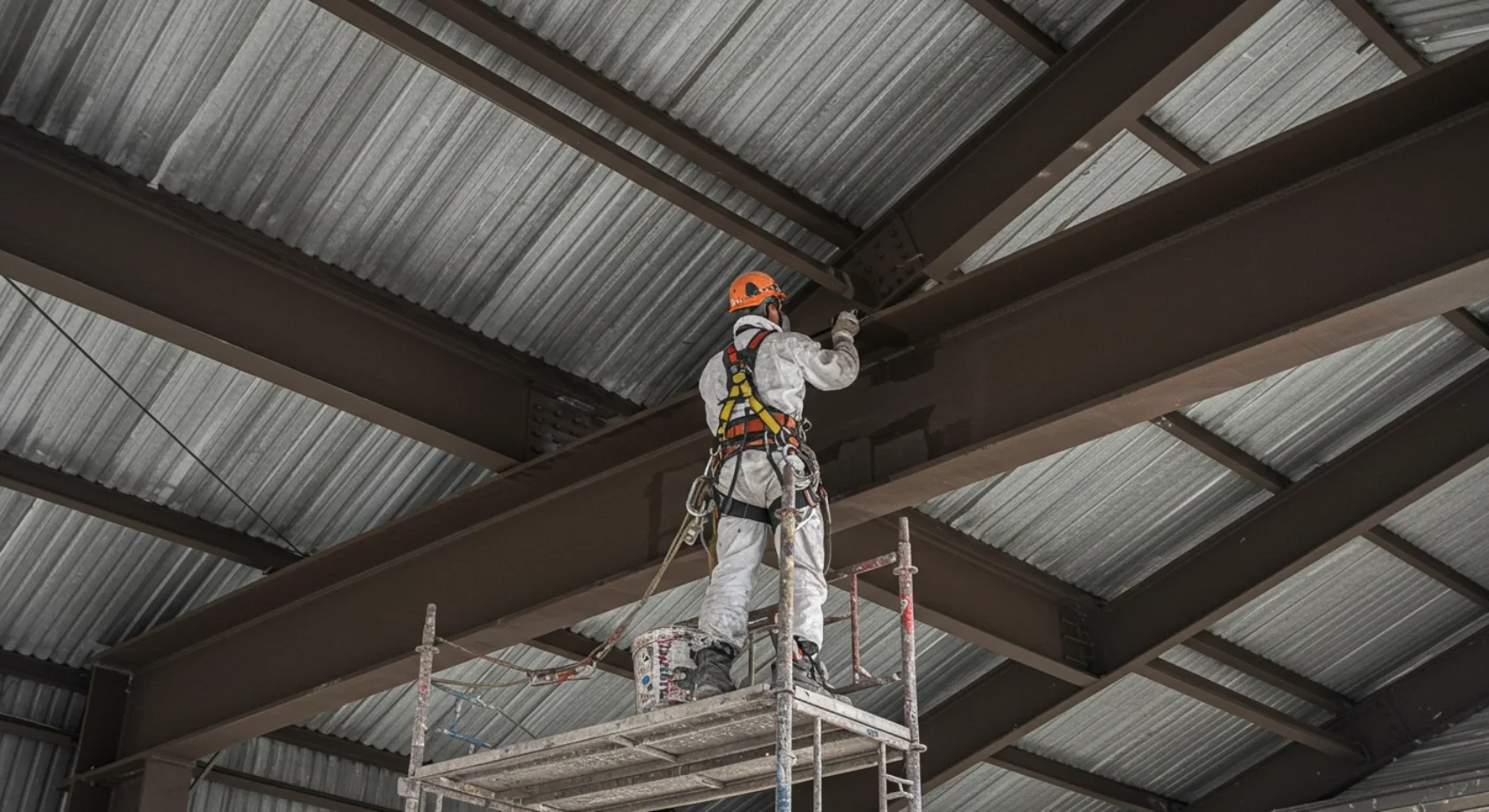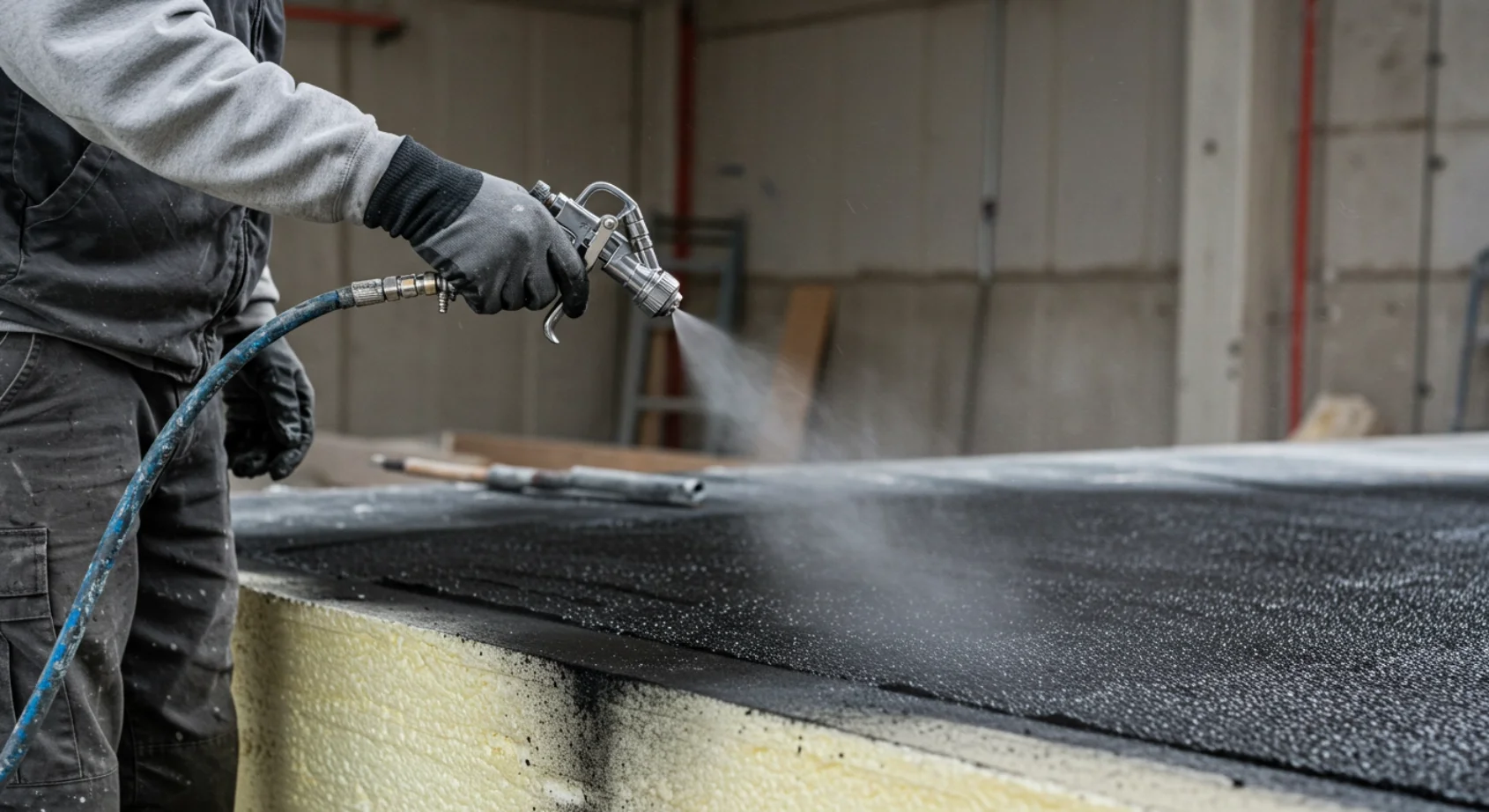
How Is Intumescent Coating Thickness Determined in Spencer, MA?
Determining the required thickness for an intumescent coating is not a matter of guesswork; it is an engineering calculation that…


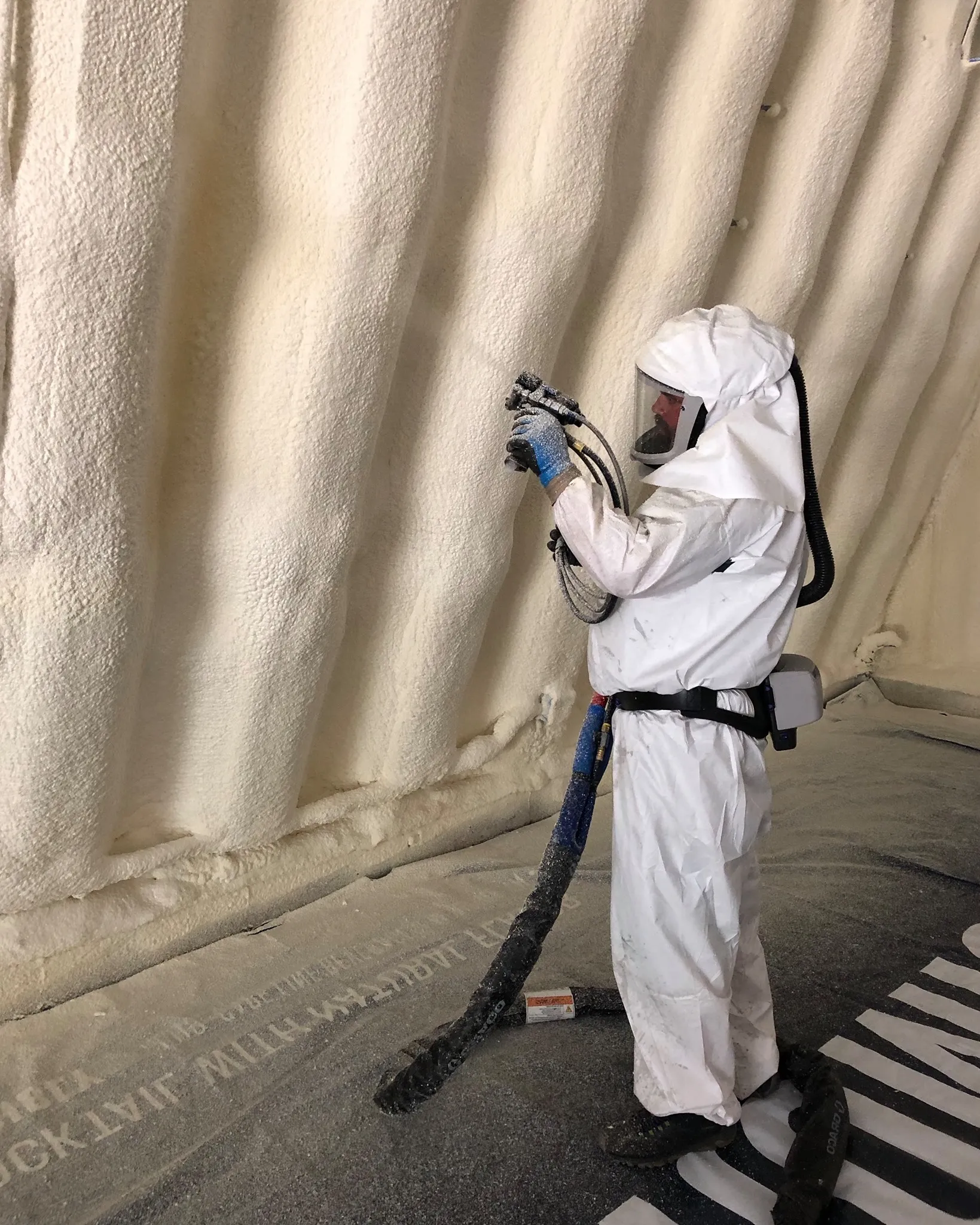
A properly installed spray foam moisture barrier does more than insulate. It stops the air movement that carries moisture into walls, attics, and crawl spaces in the first place, which is the root cause of most condensation and mold problems. Before getting into the specifics below, our spray foam insulation services page is a good starting point for understanding how foam performs across an entire building envelope.
Different types of spray foam offer different levels of water vapor resistance, so the right choice depends on your climate, the area being insulated, and whether you’re dealing with humidity, condensation, or bulk water.
Moisture problems in buildings are almost always linked to uncontrolled air leakage. Warm, humid indoor air traveling into a cold wall cavity condenses and leads to rot and mold, while damp outdoor air can just as easily work its way in from outside. Spray polyurethane foam (SPF) is applied as a liquid that expands and hardens in place, forming a continuous, custom-fitted layer that adheres directly to the substrate. Unlike batts, which leave gaps and seams, spray foam leaves no voids for air and the moisture it carries to pass through.
The two main types of spray foam handle moisture control spray foam applications very differently, and picking the right one depends entirely on the application, climate, and goals for the project.
Closed-cell foam is dense and rigid, with each tiny cell fully enclosed. That structure makes it highly resistant to both air and water vapor. At sufficient thickness, the International Code Council recognizes closed-cell spray foam as a vapor retarder, often removing the need for a separate plastic vapor barrier altogether.
Open-cell foam is lighter, softer, and more flexible, with interconnected cells that allow water vapor to pass through more easily. It’s an excellent spray foam air barrier, but it is not a vapor retarder on its own. In some assemblies, that permeability is actually an advantage, since it lets a wall dry out in the right direction.
| Feature | Closed-Cell Spray Foam | Open-Cell Spray Foam |
| Vapor Permeability | Very low (acts as a vapor retarder) | High (vapor permeable) |
| Water Resistance | Resists bulk water | Will absorb water |
| R-Value per Inch | R-6.5 to R-7 | R-3.5 to R-3.8 |
| Structure | Rigid, adds structural strength | Spongy and flexible |
| Common Uses | Basements, crawl spaces, continuous exterior insulation | Attics, walls in mixed-humid climates |
In a basement or crawl space in a cold climate like New England, closed-cell foam is almost always the right call. Its ability to block moisture from concrete walls is essential for preventing dampness and mold in below-grade spaces. Homeowners weighing the higher upfront cost can review the full specifications on our closed-cell spray foam insulation page.
Different parts of a building have unique vulnerabilities. Applying the right foam type in these areas prevents long-term damage before it starts.
Applying spray foam directly to the underside of the roof deck moves the insulation layer from the attic floor to the roofline, creating a conditioned or semi-conditioned attic. This helps prevent ice dams in cold climates. Closed-cell foam is often chosen here for its high R-value and its ability to block water if a roof leak occurs; open-cell foam can also work but needs careful vapor-control planning.
Crawl spaces and basements are notorious for moisture problems. Encapsulating a crawl space with closed-cell spray foam on the walls and rim joists creates a clean, dry area that isolates the home from ground moisture, preventing evaporation into the living space. Research from Advanced Energy found that sealed, unvented crawl spaces significantly reduce moisture levels compared to traditional vented ones.
The rim joist, or band joist, is the wooden perimeter of the floor framing, and it’s a major source of air leakage since it’s a thin barrier between inside and outside temperatures. Spray foam is an ideal fix here because it fully air-seals this complex junction of wood and concrete.
Before insulating a rim joist, inspect the area for existing water damage or rot. Sealing in moisture that’s already there only makes the problem worse, so any leaks or dampness need to be resolved before foam goes on.
Spray foam is an advanced material, and its performance as a moisture barrier depends on more than just the product itself.
Choosing between open-cell and closed-cell foam, and getting the placement and thickness right, isn’t something to guess at. A professional assessment of your climate, structure, and existing moisture issues will tell you exactly what your property needs.
Reach out to our team for a detailed evaluation and a straightforward recommendation for your space.
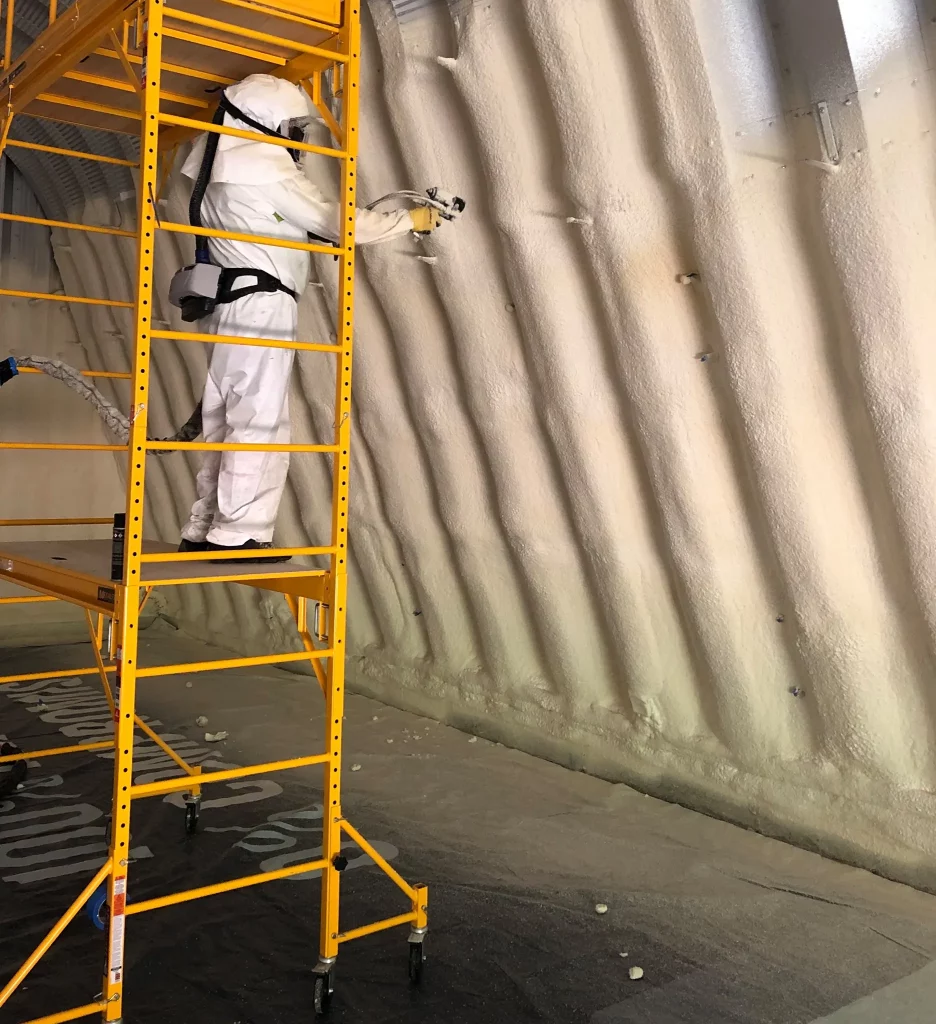
Closed-cell spray foam is water-resistant and rejects bulk water, making it a strong part of a water-resistant barrier. Open-cell foam is not waterproof and will absorb water if it gets wet.
When installed correctly and kept out of direct sunlight, spray foam should last for the life of the building. It’s a stable material that doesn’t sag, settle, or lose performance over time.
Closed-cell spray foam, applied at the right thickness (usually around 2 inches), functions as its own vapor barrier, so an additional one typically isn’t needed. Open-cell foam is vapor-permeable and may need a separate vapor-retarding paint or membrane depending on climate and wall design.
Yes, when the right type is used in the right location. By sealing air leaks, spray foam removes the warm, moist air that causes condensation on cold surfaces in the first place.
Closed-cell foam resists water absorption due to its sealed-cell structure. Open-cell foam, with its interconnected cells, will absorb water if directly exposed.
Spray foam offers no nutritional value to pests, and while insects or rodents could technically tunnel through it, they’re far less likely to than with fiberglass or cellulose. Its air-sealing properties also block the small entry points pests typically use.