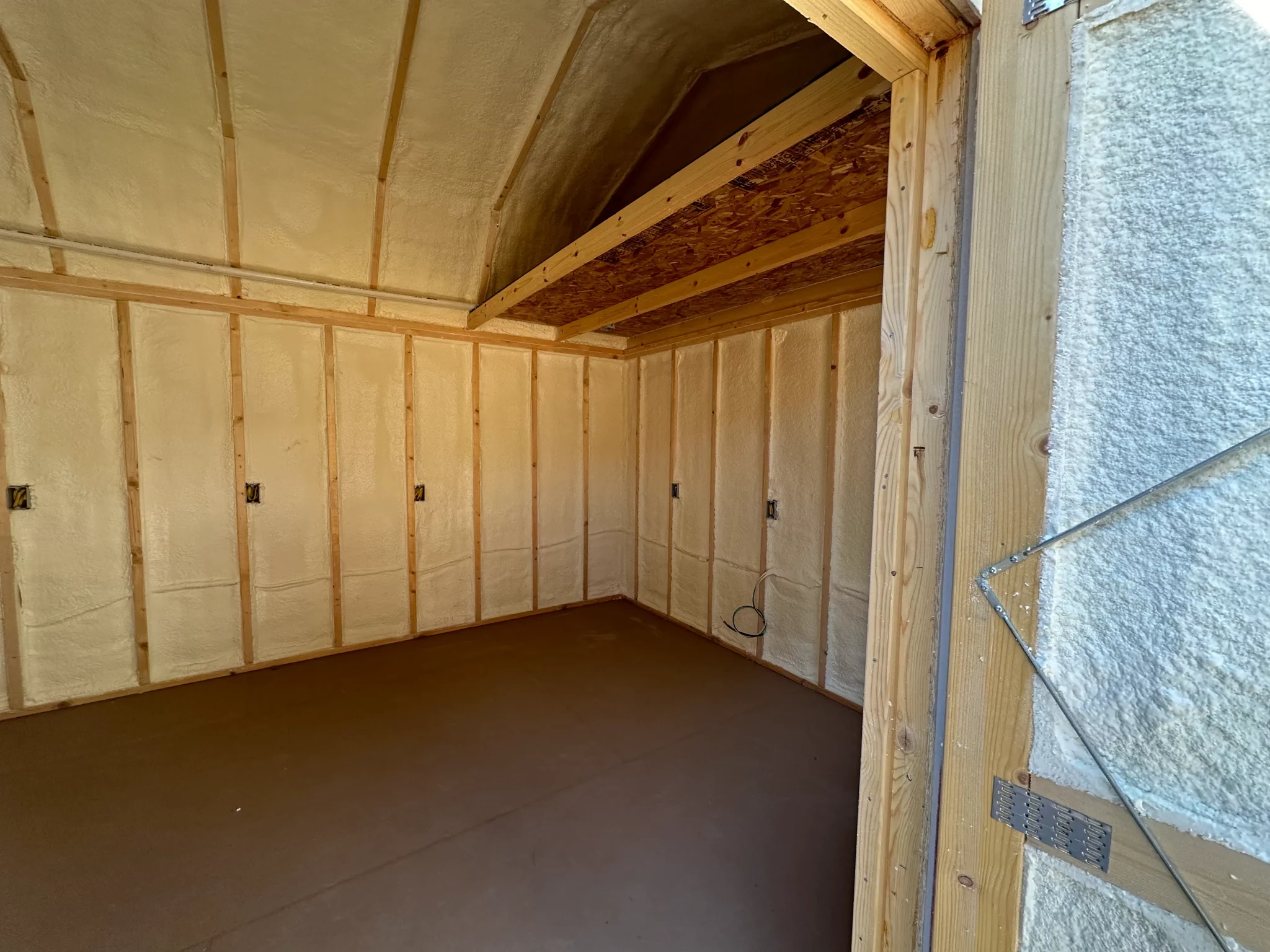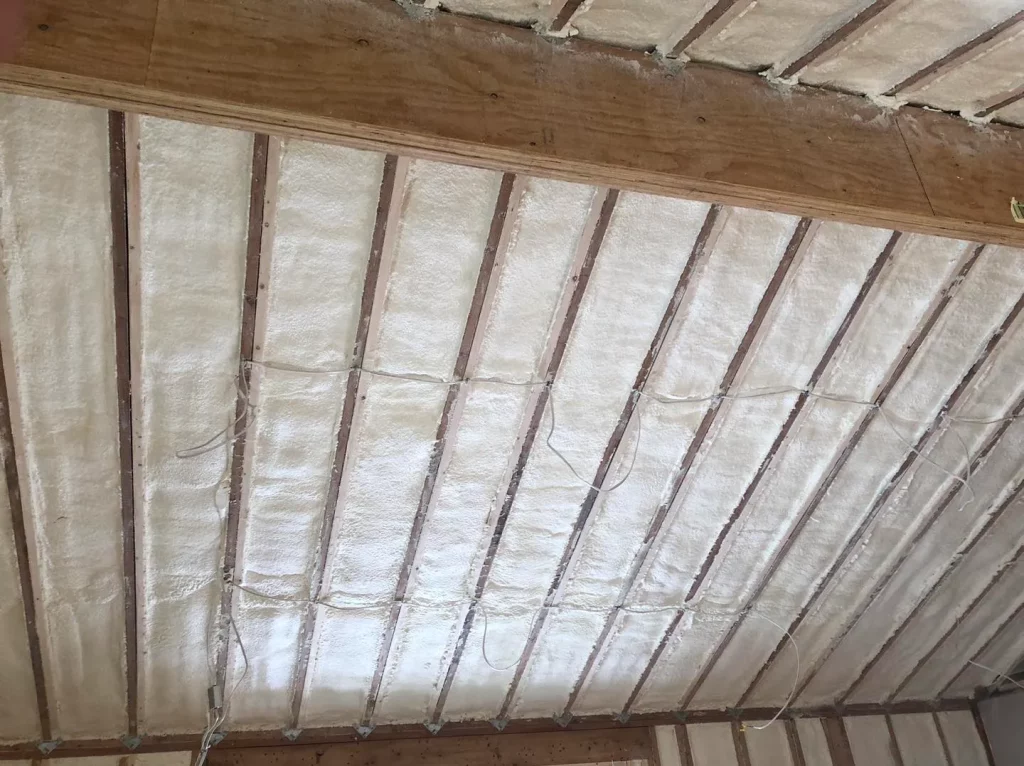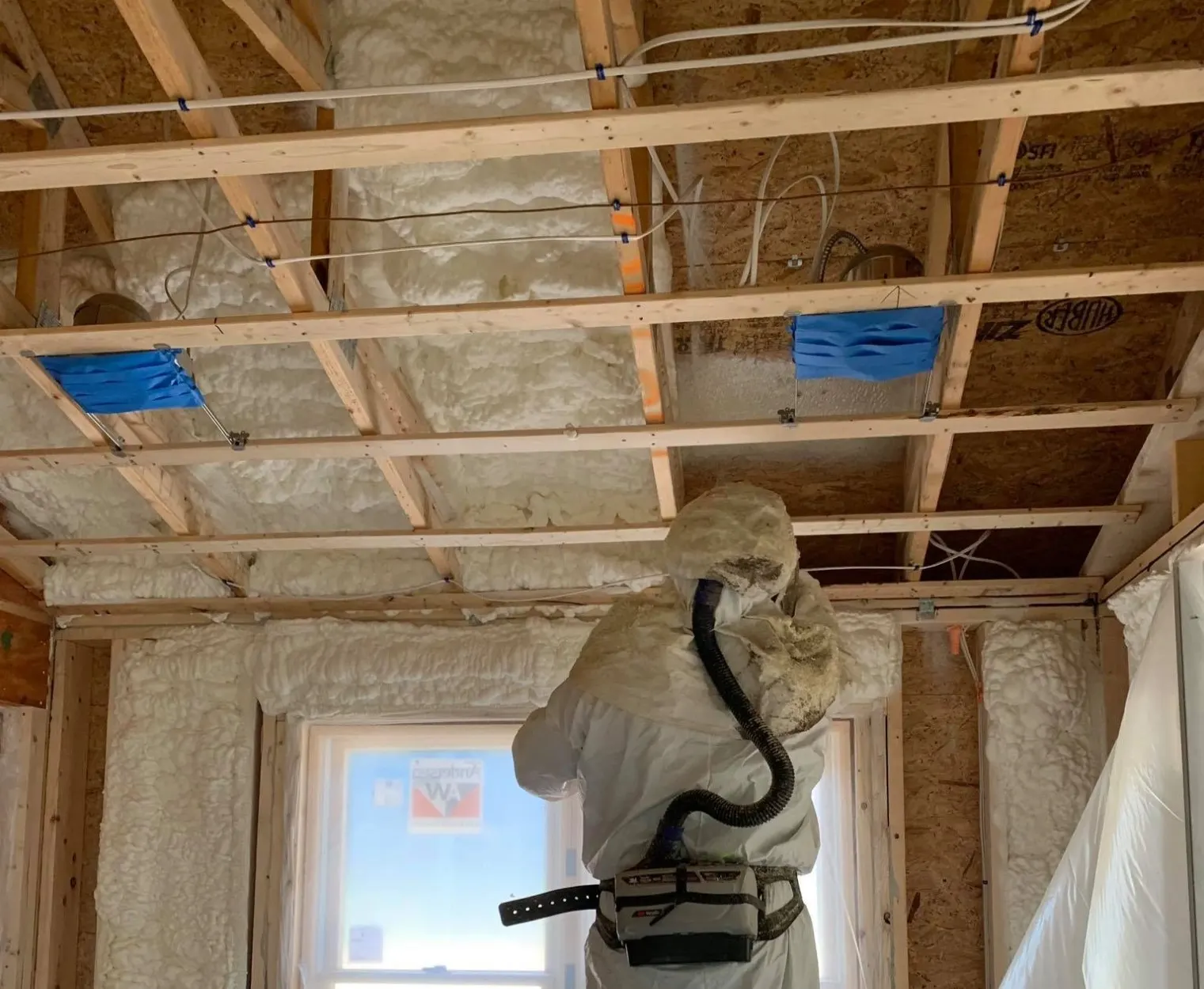
How to Address Uneven Insulation Coverage With Open-Cell Spray Foam in Worcester, MA
Fixing uneven insulation coverage with open-cell spray foam in Worcester, MA starts with diagnosis, not with more foam. Our team…


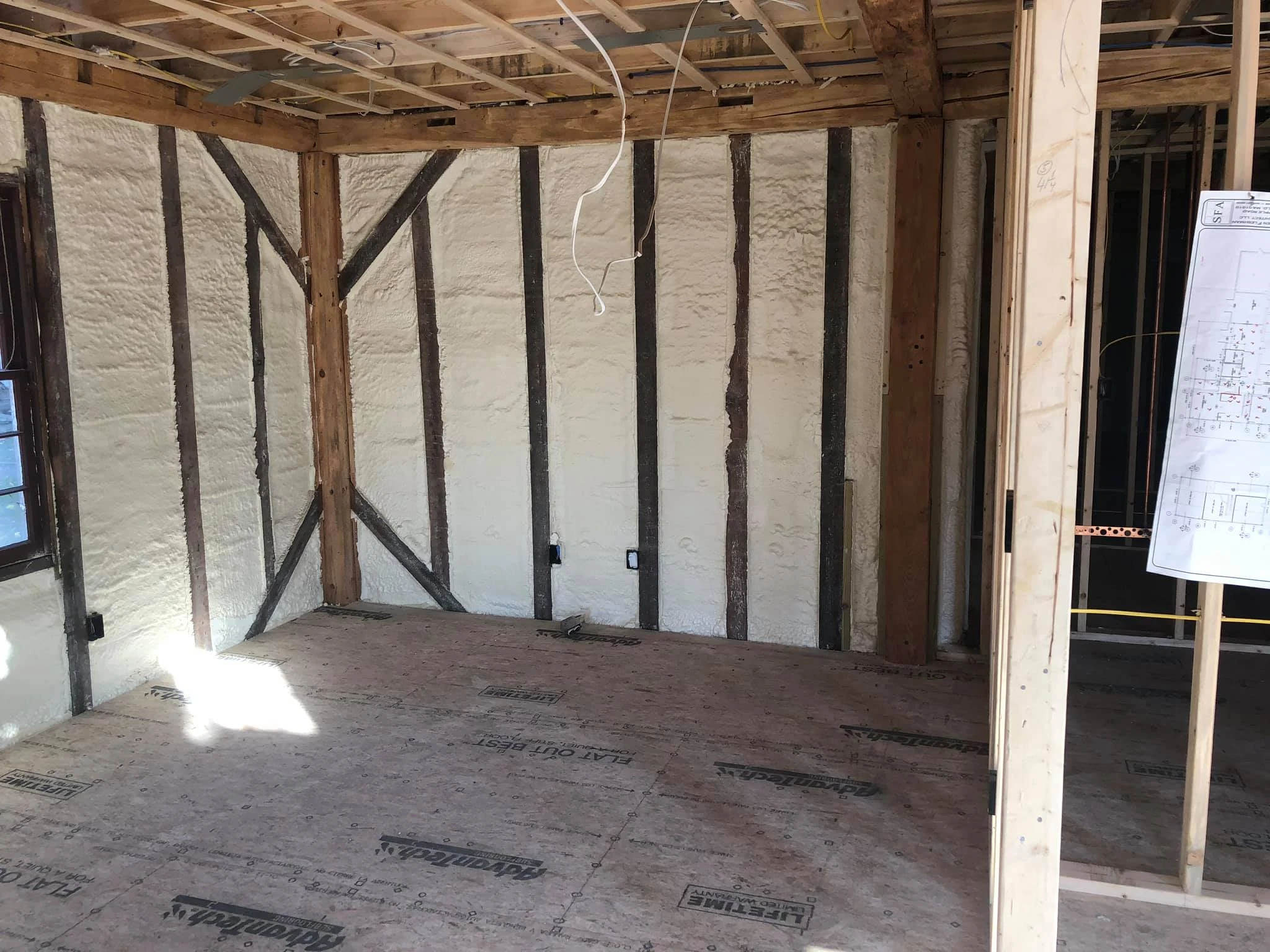
Spray foam insulation protects homes in Rochdale, MA by combining high R-value thermal resistance, continuous air sealing, and moisture control into a single applied material. For a village in Massachusetts Climate Zone 5A, where winter lows regularly drop into the teens and summer heat drives humidity through every gap and crack, spray foam addresses the three main weather threats simultaneously: heat loss, air infiltration, and moisture damage. Whether you own an older colonial near Leicester Center or a newer build in the Rochdale area, choosing between open-cell and closed-cell spray foam depends on your budget, the specific areas being insulated, and whether moisture control is a primary concern.
Rochdale sits in the southeastern corner of Leicester, in Worcester County, Massachusetts. The area falls squarely within IECC Climate Zone 5A, a cold climate zone that demands serious thermal protection. Based on long-term climate normals for the broader Massachusetts region, winter average lows dip to around 22°F in January, while summer average highs climb to roughly 81°F in July. That temperature swing of nearly 60 degrees between seasonal extremes puts constant stress on a home’s building envelope.
Precipitation is spread fairly evenly across all 12 months, meaning moisture is a year-round concern. Nor’easters dump heavy snow in winter, spring rain saturates the ground around foundations, and summer thunderstorms drive wind-blown water against siding and rooflines. Homes in Rochdale face three distinct weather challenges: deep cold that demands high thermal resistance, moisture intrusion that threatens structural integrity and indoor air quality, and wind-driven air leakage that undermines the performance of traditional insulation like fiberglass batts.
Spray polyurethane foam is applied as a liquid that expands and cures into a solid cellular material. As it expands, it fills gaps, cracks, and voids that traditional batt or blown insulation cannot reach. This expansion is what sets spray foam apart when it comes to weather protection.
According to the U.S. Department of Energy – Insulation, heat flows from warmer to cooler areas until there is no temperature difference. In a Rochdale winter, heat flows from your living space through walls, ceilings, and floors to the cold outdoors. In summer, that process reverses. Insulation provides resistance to that heat flow, measured as R-value. The higher the R-value, the better the insulation performs.
Spray foam insulation works on three fronts at once:
Thermal resistance: Both open-cell and closed-cell spray foam deliver higher R-values per inch than fiberglass or cellulose. This matters in Climate Zone 5A, where code-minimum wall assemblies need R-20 and attics need R-49 to perform adequately.
Air sealing: Spray foam expands to fill cavities completely, creating a continuous air barrier. Traditional insulation leaves gaps around framing members, electrical boxes, and plumbing penetrations. The DOE notes that air sealing and moisture control are essential to home energy efficiency, health, and comfort, and spray foam addresses both in a single application.
Moisture control: Closed-cell spray foam has a closed-cell structure that resists water absorption and acts as a vapor retarder. This is particularly important in basements, crawl spaces, and rim joist areas where ground moisture and condensation threaten building assemblies.
Not all spray foam is the same. The two types serve different purposes, and selecting the right one for each area of your home directly affects how well you are protected against extreme weather.
| Feature | Open-Cell Spray Foam | Closed-Cell Spray Foam |
|---|---|---|
| R-Value per Inch | R-3.5 to R-3.8 | R-6.0 to R-7.0 |
| Density | Lower, lighter | Higher, heavier |
| Air Barrier | Yes | Yes |
| Vapor Barrier | No (vapor permeable) | Yes (Class II vapor retarder) |
| Moisture Resistance | Absorbs water if exposed | Resists water absorption |
| Structural Strength | Minimal | Adds racking strength to walls |
| Best Application Areas | Wall cavities, attics, sound dampening | Basements, crawl spaces, rim joists, exterior sheathing |
| Expansion | Expands significantly (up to 100x) | Expands moderately (up to 30x) |
For Rochdale homeowners, closed-cell spray foam is generally the stronger choice for below-grade applications. Basement walls in Massachusetts stay cool year-round and absorb moisture from surrounding soil. Closed-cell foam applied to basement walls or crawl space linings provides both the thermal resistance and the moisture barrier that these areas demand.
Open-cell spray foam, while less effective as a vapor barrier, still provides an excellent air seal at a lower material cost. It works well in above-grade wall cavities and vented attic floors where a separate vapor retarder strategy can be used in combination.
Massachusetts has some of the most demanding energy codes in the country. The Massachusetts Energy Code 2020 specifies that residential buildings in Climate Zone 5 must meet the following minimum R-values:
Additionally, the code mandates that buildings in Climate Zones 3 through 8 must have an air leakage rate not exceeding 3 air changes per hour (ACH50) when tested with a blower door. Spray foam insulation, because of its air-sealing properties, helps meet this requirement in a way that fiberglass batts alone cannot. Many insulation materials settle, compress, or leave gaps around obstructions, all of which increase air leakage. Spray foam maintains its seal over time.
The EPA also notes that proper insulation should prioritize higher thermal resistance values and reduction of harmful compounds like formaldehyde and volatile organic compounds. Guidance on these sustainability considerations is available in EPA – Identifying Greener Insulation. When selecting spray foam products, ask about third-party certifications and low-VOC formulations, especially for indoor applications.
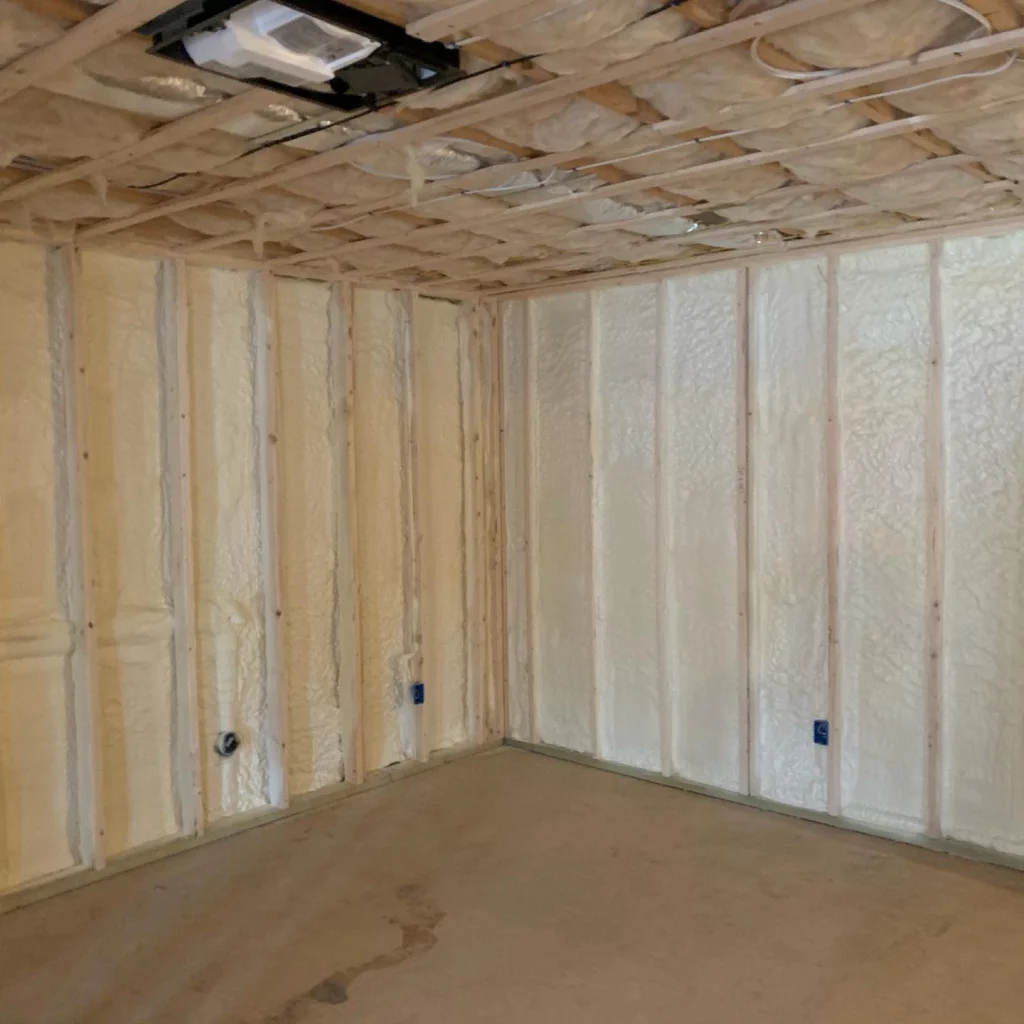
Where spray foam is applied matters as much as which type is used. For homes in the Rochdale area, these are the areas where spray foam delivers the most weather protection:
Attics are responsible for the highest heat loss in New England homes. In winter, heated air rises and escapes through any gaps in the attic floor or roofline. In summer, solar radiation heats the attic space and radiates warmth into living areas below. Spray foam applied to the attic floor (in vented attics) or directly to the roof deck (in unvented attic assemblies) seals penetrations around framing, ductwork, and recessed lights while providing high R-values in a thinner profile than fiberglass or cellulose.
The rim joist area where the floor framing meets the foundation is one of the most leaky areas in any home. In a typical framed house, this band of wood is riddled with gaps where joists meet the sill plate. These gaps allow cold air to infiltrate in winter and humid air in summer. Closed-cell spray foam is the standard solution here because it seals the air leaks, provides high R-value in the shallow cavity, and resists moisture that can condense on cold rim joist surfaces.
Ground moisture is a constant threat in Massachusetts basements and crawl spaces. Closed-cell spray foam applied to basement walls creates a thermal and moisture barrier that keeps living spaces above warmer and drier. In crawl spaces, spray foam on the walls combined with a sealed vapor barrier on the floor creates a conditioned crawl space that eliminates the moisture, cold drafts, and pest access that vented crawl spaces allow.
For new construction or deep renovations where wall cavities are accessible, spray foam fills every void in the framing cavity. Unlike batts that can be compressed, folded around wiring, or simply missed in hard-to-reach areas, spray foam conforms to every shape and seals around every penetration.
| Home Type | Recommended Spray Foam Strategy | Reasoning |
|---|---|---|
| Older colonial or cape (pre-1980) | Closed-cell in rim joists and basement; open-cell in accessible wall cavities and attic floor | These homes often have no insulation in rim joists or basements. Prioritize moisture-prone areas first. |
| Newer construction (2000s) | Open-cell or closed-cell in attic, depending on vented vs. unvented design; closed-cell in rim joists | Newer homes may already have wall insulation but often lack proper air sealing at transitions. |
| New construction | Closed-cell in basement and crawl space walls; open-cell in wall cavities and attic | Maximize performance in moisture-critical areas while managing budget on large cavity areas. |
| Renovation with exposed framing | Closed-cell in all below-grade and rim joist areas; open-cell in above-grade walls | Best opportunity to get full cavity fill and air sealing in one step. |
Choosing the right installer is just as important as choosing the right material. Spray foam requires specialized equipment, training, and attention to detail. Here are the indicators that signal a qualified professional:
Lamothe Insulation and Contracting has been helping homeowners across central Massachusetts protect their homes against extreme weather through professional spray foam insulation installation. Our team evaluates your home’s specific needs based on age, construction type, and problem areas, then recommends the right spray foam solution for each part of your building envelope. We work within Massachusetts energy code requirements and take the time to explain every step of the process.
Request a Free Quote | Schedule an Insulation Assessment
Call us at (508) 847-0119 or email [email protected] to get started.
Spray foam delivers higher R-value per inch than fiberglass and seals air leaks that fiberglass cannot address. In a Climate Zone 5A winter, this combination of thermal resistance and air sealing means less heat escapes through your walls, attic, and rim joists, which reduces the load on your heating system and improves indoor comfort.
Yes. Ice dams form when heat escapes through the attic and warms the roof deck, causing snow to melt and refreeze at the eaves. Spray foam applied to the attic floor or roof deck reduces that heat loss, which keeps the roof surface closer to outdoor temperature and reduces the conditions that lead to ice dam formation.
In Massachusetts basements, ground moisture and condensation are consistent concerns. Closed-cell spray foam provides both insulation and a vapor-retarding barrier, which makes it the recommended choice for basement walls and below-grade applications in cold climates.
When properly installed, spray foam insulation is a permanent building material. It does not settle, sag, or degrade over time like some loose-fill materials. Its adhesive properties also help it maintain its bond to surrounding building materials for the life of the structure.
Because spray foam creates a tight air seal, mechanical ventilation becomes more important to maintain indoor air quality. The Massachusetts Energy Code 2020 requires whole-house mechanical ventilation in new construction, and adding spray foam to an existing home may warrant evaluating whether your current ventilation is adequate for a tighter building envelope.