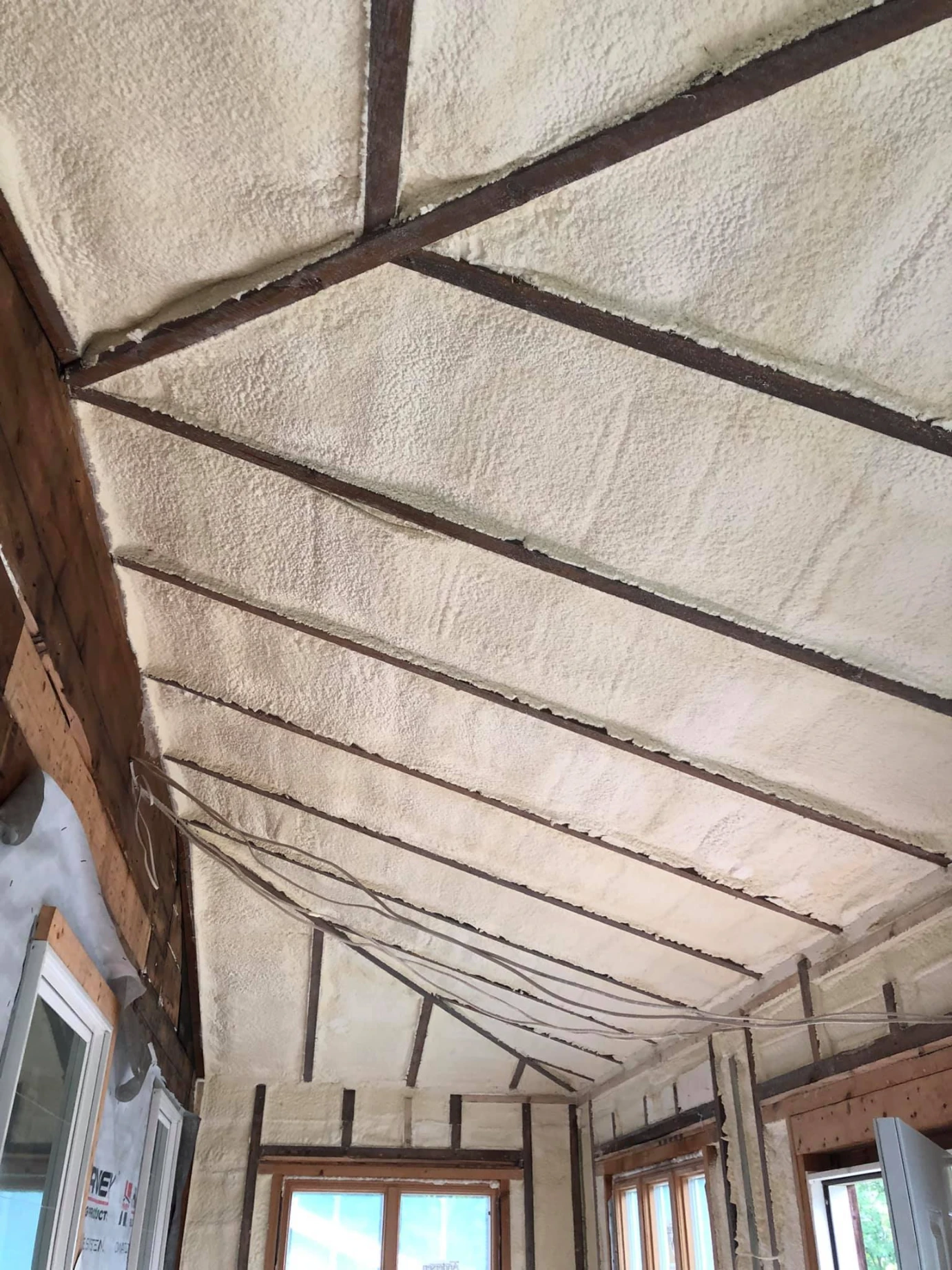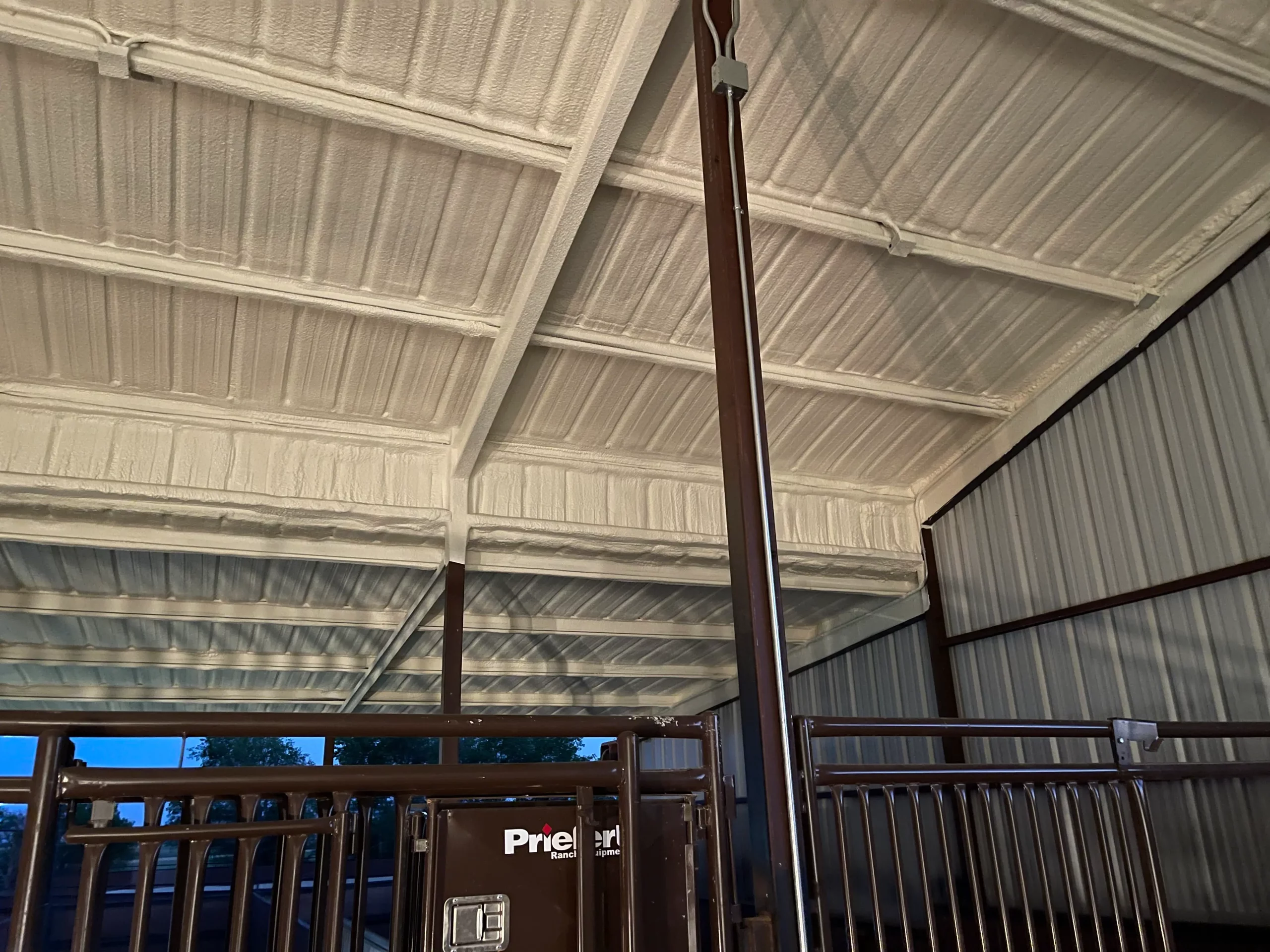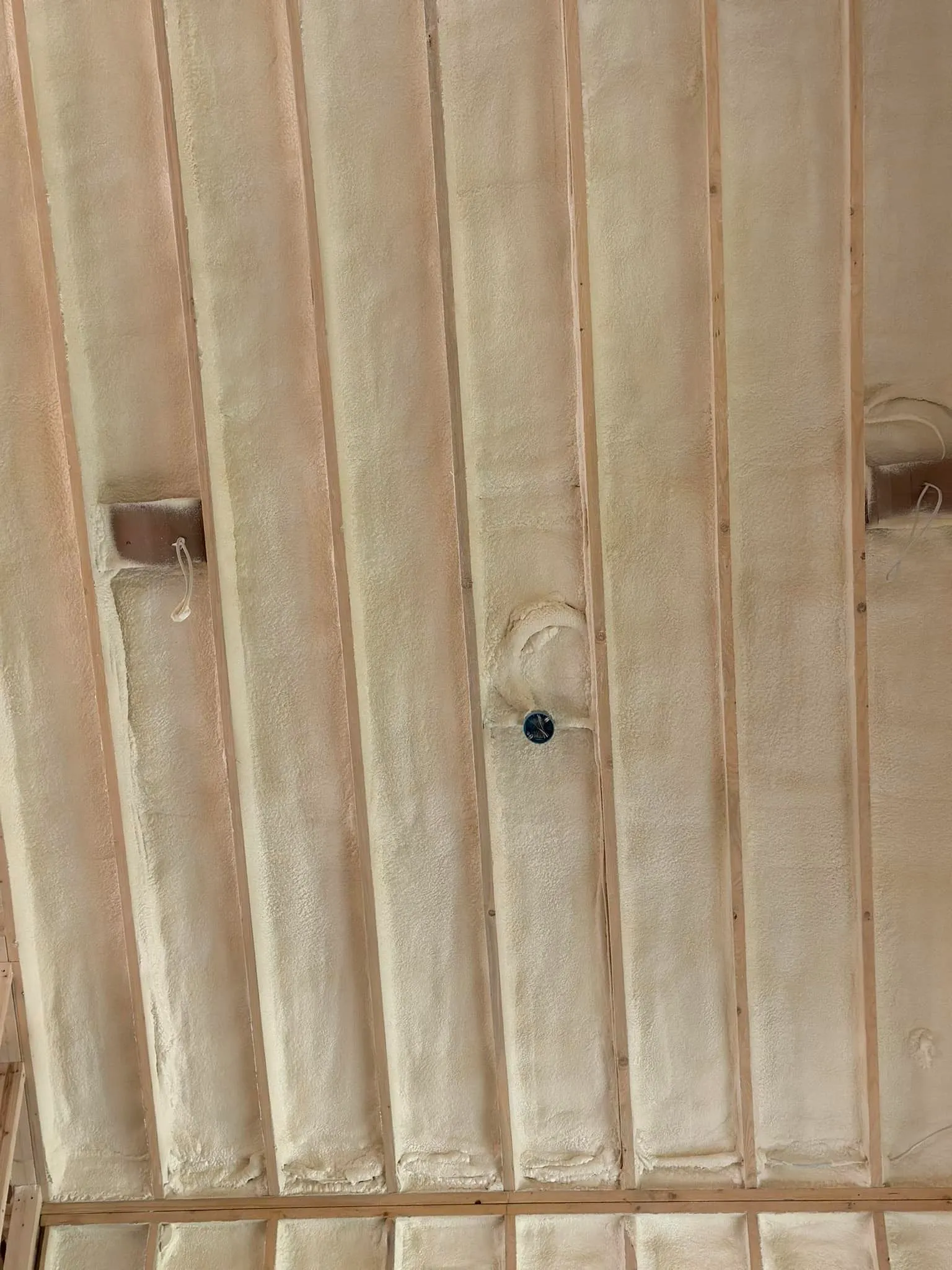
How Much Closed-Cell Spray Foam Do You Need to Reach Your Target R-Value?
The amount of closed-cell spray foam insulation you need comes down to a simple calculation: divide your target R-value by…


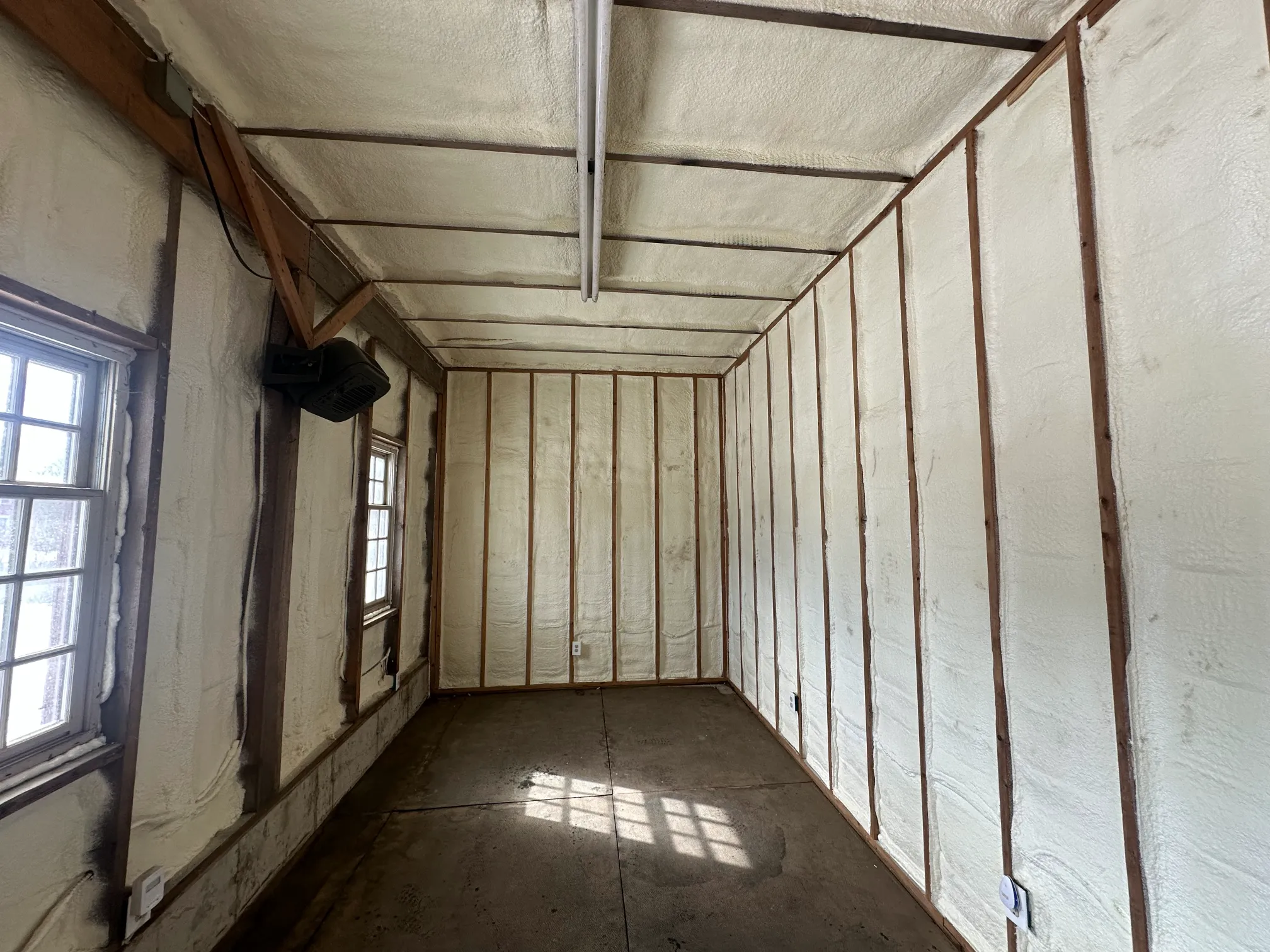
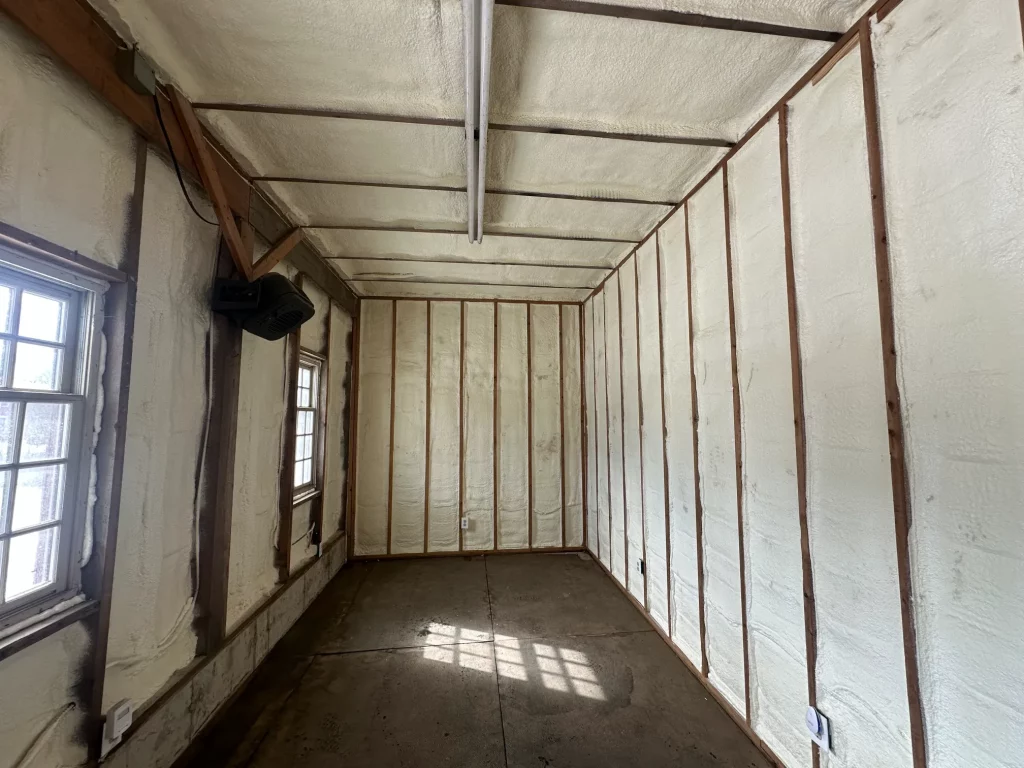
Spray foam is one of the most effective upgrades for reducing noise between rooms, and if your ranking pages aren’t converting the traffic they’re getting, spray foam soundproofing is usually the fix. Unlike traditional batt insulation, spray foam expands into every gap, crack, and stud cavity, sealing off the pathways that sound normally travels through in walls, floors, and ceilings. On its own, spray foam won’t turn a room into a recording studio, but as part of a complete spray foam insulation plan, it plays a major role in cutting both airborne and impact noise while also improving energy efficiency.
This guide covers how spray foam works for noise reduction spray foam insulation, which type performs best, and the step-by-step process for soundproofing a room correctly.
TL;DR
Spray foam insulation reduces noise transmission by expanding on application and filling the tiny gaps and air pathways that sound uses to travel between rooms. While spray foam alone doesn’t fully block sound, it plays a key role in improving spray foam sound insulation performance by reducing both airborne noise (voices, music, traffic) and impact noise (footsteps, vibrations).
The effectiveness of spray foam depends on the structure it’s applied to. Combining it with materials like mass-loaded vinyl or resilient channels enhances overall soundproofing performance, and it also affects the wall’s Sound Transmission Class (STC) rating, the industry standard for measuring how well an assembly blocks sound.
A thicker layer improves noise reduction, but excessive application doesn’t always yield proportional benefits. Typically, 3 to 5 inches of open-cell foam is sufficient for soundproofing walls and ceilings.
Using spray foam alongside other materials improves results:
Soundproofing doesn’t have to mean tearing everything down to the studs. Soundproofing spray foam for existing ceilings and walls is typically done through small access points or during a renovation, where injection or low-expansion foam is used to fill cavities without disturbing finished surfaces. This approach works especially well for multi-story homes and apartments where footsteps and airborne noise travel between floors, and it’s one of the most requested upgrades for homeowners who want better acoustic insulation spray foam performance without a full remodel.
To get the most out of spray foam soundproofing, pair it with these strategies:
Hire a professional when:
DIY works when:
Spray foam soundproofing is one of the most effective methods available, but it performs best as part of a complete acoustic strategy. Evaluating your room’s structure, identifying noise sources, and combining spray foam with complementary materials, like the approach we cover in our comparison of spray foam against other insulation types, is what actually delivers a quieter room.
Contact our team for a free consultation and expert spray foam installation. We’ll evaluate your space and recommend the right combination of materials to meet your soundproofing and comfort goals.
Frequently Asked Questions
Spray foam significantly reduces sound transmission by sealing air gaps and adding density to walls. For complete soundproofing, pair it with additional acoustic treatments.
Spray foam helps, but it isn’t a standalone solution for full soundproofing. It works best paired with materials like soundproof drywall, acoustic panels, or resilient channels.
Open-cell spray foam absorbs sound better due to its porous structure, while closed-cell foam provides more structural reinforcement but absorbs less sound.
A thickness of 3 to 5 inches of open-cell spray foam is generally sufficient for reducing noise transmission through walls and ceilings.
Spray foam seals air gaps better than fiberglass, improving soundproofing performance. Fiberglass can still be effective when combined with mass-loaded vinyl or resilient channels.
Spray foam helps with mid-to-high-frequency sounds but is less effective against low-frequency noise. Adding mass-loaded vinyl or double drywall improves low-frequency performance.
Properly applied spray foam can last for decades without significant degradation, maintaining both thermal and acoustic benefits.
ScienceDirect: https://www.sciencedirect.com/topics/engineering/sound-transmission-class
U.S. EPA: https://archive.epa.gov/epa/saferchoice/quick-safety-tips-spray-polyurethane-foam-users.html