Intumescent Coatings Explained: Benefits, Types, and Applications
Intumescent coatings are paint-like products that swell into an insulating char when fire heats them. That char slows the heat…


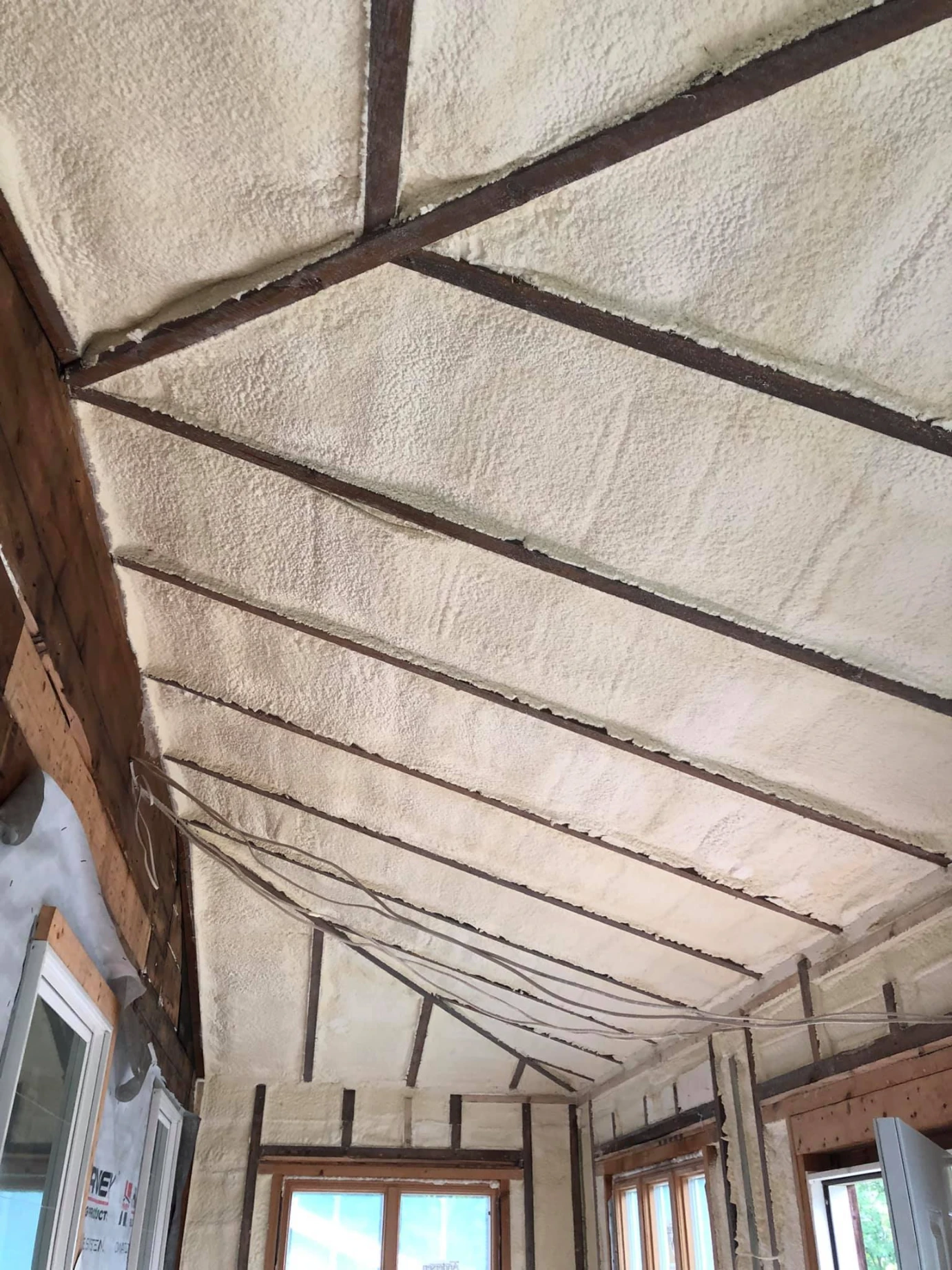
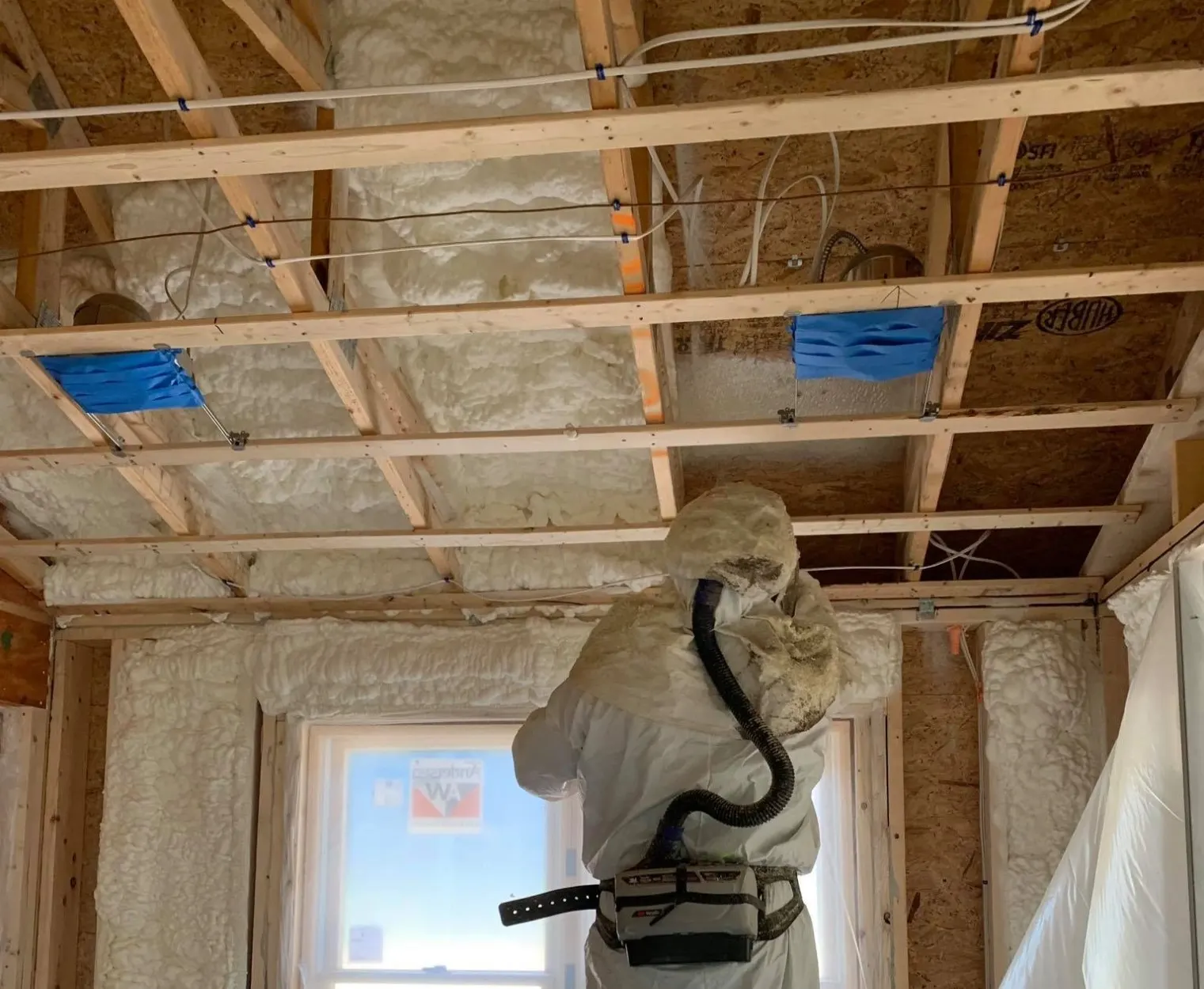
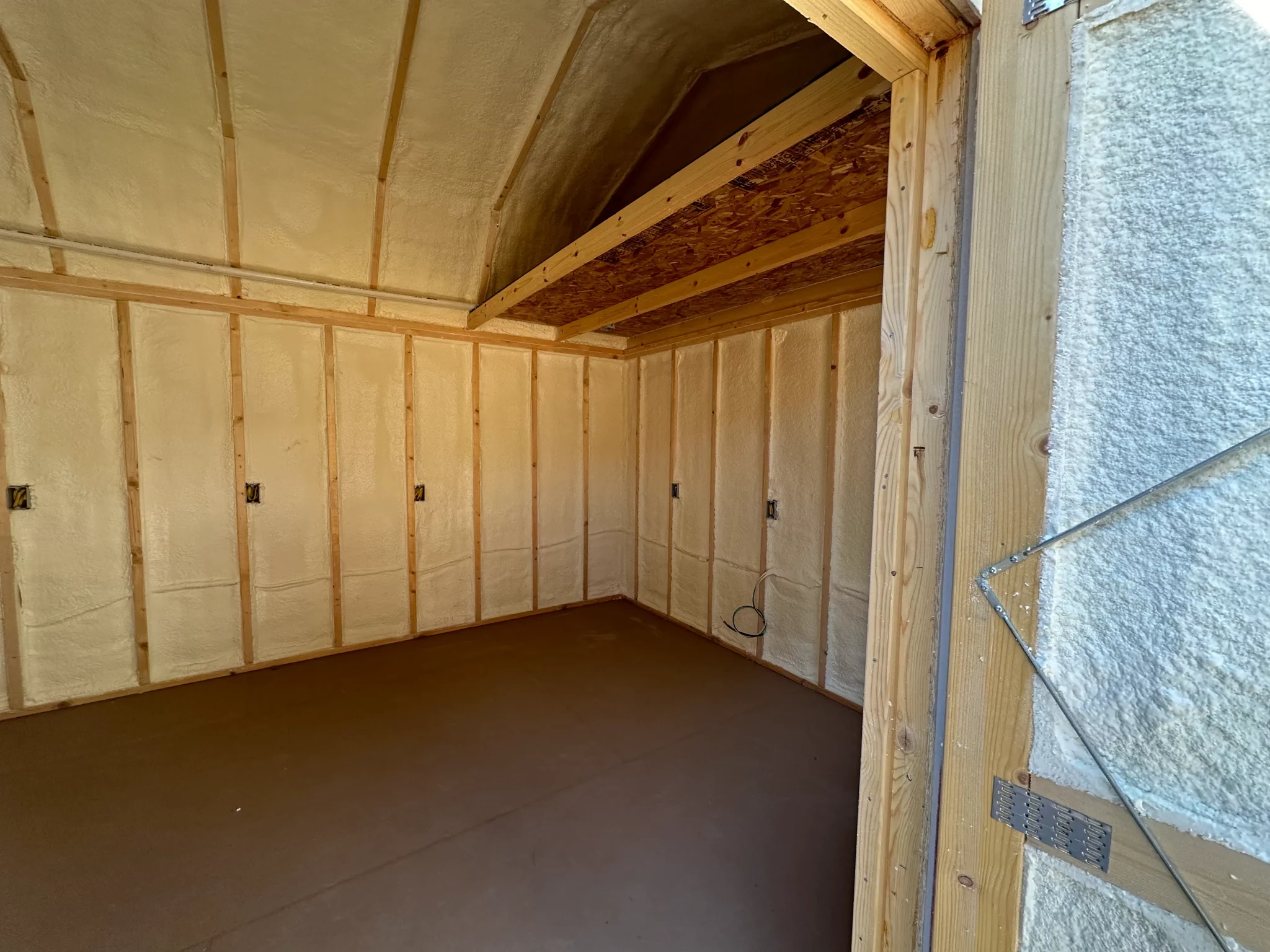
Choosing the right closed-cell foam thickness in Charlton Depot, MA comes down to three connected factors: your target R-value for each area of the home, the climate zone your property sits in, and whether you need the foam to double as a vapor barrier. Charlton Depot falls within IECC Climate Zone 5, a heating-dominated region where Massachusetts requires meaningful insulation levels across attics, walls, basements, and crawl spaces. Closed-cell spray foam delivers roughly R-6 per inch, making it possible to hit code-minimum R-values in tighter cavities than most other insulation types. The right thickness isn’t one number, it depends on which part of the building envelope you are insulating and whether you are pursuing code minimums, stretch code compliance, or enhanced performance targets.
Homes in Charlton Depot face cold winters, freezing temperatures, and measurable snowfall every heating season. The area sits squarely in Climate Zone 5, which the International Energy Conservation Code defines as a cool climate requiring substantial envelope insulation. Massachusetts has adopted the 2021 IECC with state amendments, and many municipalities also enforce the optional Stretch Energy Code with even stricter requirements.
Closed-cell spray foam is particularly well suited to this climate for a few specific reasons. It delivers a higher R-value per inch than fiberglass batts, blown cellulose, or open-cell foam, which means you can achieve strong thermal resistance without filling every available inch of a wall cavity. According to the Spray Polyurethane Foam Alliance (SPFA), medium-density closed-cell foam offers an R-value greater than 6.0 per inch and functions as a high-strength moisture barrier with low moisture permeability.
Beyond thermal resistance, closed-cell spray foam air-seals as it insulates. As much as 40% of a building’s energy loss comes from air infiltration through gaps, cracks, and joints. Spray foam conforms to irregular surfaces, seals around framing members, and creates a continuous barrier that traditional batt insulation simply cannot match.
The R-value measures thermal resistance, meaning how well a material resists the flow of heat. As Wikipedia’s R-value reference explains, R-values are additive for multiple layers of materials, and the higher the R-value, the better the insulating properties. For closed-cell polyurethane spray foam, the typical R-value falls between R-5.5 and R-6.5 per inch.
This per-inch rating is what allows you to calculate the thickness needed for a given target. For example, to achieve R-20 in a wall cavity using closed-cell foam at R-6 per inch, you would need approximately 3.3 inches of foam. That fits comfortably within a 2×6 wall cavity (which is 5.5 inches deep), with room left for wiring and plumbing.
It’s worth noting that closed-cell foam’s R-value can drift slightly over time as blowing agents diffuse and are replaced by air. Research cited on the Wikipedia spray foam page indicates that closed-cell polyurethane may see R-value reductions in the range of 15-27% over the long term, which is why the industry has adopted the Long Term Thermal Resistance (LTTR) rating method based on a 15-year weighted average.
The table below outlines the typical thickness recommendations for common building assemblies in Climate Zone 5. These are calculated using a conservative R-6 per inch for closed-cell foam.
| Building Assembly | Code R-Value Target (2021 IECC) | Recommended Foam Thickness | Additional Notes |
|---|---|---|---|
| Attic / Ceiling (vented) | R-60 | 8-10 inches of ccSPF | Often paired with blown-in insulation for cost efficiency |
| Wood-Frame Wall (2×6) | R-30 cavity or R-20+R-5 ci | 3.5-5 inches in cavity | Cavity-only path; foam fills stud bays completely |
| Wood-Frame Wall (2×4) | R-13 cavity + R-10 ci | 2-3 inches in cavity + rigid foam exterior | Requires continuous exterior insulation for full compliance |
| Basement Wall | R-15 continuous or R-19 cavity | 2.5-3.5 inches on concrete face | Foam applied directly to basement wall provides both insulation and moisture control |
| Crawl Space Walls | R-15 continuous | 2.5-3 inches on foundation walls | Seals ground moisture and conditioned air from the crawl space |
| Rim Joist / Band Joist | R-15+ | 2.5-3 inches | One of the highest-ROI spray foam applications due to air sealing alone |
| Floor Over Unconditioned Space | R-30 | 5 inches | Bays between floor joists |
These recommendations reflect code minimums. In practice, the ideal thickness also depends on the depth of the cavity you are filling, your budget, and whether you are combining spray foam with other insulation materials.
One of the most important distinctions with closed-cell spray foam is that thickness determines whether the foam qualifies as a vapor retarder, vapor barrier, and air barrier. According to the SPFA, closed-cell foam at its minimum installed thickness functions as both an air barrier and a moisture barrier, thanks to its low permeability and dense cell structure. The Wikipedia spray foam reference notes that when the required minimum thickness of 50 mm (approximately 2 inches) is installed, closed-cell spray foam is both a vapor barrier and an air barrier.
This matters a great deal in Charlton Depot’s climate. In Zone 5, moisture management is arguably as important as thermal resistance. Warm indoor air during heating season carries water vapor that can condense inside wall and ceiling assemblies if it reaches a cold surface. Closed-cell spray foam applied at 2 inches or more prevents that vapor from reaching cold sheathing or concrete, eliminating a major condensation risk.
For thinner applications, such as a 1-inch flash coat over open-cell foam, the closed-cell layer provides some vapor resistance but does not meet the full vapor barrier threshold. Understanding this difference helps you avoid assemblies that look correct on paper but create moisture problems in practice.
Applying the same thickness everywhere. Different building assemblies have different R-value targets, cavity depths, and moisture exposure levels. Treating a rim joist the same as an attic flat leads to either over-spending in low-value areas or under-insulating in critical ones.
Ignoring the cavity depth. Overfilling a 2×4 cavity with more foam than the bay can hold adds material cost without proportional performance gains. The foam cannot expand beyond the framing, so excess thickness in a shallow cavity is wasted investment.
Choosing thickness without considering air sealing. One of closed-cell spray foam’s primary benefits is its ability to air-seal. If you are only thinking about R-value and not about where air leaks occur, you may under-insulate the areas that need it most, such as rim joists, top plates, and band joists.
Skipping the vapor barrier calculation. In cold climates, the position and class of the vapor retarder matters. Closed-cell foam applied at sufficient thickness eliminates the need for a separate polyethylene vapor barrier in many assemblies, but only if you install enough foam to meet the permeance threshold.
Not accounting for long-term R-value drift. Closed-cell foam’s initial R-value is higher than its aged R-value. If your compliance calculation relies on the initial R-value, you may fall short of code once the foam has aged. Using the LTTR rating in your calculations provides a more realistic long-term number.
For new homes, closed-cell spray foam is most effective when used strategically rather than sprayed throughout the entire envelope. Focus on rim joists, band joists, crawl space walls, and basement walls where the air sealing and moisture barrier properties deliver outsized value. For wall cavities, a combination of closed-cell foam (2-3 inches) against the sheathing for air and moisture control, paired with cavity-fill insulation such as fiberglass or cellulose for the remaining R-value, is a common approach that balances performance and material cost.
Existing homes in Charlton Depot often have little to no insulation in rim joists, crawl spaces, and attic floors. Closed-cell spray foam applied at 2-3 inches in these locations delivers immediate, noticeable improvements in comfort and energy use. These areas are where the green benefits of spray foam insulation have the greatest impact because the existing envelope is typically leaky and under-insulated.
For basements and crawl spaces, 2.5-3 inches of closed-cell foam applied directly to foundation walls creates a continuous thermal and moisture barrier. This thickness hits the Zone 5 R-15 continuous requirement while simultaneously providing the air sealing and moisture control needed to keep these spaces dry and comfortable.
A qualified insulation professional will never quote a single thickness for every surface in your home. They will walk through the building, identify each assembly type, and explain the R-value target and recommended foam depth for each location. They will also discuss how the spray foam insulation in Charlton Depot, MA interacts with other building materials, particularly any existing insulation, vapor barriers, and ventilation systems.
The SPFA’s contractor guidance recommends asking about the supervisor’s training and certification, the specific product being installed, and the reoccupancy timeline after application. A contractor who can clearly explain why they recommend a certain thickness for each area, rather than applying a uniform approach, is demonstrating the kind of project-specific judgment that leads to good outcomes.
Look for contractors who provide a written contract specifying the product, installed thickness, target R-value, warranty details, and cleanup responsibilities. The EPA’s archived guidance on SPF emphasizes that proper installation requires specific personal protective equipment, appropriate ventilation during application, and adherence to manufacturer reoccupancy times. A contractor who communicates these safety measures upfront is one worth trusting.
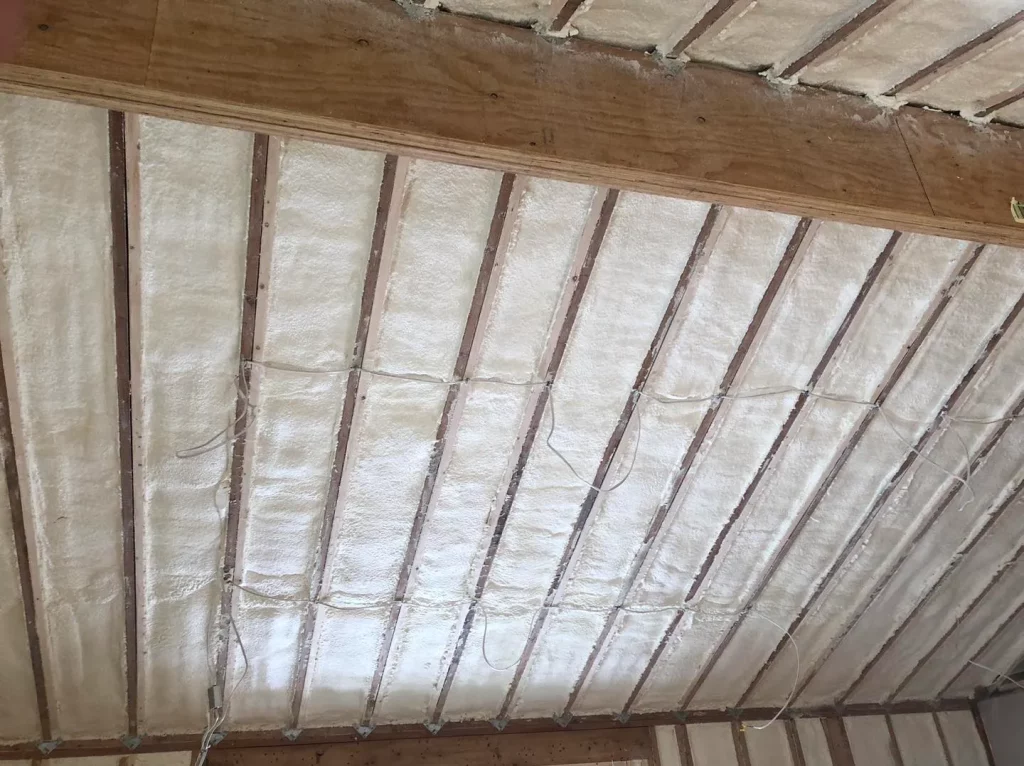
Choosing the right closed-cell spray foam thickness requires a clear understanding of your building assembly, your climate zone requirements, and your performance goals. Our team at Lamothe Insulation and Contracting evaluates each project individually, recommending the right foam thickness for every surface based on code compliance, building science, and your specific needs in Charlton Depot, MA. We hold ourselves to high standards for safety, installation quality, and customer communication on every job.
Request a Free Quote | Schedule an Insulation Assessment
Reach us at (508) 847-0119 or email [email protected] to discuss your project. We serve Charlton Depot and the surrounding communities with professional spray foam installation that accounts for every detail, from cavity depth to code compliance.
Closed-cell spray foam must be installed at a minimum of approximately 2 inches (50 mm) to function as both a vapor barrier and an air barrier in a wall or ceiling assembly.
In a standard 2×4 wall cavity, 2 to 3 inches of closed-cell foam provides R-12 to R-18. To meet the full code R-30 requirement, additional continuous exterior insulation such as rigid foam is typically needed.
Yes, a common approach is to apply 1-2 inches of closed-cell foam against the sheathing for moisture and air control, then fill the remaining cavity depth with open-cell foam for additional R-value.
Yes, the blowing agents in closed-cell foam gradually diffuse and are replaced by air, which can reduce the effective R-value by 15-27% over the long term. The industry LTTR rating accounts for this aging effect.
Under the expanded 25C tax credit, homeowners can claim 30% of insulation costs up to $1,200 annually through 2032. Spray foam insulation that meets energy efficiency requirements qualifies for this credit.