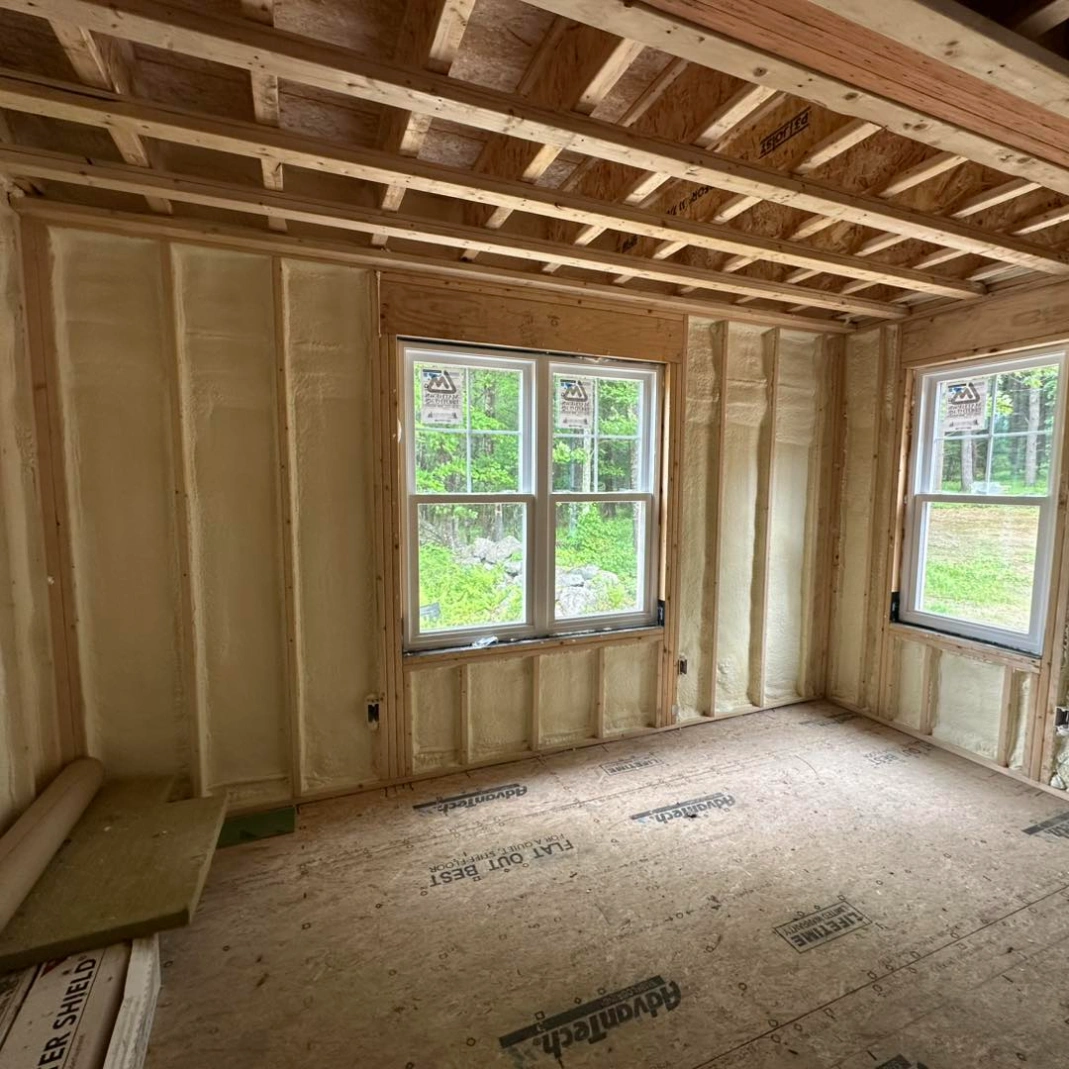
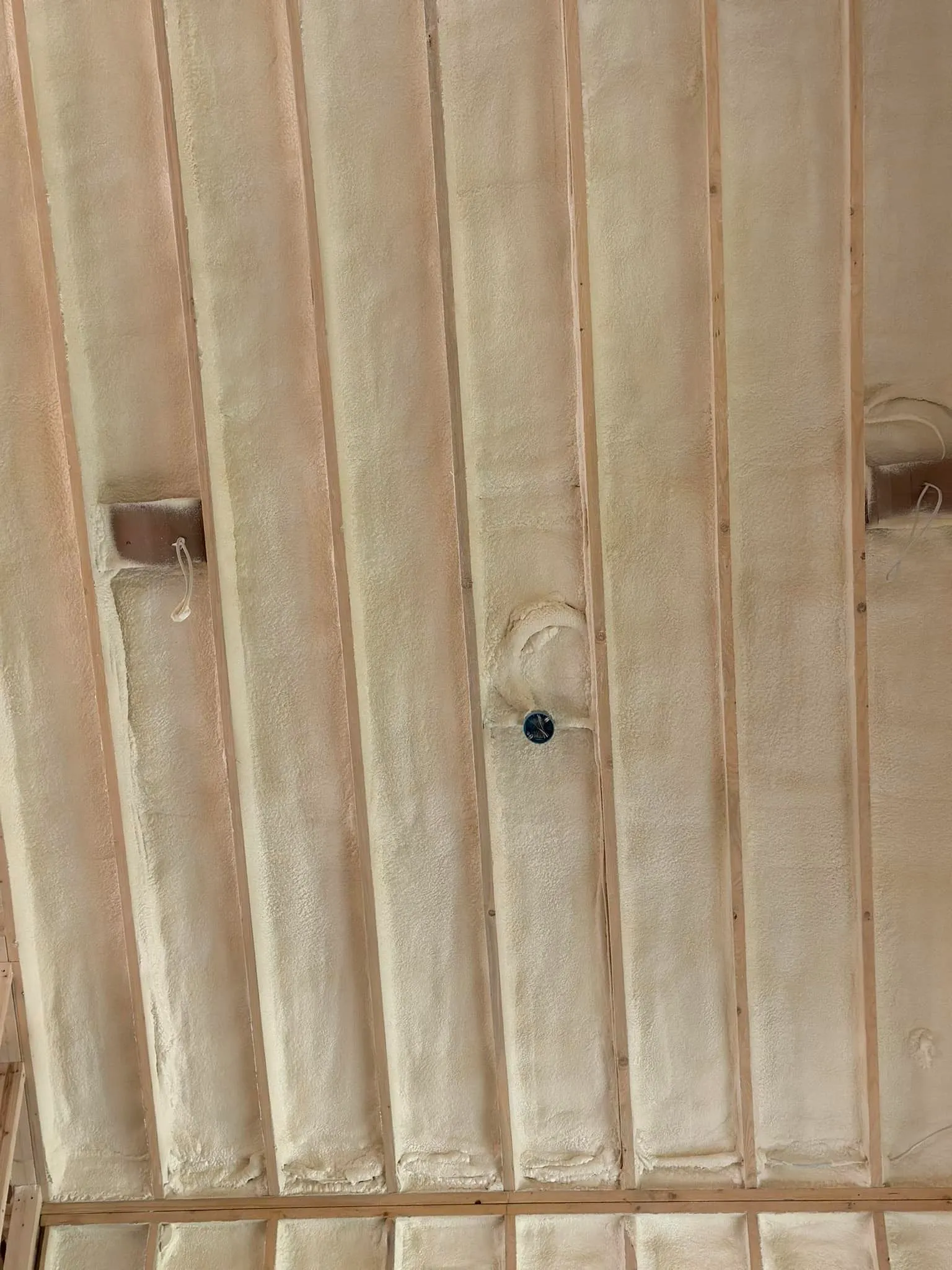
How Closed-Cell Spray Foam Creates a Continuous Air Seal in Worcester, MA
Closed-cell spray foam creates a continuous air seal by applying liquid polyurethane that expands up to 60 times its original…


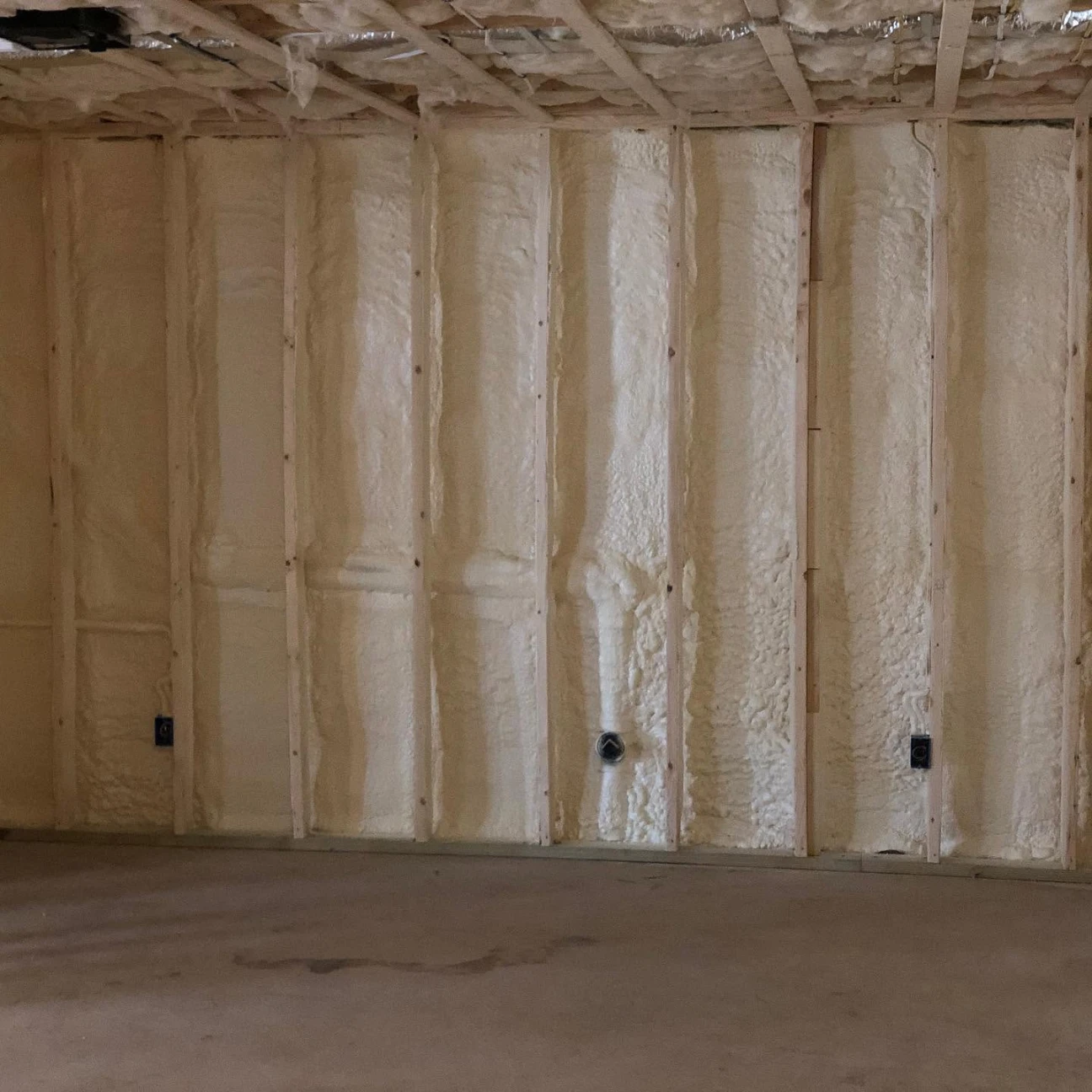
Spray foam insulation prevents air leakage by expanding into cracks, gaps, and penetrations throughout the building envelope, bonding directly to surfaces and forming a continuous airtight seal that traditional insulation materials like fiberglass and cellulose cannot achieve. According to the U.S. Department of Energy’s Energy Saver program, sprayed foam insulation fills even the smallest cavities and creates an effective air barrier, which directly reduces the amount of conditioned air that escapes and unconditioned air that enters. Because air leakage accounts for 25 to 40 percent of the energy used for heating and cooling in a typical residence, as documented by ENERGY STAR, sealing those leaks with spray foam takes a significant load off your HVAC system, allowing it to run less frequently, cycle more efficiently, and last longer.
Most homeowners assume their insulation is doing the full job of keeping their home comfortable. In reality, insulation only slows conductive heat transfer. It does not stop air movement. When a home has unsealed gaps around windows, doors, plumbing penetrations, electrical wiring, rim joists, attic hatches, and duct runs, conditioned air escapes and outside air enters around the clock. This constant air exchange forces the HVAC system to work harder than necessary to maintain the thermostat setpoint.
Building Science Corporation notes that uncontrolled air leaks can account for a third or more of the energy loss in typical houses. Three forces drive this airflow: wind pressure against the building envelope, the stack effect (warm air rising and escaping through upper levels while drawing cold air in at the base), and mechanical exhaust from fans and HVAC equipment. Each of these forces acts on every crack and penetration in the building shell simultaneously, meaning even small gaps add up to significant energy waste over the course of a heating or cooling season.
The Ohio State University Green Home Technology Center confirms that 25 to 40 percent of heating and cooling energy is directly tied to air leakage, and that reducing infiltration is among the cheapest and most effective methods to lower home energy consumption. Traditional insulation materials leave many of these leakage paths untouched because batts and rolls cannot conform to irregular surfaces, and blown-in loose-fill settles over time. This is exactly where spray foam changes the equation.
Spray foam insulation is applied as a liquid that expands and cures in place. As it expands, it presses against framing members, sheathing, pipes, wires, and every irregular surface within the cavity. This expansion creates a monolithic seal with no gaps, no compression around obstacles, and no settling over time. The foam bonds to the substrate, meaning it cannot shift, sag, or pull away from the surfaces it contacts.
Both open-cell and closed-cell spray polyurethane foams serve as effective air barriers when applied at the proper thickness. According to the DOE’s Insulation Materials guide, closed-cell foam has a higher R-value per inch and stronger resistance against moisture and air leakage, while open-cell foam is lighter, less expensive, and still provides good air sealing. The key distinction for HVAC efficiency is that either type eliminates the convective air loops and bypass airflow that degrade the performance of other insulation types.
When spray foam seals the building envelope, the HVAC system no longer has to compensate for constant air loss. Supply air reaches its intended rooms instead of escaping through wall penetrations. Return air draws from conditioned spaces rather than pulling unconditioned air from attics and crawl spaces through leaky return plenums. The result is more consistent room-to-room temperatures, shorter run times, and reduced wear on compressors, heat exchangers, and blower motors.
Choosing between closed-cell vs open-cell spray foam depends on the application, climate zone, and building assembly. Each type has distinct properties that affect air sealing performance and HVAC system interaction.
| Property | Closed-Cell Spray Foam | Open-Cell Spray Foam |
|---|---|---|
| R-Value per Inch | R-6.0 to R-7.0 | R-3.5 to R-3.7 |
| Density | 1.7 to 2.0 lb/ft³ | 0.4 to 0.5 lb/ft³ |
| Air Barrier | Yes (at any thickness above 1 inch) | Yes (at 3.5+ inches) |
| Vapor Retarder | Class II vapor retarder | Vapor permeable |
| Moisture Resistance | High, resists water absorption | Low, can absorb and hold water |
| Expansion Ratio | 30 to 35 times original volume | 100 to 120 times original volume |
| Best Applications | Rim joists, crawl spaces, below-grade, exterior walls in cold climates, metal buildings | Above-grade wall cavities, attics, sound dampening, irregular cavities |
Closed-cell foam is the preferred choice in cold climates and anywhere moisture control is a priority. Building Science Corporation identifies it as the recommended option for IECC Climate Zones 5 through 8 because it meets code requirements for condensation control and acts as a Class II vapor retarder. Its rigidity also adds structural strength to the wall assembly.
Open-cell foam excels in above-grade applications where its higher expansion ratio allows it to fill large, irregular cavities completely. It provides the same air sealing performance as closed-cell foam at the specified thickness, and its vapor permeability allows wall assemblies to dry in both directions, which is an advantage in mixed-humid climates.
Not all air leakage paths are equal. Some penetration points have an outsized impact on HVAC performance and comfort. Our professionals prioritize these critical areas during every spray foam installation.
Rim joists and band joists. The junction where the floor framing meets the foundation wall is one of the leakiest areas in any home. Gaps around framing lumber, utility penetrations, and the foundation sill plate create direct pathways between the conditioned space and the ground or exterior. Closed-cell spray foam injected into each rim joist bay creates an airtight, moisture-resistant seal that also adds R-value to a traditionally under-insulated area.
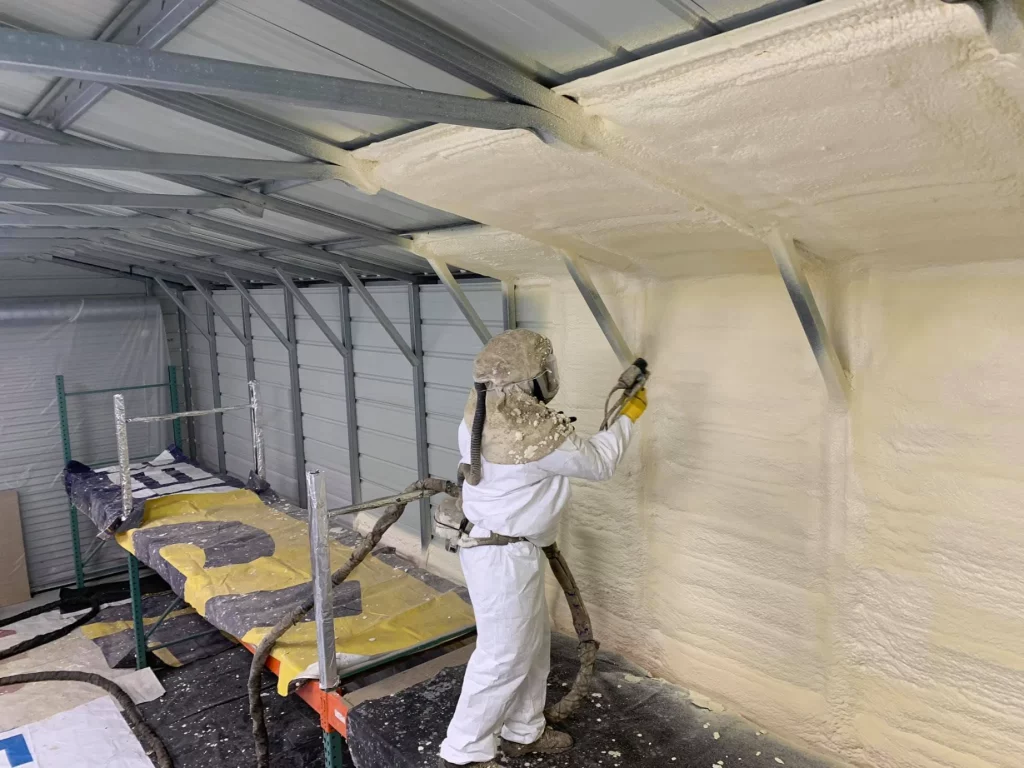
Attic floor and roofline. In winter, the stack effect drives warm air up through ceiling penetrations, recessed lights, plumbing vents, and attic hatches. Sealing these paths with spray foam at the attic floor prevents conditioned air from escaping into the vented attic, which is the single most effective air sealing measure in most homes. In unvented attic assemblies, spray foam applied directly to the underside of the roof decking brings the attic into the conditioned envelope, eliminating duct losses entirely for HVAC equipment and ductwork located in the attic.
Crawl spaces. Ventilated crawl spaces introduce humid outside air, which increases the latent load on air conditioning equipment and can cause condensation on duct surfaces. Sealing and insulating crawl space walls with closed-cell spray foam converts the area to a semi-conditioned space, keeping ducts within a controlled environment and reducing moisture-related HVAC issues.
Duct penetrations and mechanical chases. Gaps around duct registers, boot connections, and where ducts pass through floor and ceiling assemblies are common and often overlooked sources of air loss. Spray foam applied at these transition points creates a durable seal that tape and mastic alone often fail to maintain.
| Scenario | Home Type | Problem | Solution | Outcome |
|---|---|---|---|---|
| Drafty rim joists | 1970s two-story colonial | Cold floors in winter, high heating bills, visible gaps at sill plate | Closed-cell foam in all rim joist bays | Eliminated cold drafts, reduced heating load, sealed moisture entry points |
| Unvented attic conversion | 1990s ranch with HVAC in attic | Duct losses in extreme attic temperatures, uneven cooling | Open-cell foam sprayed to roof decking | Attic temperatures stabilized, duct efficiency improved, cooling run times reduced |
| Leaky crawl space | 2005 modular home | Humid crawl space causing condensation on ductwork, musty odors | Closed-cell foam on crawl space walls and rim joists | Crawl space dried out, duct sweating stopped, indoor humidity stabilized |
| Renovation gut job | 1950s cape cod during full gut renovation | Fiberglass batts with no air sealing, ice dams on roof | Closed-cell foam in all wall cavities before drywall | Continuous air barrier created, blower door test showed major reduction in air changes per hour |
| New construction build | Custom home build, Climate Zone 5 | Meeting energy code targets, maximizing HVAC efficiency | Hybrid approach: closed-cell in rim joists and crawl space, open-cell in walls and attic floor | Tight envelope allowed right-sizing of HVAC equipment, exceeded code requirements |
Several variables determine how well spray foam actually prevents air leakage and supports HVAC efficiency in practice.
Installation quality. Spray foam is only as effective as the crew applying it. Improper substrate temperature, incorrect chemical ratios, or spraying too thin all compromise the air barrier. Our technicians follow manufacturer guidelines for temperature, yield, and pass counts on every job.
Foam thickness and coverage. Each foam type has a minimum thickness requirement for air barrier performance. Closed-cell foam typically needs at least 1 to 1.5 inches to form a continuous air-impermeable layer, while open-cell foam requires 3.5 inches or more. Below these thresholds, the foam still insulates but may not qualify as a code-compliant air barrier.
Climate zone. Colder climates place higher demands on the building envelope, making the vapor retarder properties of closed-cell foam more important. In mixed-humid climates, the vapor permeability of open-cell foam can be advantageous for drying potential.
Substrate condition and preparation. Surfaces must be clean, dry, and free of dust, oil, and loose debris for proper adhesion. If the foam cannot bond to the substrate, it can pull away over time and create air gaps.
Age and condition of the building. Older homes with balloon framing, knob-and-tube wiring, or extensive structural deterioration may require additional evaluation before foam installation. Our team assesses each structure individually to recommend the safest and most effective approach.
At Lamothe Insulation and Contracting, our team has the training and experience to apply spray foam insulation that seals air leaks, improves HVAC efficiency, and delivers lasting comfort. We evaluate every building individually, recommend the right foam type for each application, and verify our work to ensure a continuous air barrier. Call us at (508) 847-0119 or email [email protected] to get started.
Request a Free Quote | Schedule an Energy Assessment
A: Yes. By sealing the air leaks that account for 25 to 40 percent of heating and cooling energy loss, spray foam reduces the workload on your HVAC system, leading to shorter run times, more even temperatures, and lower energy bills.
A: In many cases, yes. When the building envelope is properly sealed with spray foam, heating and cooling loads drop significantly. A qualified HVAC contractor can use Manual J calculations based on the tighter envelope to right-size equipment for the actual load.
A: Absolutely. A tight building envelope requires controlled fresh air intake, typically through a heat recovery ventilator (HRV) or energy recovery ventilator (ERV), to maintain healthy indoor air quality without relying on random leaks.
A: When properly installed, spray foam insulation is a permanent building material. It does not settle, sag, or degrade over time, and the air seal it creates remains effective for the life of the building.
A: It depends on the application and climate. Closed-cell foam is best for rim joists, crawl spaces, below-grade walls, and cold climate exteriors where moisture resistance is needed. Open-cell foam works well for above-grade wall cavities and attics where its higher expansion fills large spaces effectively at a lower cost.