How to Address Uneven Insulation Coverage With Open-Cell Spray Foam in Worcester, MA
Fixing uneven insulation coverage with open-cell spray foam in Worcester, MA starts with diagnosis, not with more foam. Our team…

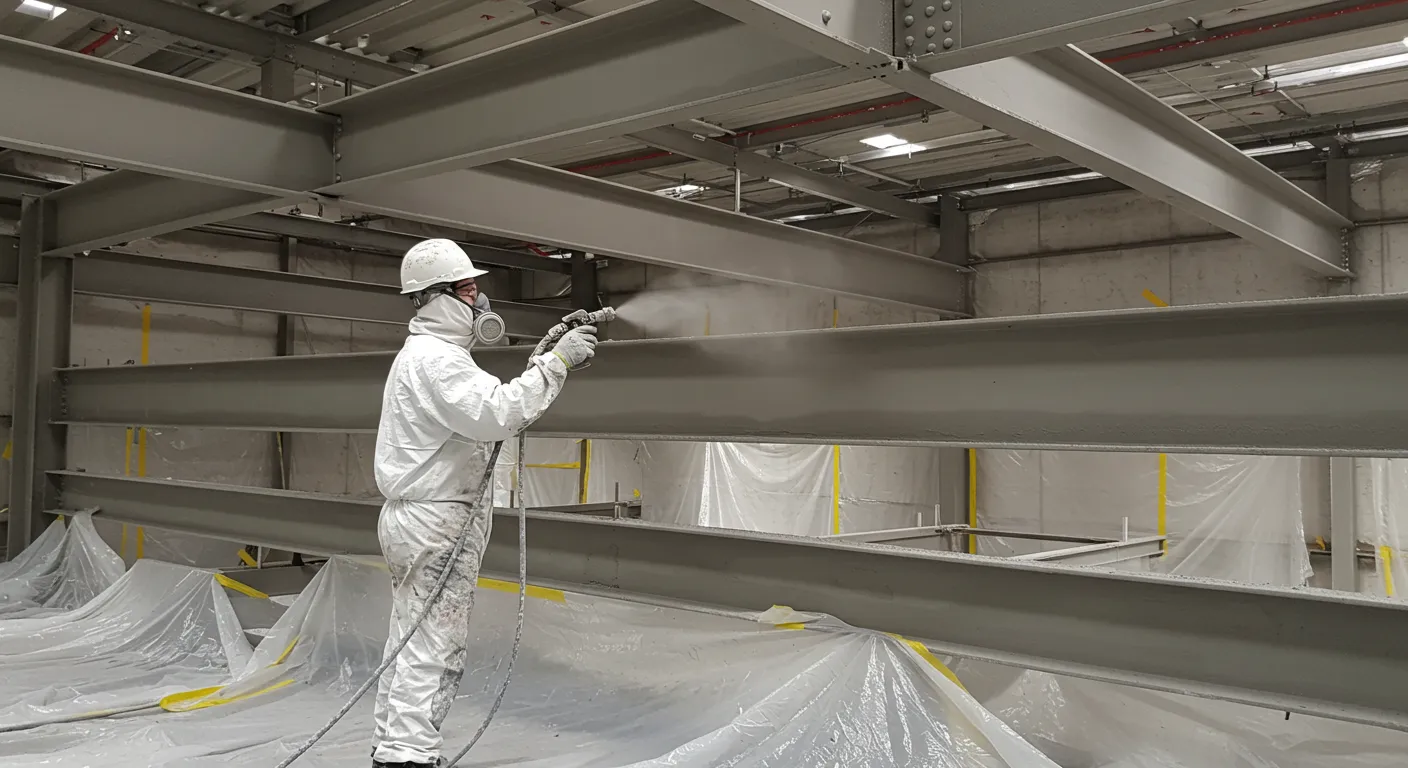
For a 2-hour fire-resistance rating, intumescent coating thickness for a 2 hour fire rating typically falls between 3.5 mm and 5.0+ mm (140 to 200+ mils) of dry film thickness on structural steel, though the exact figure depends on the steel member’s size and shape and the manufacturer’s UL-tested design. For a comprehensive overview of how coatings and other measures work together to protect a building, refer to our fire safety and property preservation guide. Below is a full thickness chart by rating, a closer look at steel-specific requirements, and the factors that push your number up or down.
| Fire Rating | Typical Coating Thickness | Application Surface | Common Product Types |
| 30 Minutes | 0.4 to 1.0 mm (16 to 40 mils) | Steel, Wood | Thin-film acrylic, epoxy |
| 60 Minutes | 1.5 to 2.5 mm (60 to 100 mils) | Structural Steel | Solvent-based or water-based epoxy |
| 90 Minutes | 2.5 to 3.5 mm (100 to 140 mils) | Structural Steel | Intumescent hybrid systems |
| 120 Minutes (2 Hours) | 3.5 to 5.0+ mm (140 to 200+ mils) | Steel, Concrete | Advanced epoxy systems |
Tip: always confirm the number on this chart against the specific manufacturer’s UL-listed design for your steel section. Charts like this one are a starting point, not a substitute for certified test data.
Coating thickness for steel is tied to the member’s weight-to-heated-perimeter (W/D) ratio, not just the fire rating alone. Heavier, bulkier steel sections, such as wide flange beams or hollow columns, dissipate heat more slowly and generally need less coating for the same rating. Lighter, thinner sections heat up faster and need a thicker film build to hit the same protection window. This is one reason a “one thickness fits every 2-hour job” number doesn’t exist. Structure Magazine’s coverage of passive fire protection thickness explains how UL’s published designs account for this section-by-section variation, and why extrapolating a thickness from one steel size to another can leave a member under-protected.
Thickness values must match the manufacturer’s certified fire-test data for the exact steel section and rating in question. These values are validated through third-party listings such as UL 263 and ASTM E119. According to Construction Specifier’s guide to specifying coating film thickness, UL has repeatedly warned that extrapolating thickness data beyond a published design voids the certified assembly, since even similar-looking steel sections can carry very different heat-absorption profiles.
| Coating Type | Max Fire Rating | Typical DFT Range | Ideal Substrate | Drying Time (23°C, 50% RH) |
| Water-Based Acrylic | 1 Hour | 0.4 to 2.0 mm | Wood, Drywall | 4 to 6 hours |
| Solvent-Based Epoxy | 2 Hours | 1.0 to 5.0 mm | Steel | 6 to 12 hours |
| Intumescent Hybrids | 2+ Hours | 2.0 to 5.0+ mm | Steel, Concrete | 8 to 16 hours |
During a fire, the coating doesn’t stay at its applied thickness. As AMPP’s CoatingsPro coverage of UL fire testing explains, intumescent coatings expand roughly 15 to 30 times their original thickness during a UL 263 fire test, forming the insulating char layer that slows heat transfer to the steel underneath. That expansion behavior is exactly why the applied dry film thickness has to match tested data rather than a visual estimate.
Higher time ratings (60 to 120 minutes) significantly increase coating thickness. Thickness can more than double when upgrading from a 60-minute to a 120-minute rating.
Cold weather or high humidity alters cure times and can affect the final film build during application. Winter applications, for example, often need controlled environments or extended curing periods.
Thickness values must match the manufacturer’s certified fire-test data, validated by third-party listings such as UL 263 and ASTM E119.
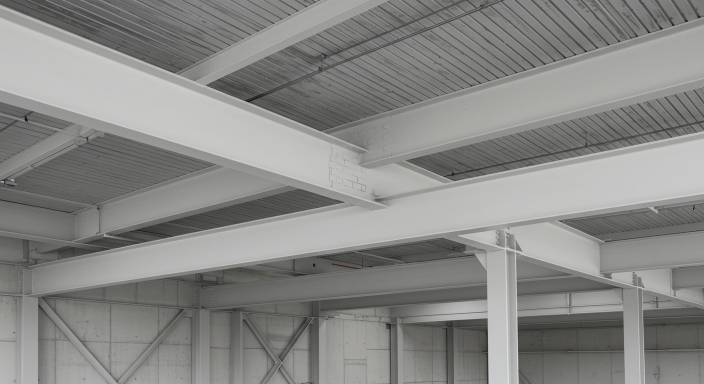
For fire-resistance work backed by certified application methods, our thermal and intumescent coatings services cover specification review through final DFT verification.
Getting the fire rating you need comes down to matching the right product, the right thickness, and the right application conditions to your specific steel section, and getting any one of those wrong can mean rework or a failed inspection. Contact us for a free quote and we’ll walk through your project’s rating requirements and substrate before a single coat goes on.
Related reading: not sure whether intumescent coating or fire-retardant paint fits your project? See our comparison of intumescent coatings and fire-retardant paint.
A 2-hour (120-minute) fire rating typically needs 3.5 mm to 5.0+ mm (140 to 200+ mils) of dry film thickness on structural steel, though the exact figure depends on the steel section’s size and shape. Always confirm the number against the manufacturer’s UL-listed design for that specific member rather than relying on a general range.
Thickness for steel depends on the member’s weight-to-heated-perimeter (W/D) ratio and the required fire rating. Lighter, thinner steel sections need a thicker coating than heavier sections to reach the same rating, which is why coating thickness for steel is specified per section size rather than as one universal number.
Coatings applied beyond the manufacturer’s tested specifications can crack or fail. Always apply within the tested thickness limits shown in the product’s UL-listed design.
Not for most systems. Multiple coats are typically required to reach the specified thickness without sagging or cracking during application or cure.
Use a certified dry film thickness (DFT) gauge and check readings against the job-specific thickness benchmark at each application phase, not just at the end.
No. Pigments added to topcoats for appearance don’t change the fire resistance of the base intumescent layer underneath.