How to Address Uneven Insulation Coverage With Open-Cell Spray Foam in Worcester, MA
Fixing uneven insulation coverage with open-cell spray foam in Worcester, MA starts with diagnosis, not with more foam. Our team…

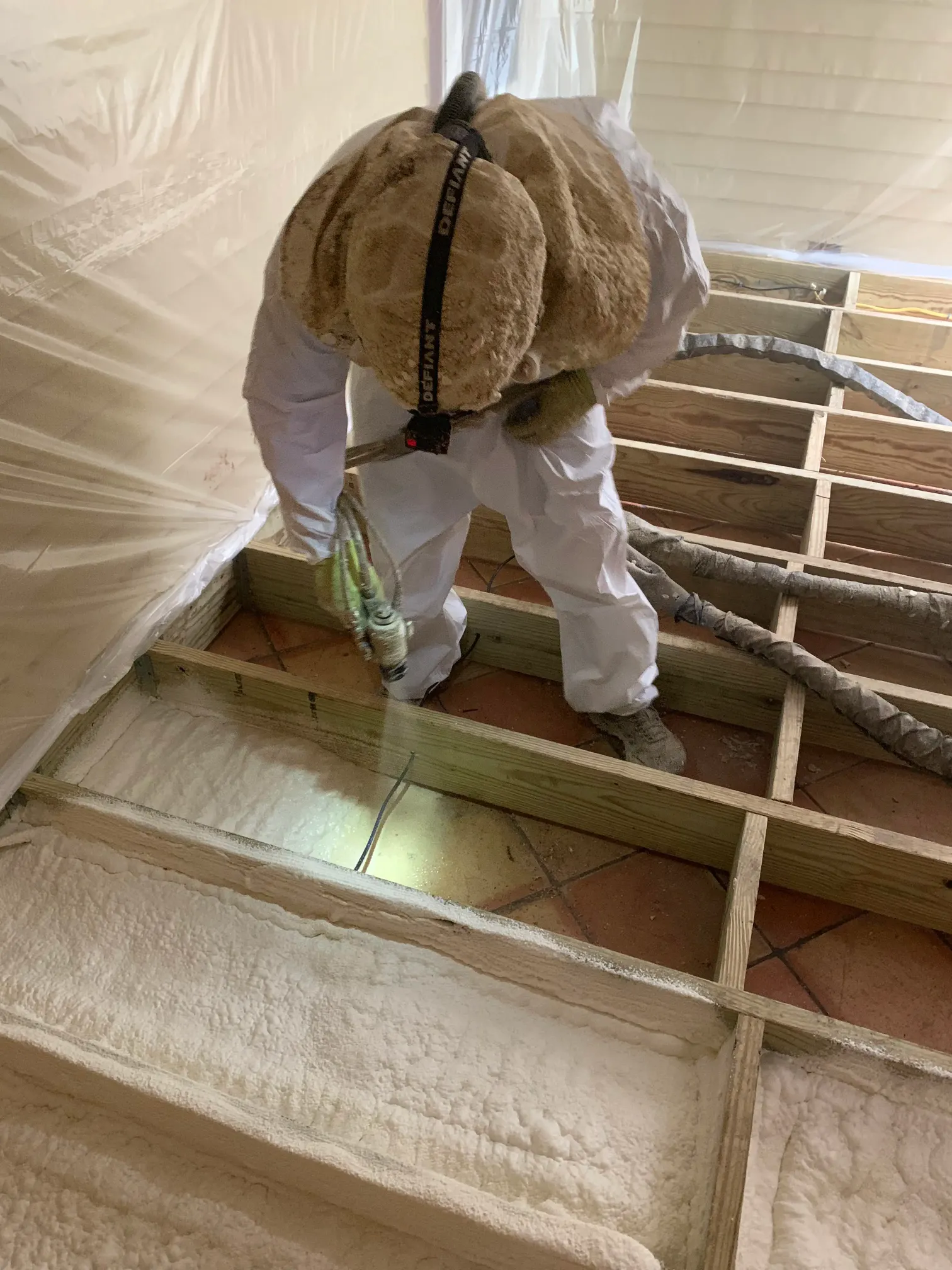
If you’re asking if is 1 inch of spray foam insulation enough, the honest answer is: it depends on what you’re trying to accomplish. One inch can work well as an air seal or a moisture barrier, but it usually falls short as the sole source of thermal insulation in most climates. Before comparing thicknesses, it helps to understand how open-cell and closed-cell spray foam differ, since the type of foam you use changes how much coverage one inch actually gives you.
This guide breaks down the 1-inch spray foam R-value, where a single inch is enough, where it isn’t, and how to figure out the right thickness for your specific project.
TL;DR: One inch of closed-cell spray foam provides roughly R-6 to R-7, while one inch of open-cell foam provides roughly R-3.5 to R-4. That’s enough for air sealing or as a moisture barrier, but it falls short of the R-13 to R-60 range most codes require for walls, attics, and roofs. One inch works best as a base layer or supplemental air seal rather than a home’s only insulation.
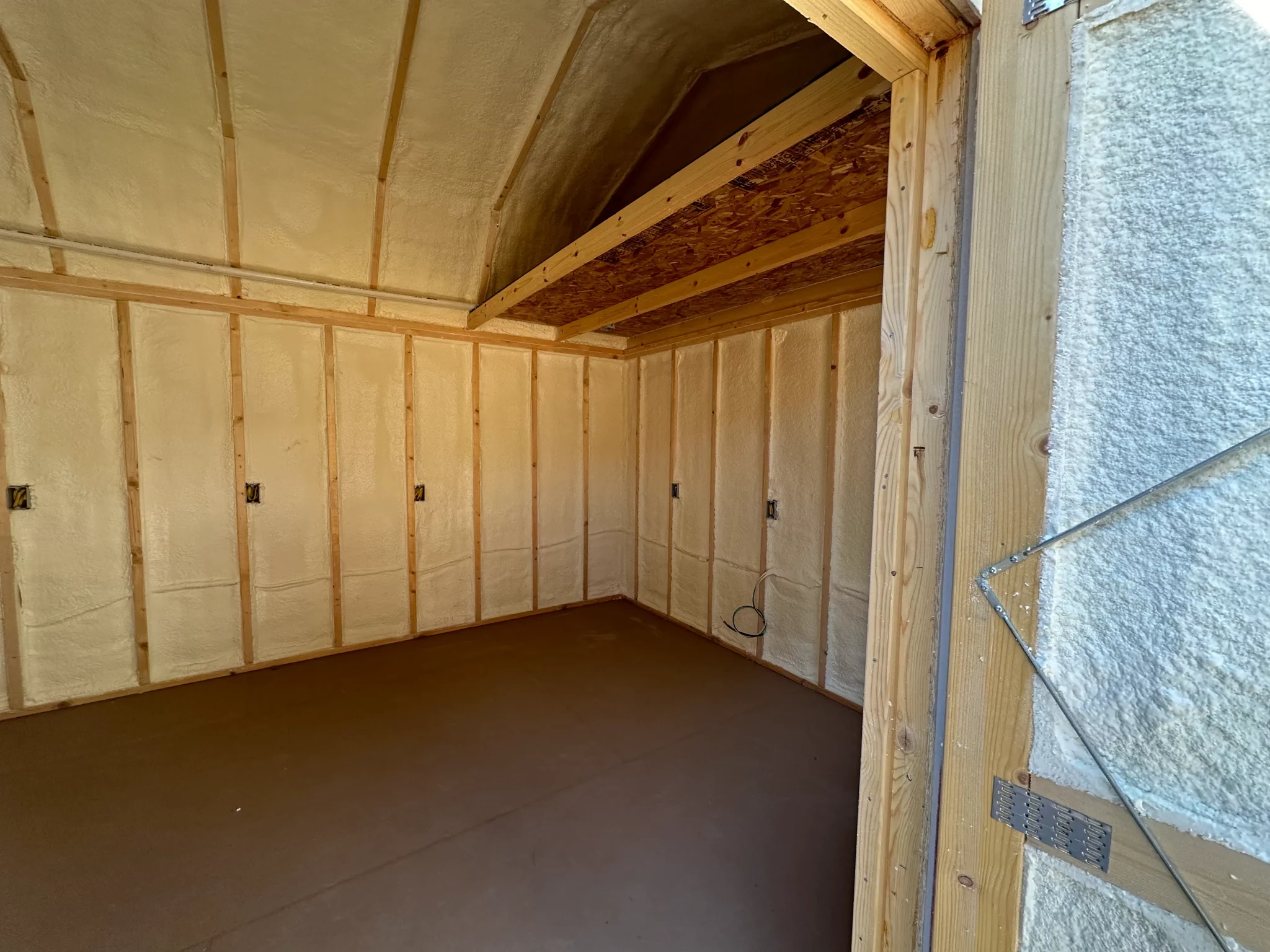
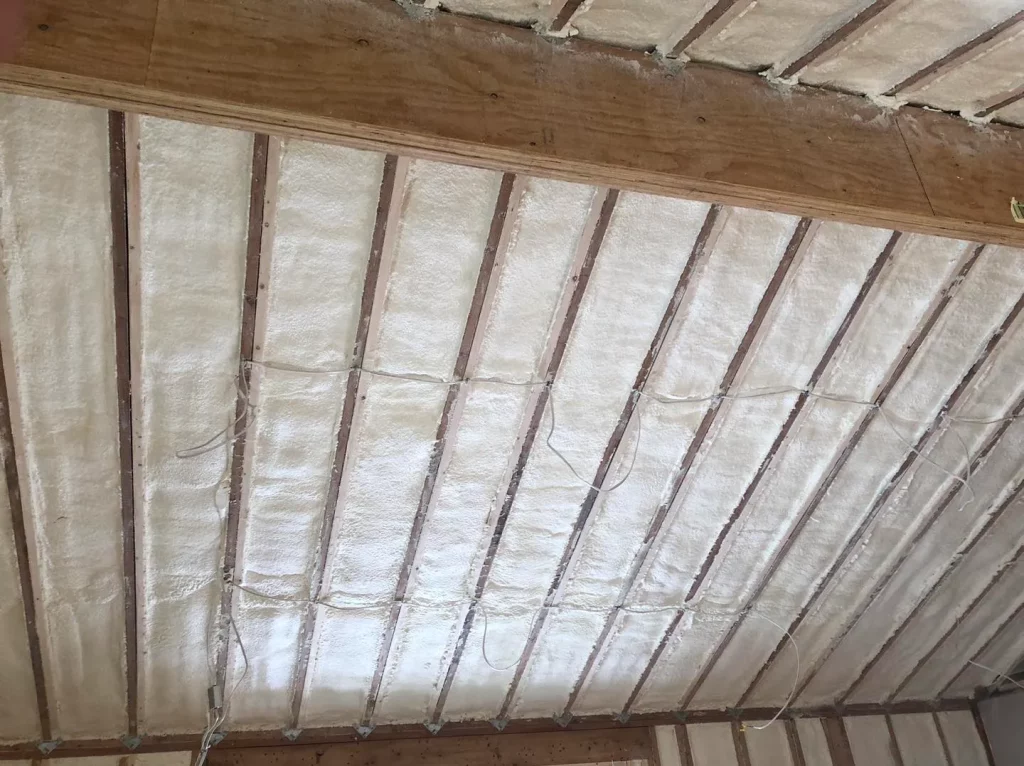
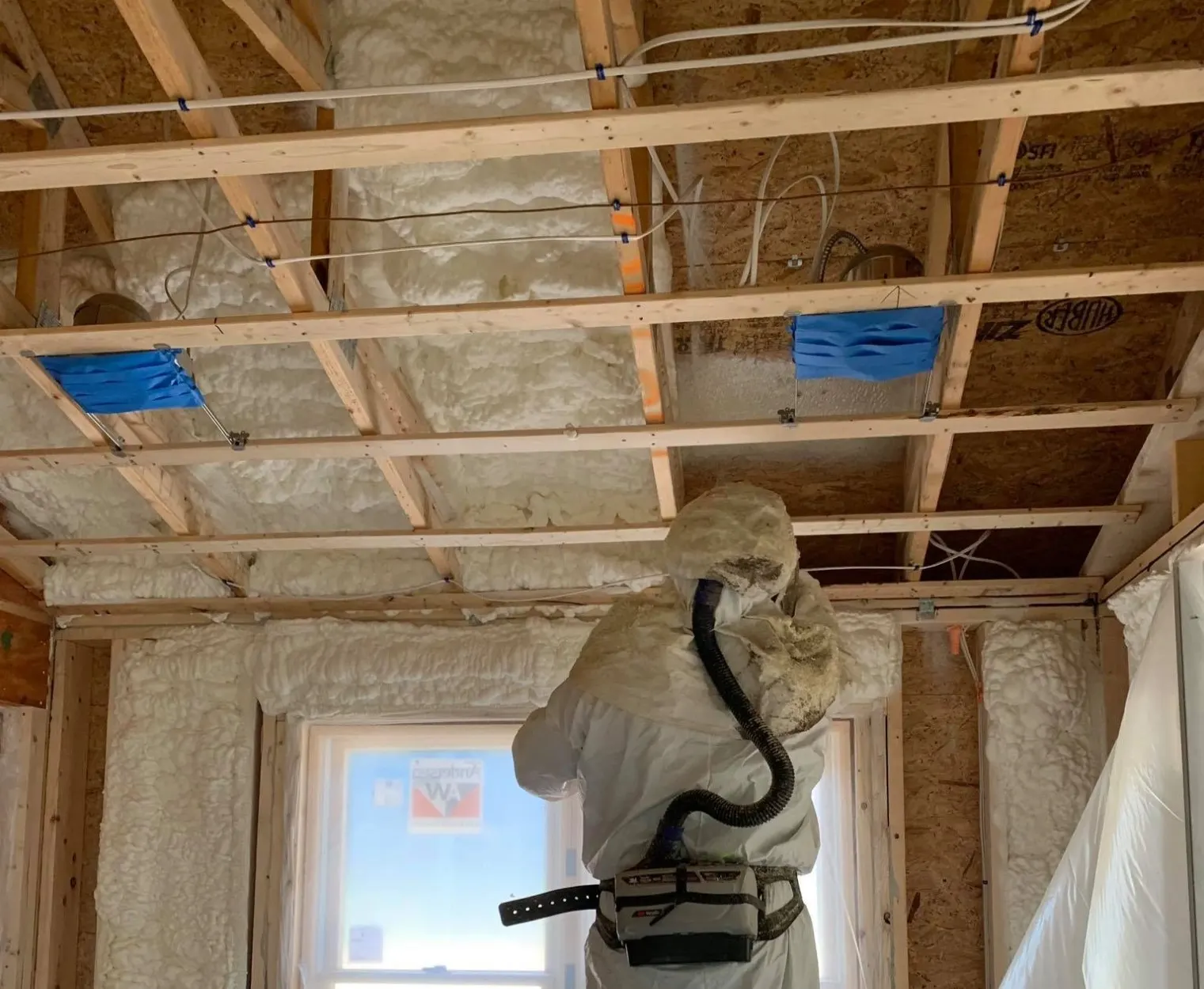
Spray foam expands on application, forming a tight seal that cuts down air leakage. It comes in two main types. Open-cell spray foam is lightweight and flexible with a lower R-value, and it allows some air and moisture permeability, which suits certain interior applications. Closed-cell spray foam is denser, with a higher R-value, and it adds structural reinforcement while resisting moisture more effectively.
The right thickness of spray foam insulation depends on the R-value you’re targeting, your climate zone, and where in the building the foam is being applied.
R-value measures how well a material resists heat transfer. Higher R-value means better thermal performance. Here’s what one inch of each foam type provides:
Different parts of a home need different R-values to perform well:
| Area of Application | Recommended R-Value | Thickness Required (Closed-Cell) |
| Attic | R-38 to R-60 | 6-10 inches |
| Walls | R-13 to R-21 | 2-3 inches |
| Crawl Spaces | R-10 to R-15 | 2-3 inches |
| Roofs | R-30 to R-49 | 5-8 inches |
Since 1 inch of closed-cell foam provides only R-6 to R-7, it typically isn’t enough on its own for primary insulation in most climates. It can still work well as an air barrier layered with other insulation.
There are a handful of scenarios where a single inch does the job.
As an air sealant. Spray foam’s biggest strength is forming an airtight barrier. Even at one inch, it meaningfully cuts drafts and air infiltration, which makes it a strong complement to fiberglass or cellulose rather than a replacement for them.
For vapor and moisture control. In humid environments, one inch of closed-cell foam can act as a vapor retarder, helping prevent condensation buildup in walls and crawl spaces.
As a supplemental base layer. Some builds use one inch of closed-cell foam as a base coat before adding batt or blown-in insulation on top, which improves air sealing while still hitting recommended R-values.
In metal buildings and pole barns. For non-living spaces like sheds, barns, and warehouses, one inch of spray foam can offer a reasonable level of insulation, particularly for condensation control.
A single inch of spray foam has real limitations. It typically comes in under the R-value most building codes call for. It provides limited thermal performance in colder climates. It can invite condensation issues if it’s the only insulation layer in certain applications. And it doesn’t offer much in the way of soundproofing on its own. Meeting code and efficiency targets usually means adding layers, which raises cost but delivers better performance meaningfully.
A few factors decide how much thickness you actually need.
Climate zone. Colder regions need higher R-values to limit heat loss, which almost always means more than one inch of foam.
Building code requirements. Local codes typically set minimum R-values by area of the home. According to the International Code Council, energy code minimums vary by climate zone, so it’s worth confirming local requirements before finalizing a thickness. Missing these minimums can mean inefficiency or a failed inspection.
Budget and goals. If air sealing is the priority, one inch may be enough. If thermal resistance is the priority, plan on additional layers.
Research from the Spray Polyurethane Foam Alliance backs this up: their technical data shows spray foam’s air-sealing performance holds up even at lower thicknesses, but R-value scales directly with how much material is applied, so thickness and thermal performance can’t be separated. For a broader look at how foam thickness plays into performance across different weather extremes, our comparison of spray foam vs reflective insulation is worth a read.
If you’re unsure about the right thickness for your project, an on-site evaluation removes the guesswork. Our closed-cell spray foam insulation service is built around applying the correct thickness for your climate zone and application, whether that’s one inch as an air seal or a full multi-inch build-out for code-compliant R-values.
Every project has different thickness and R-value needs depending on climate, budget, and building type. Reach out to our team for a straightforward assessment and quote before you commit to a thickness.
It depends on the goal. One inch works well as an air seal or moisture barrier, but it usually falls short of code-required R-values for full thermal insulation, especially in colder climates.
Open-cell foam provides roughly R-3.5 to R-4 per inch, while closed-cell foam provides roughly R-6 to R-7 per inch. Closed-cell is the stronger option when only one inch is being applied.
It varies by area. Attics typically need 6 to 10 inches of closed-cell foam to hit R-38 to R-60, while walls generally need 2 to 3 inches to reach R-13 to R-21.
Yes, for single-inch applications. Closed-cell foam offers a higher R-value and better moisture resistance than open-cell foam at the same thickness.
It depends on the area and your climate zone. Attics generally need the most, often 6 to 10 inches, while walls and crawl spaces typically need 2 to 3 inches to meet standard code requirements.
For most wall and crawl space applications, yes. Two to three inches of closed-cell foam typically lands in the R-13 to R-21 range most codes require for those areas.