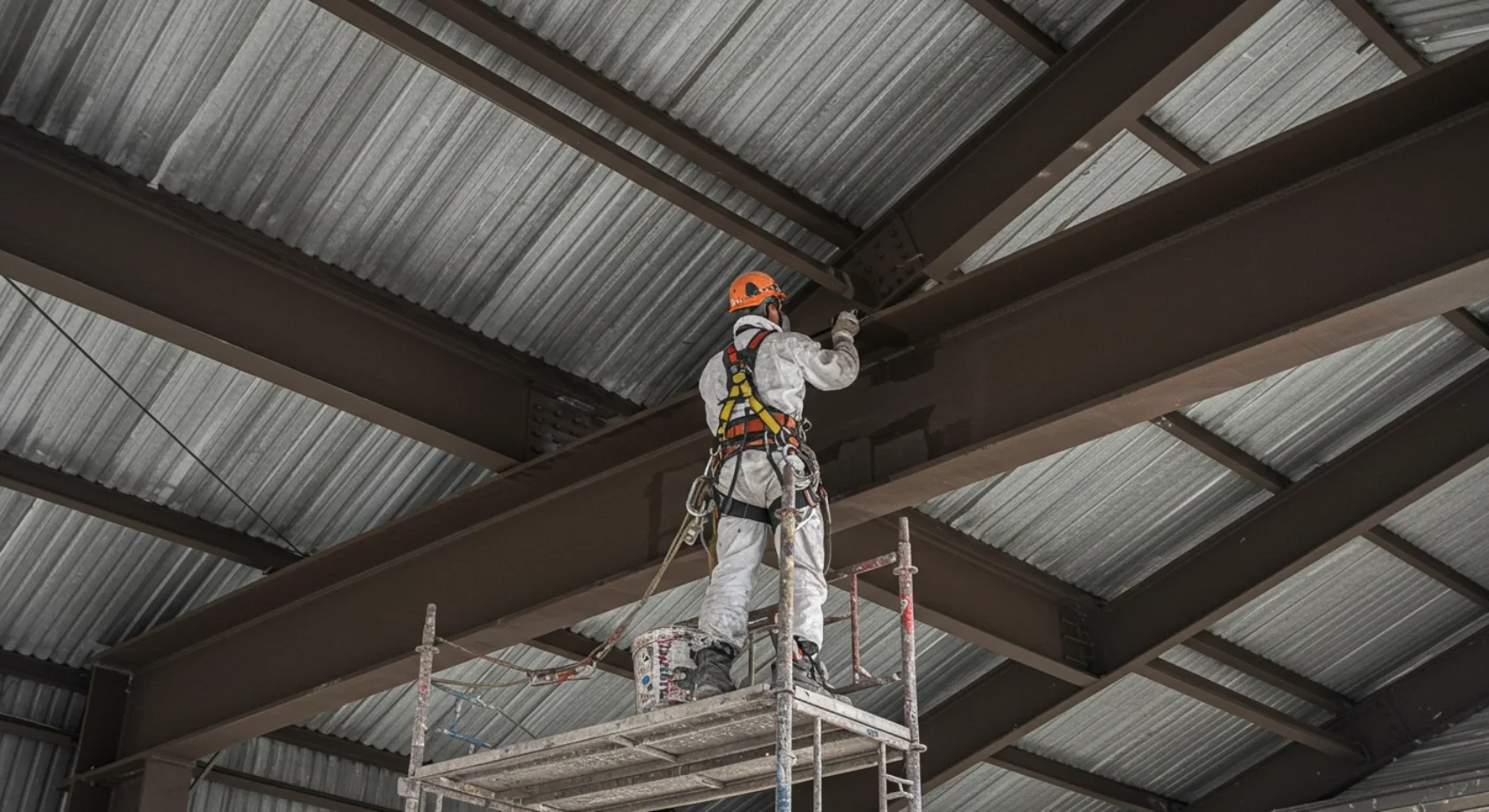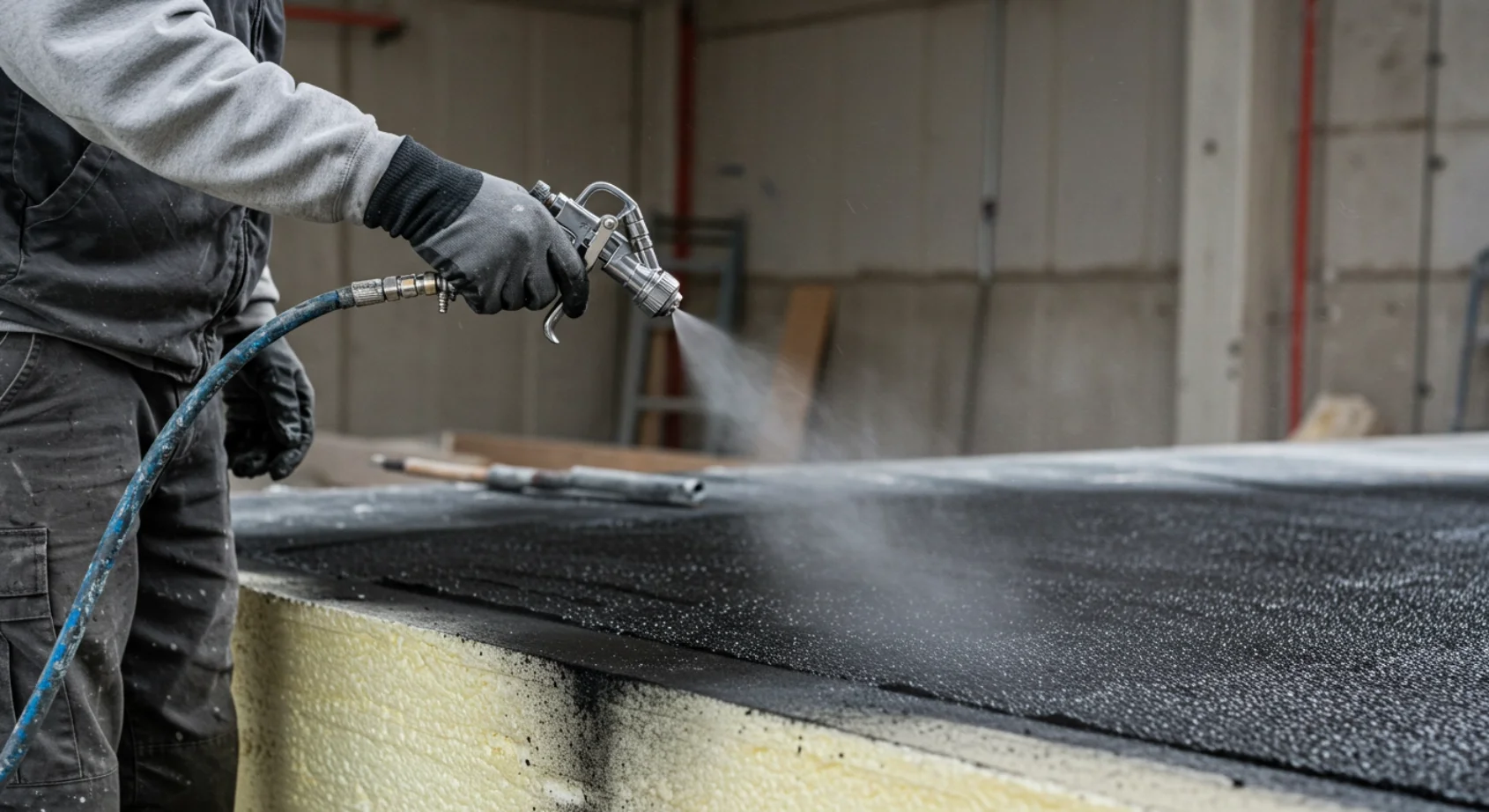
How Is Intumescent Coating Thickness Determined in Spencer, MA?
Determining the required thickness for an intumescent coating is not a matter of guesswork; it is an engineering calculation that…


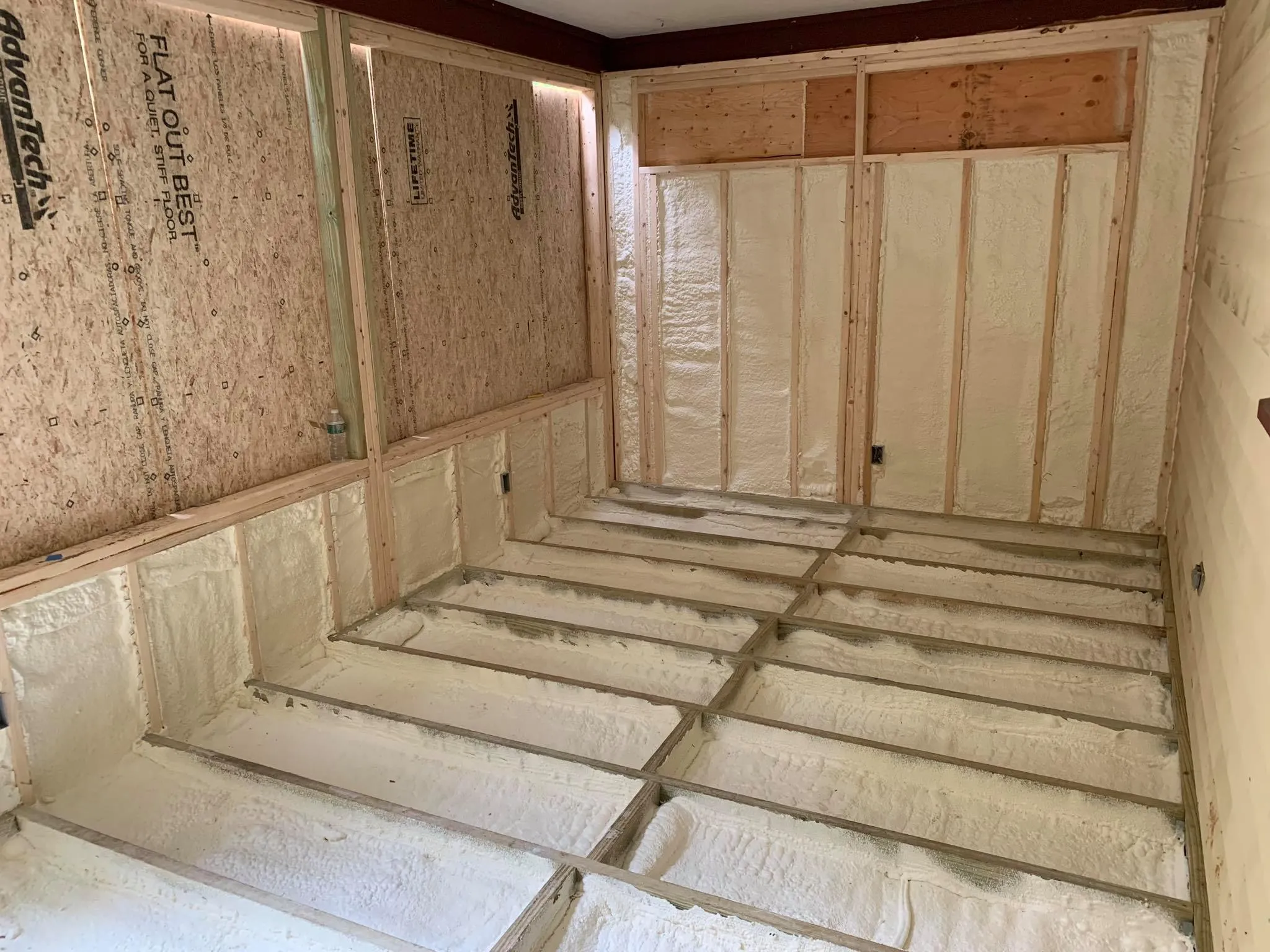
Open-cell spray foam generally provides superior noise reduction compared to closed-cell foam. Its lower density and open If you’re comparing open-cell vs closed-cell foam for soundproofing, the short answer is that these two materials handle sound in completely different ways. Open-cell foam absorbs sound waves inside its soft, porous structure. Closed-cell foam is dense enough to reflect sound rather than soak it up. For more background on how the softer material is made and where it performs best, our open-cell spray foam guide is a good starting point before you decide which product fits your project.
This guide breaks down the acoustic differences between the two foams, explains the physics behind sound absorption versus sound reflection of open-cell vs closed-cell spray foam for Soundproofing, and helps you match the right material to your actual noise problem.
TL;DR: Open-cell foam is the stronger choice for open-cell foam sound deadening and interior soundproofing because its low density absorbs airborne noise. Closed-cell foam is denser and built for air sealing, moisture control, and structural strength. It can block some sound by reflecting it, but closed-cell foam sound absorption is limited, so it does little for echo or reverberation. Most soundproofing projects use open-cell foam on interior walls and closed-cell foam on the exterior envelope.
Sound travels through the air as vibration. To stop it, insulation has to either absorb that vibration or block its path outright.
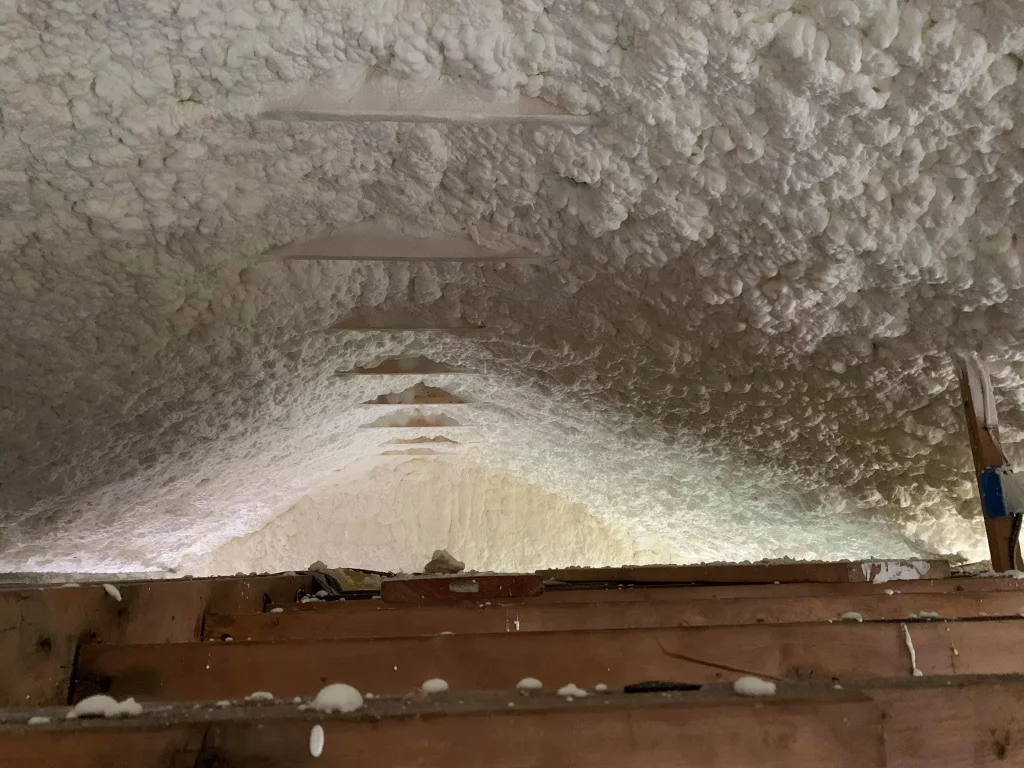
Open-cell foam acts like a sponge for sound. When sound waves hit its porous surface, they enter the tiny open bubbles and lose energy through friction inside the cell structure. That process converts sound energy into a small amount of heat, which muffles the noise.
Closed-cell foam works differently. Its cells are pressed tightly together and filled with gas, which makes the material hard and rigid. When sound waves hit that dense surface, they bounce off instead of penetrating it. The blocking effect helps with some noise, but the rigid structure can transmit vibration through the building frame if it isn’t applied correctly.
Demand for insulation that handles both energy performance and comfort keeps climbing. According to Grand View Research, the spray polyurethane foam market continues to expand as homeowners look for materials that do more than one job.
Open-cell foam is a purpose-built tool for open cell foam for soundproofing projects. Its density runs very low, often around 0.5 pounds per cubic foot. That softness makes it excellent at absorbing airborne noise like voices, TVs, and music, and it’s especially effective against mid- to high-frequency sound.
Closed-cell foam is much denser, typically 1.7 to 2.0 pounds per cubic foot. It forms a vapor barrier and adds structural strength to the building. So does closed-cell foam absorb sound? Not really. It excels at thermal insulation and air sealing, but it isn’t built as a sound absorber. It reflects sound, which helps keep outside noise from entering a space, but it doesn’t touch echo or reverberation inside the room itself. That’s why homeowners asking is closed cell foam good for soundproofing usually get a “yes, but only for certain jobs.”
For homeowners who want both materials applied correctly for a specific room, our closed-cell spray foam insulation service covers proper density and coverage for air sealing alongside sound control.
| Feature | Open-Cell Spray Foam | Closed-Cell Spray Foam |
| Primary Mechanism | Sound absorption | Sound reflection/air sealing |
| Density | Low (~0.5 lbs/ft³) | High (~2.0 lbs/ft³) |
| Best For | Echo reduction, interior walls | Exterior shells, air sealing |
| Noise Type Handled | Airborne (voices, TV) | Impact and airborne (via sealing) |
| Vapor Barrier | No (permeable) | Yes (impermeable) |
In the Northeast, where humidity and temperature swings are common, insulation choice takes a bit more thought. Research from Building Science Corporation points to air sealing as one of the most cost-effective ways to improve comfort and control moisture.
For homes in colder climates like New England, closed-cell foam is often specified for the exterior envelope to prevent ice dams and moisture intrusion. That said, when the goal is soundproofing a media room or master suite, open-cell foam remains the stronger pick for interior partitions no matter the exterior climate. The Spray Polyurethane Foam Alliance notes that spray foam outperforms traditional insulation for air sealing, which matters for noise control since sound travels easily through air gaps. One more common concern is odor. Quality spray foam cures quickly and doesn’t hold onto smells long-term, but proper ventilation during installation is still important for a safe job site.
The right foam involves more than checking an STC rating. Weigh these factors first:
Open-cell foam wins for dedicated noise-reduction projects because of how well it absorbs sound. Closed-cell foam earns its place as an air barrier and thermal insulator on the building’s perimeter. Most high-performing projects use closed-cell on the exterior for structure and weatherproofing, and open-cell on interior partitions for a quieter living space. Matching the material to the actual noise source and the space’s moisture and climate conditions is what gets the best result.
If you’re also weighing how spray foam holds up against other materials in tougher conditions, our comparison of spray foam vs reflective insulation covers that in more depth.
Picking the right foam for noise reduction depends on your specific space, budget, and building conditions. Reach out to our team for a personalized assessment and a straightforward quote before you start your project.
Not effectively. Closed-cell foam is dense and rigid, so it reflects sound rather than absorbing it. It can help block noise from entering a space through air sealing, but it won’t reduce echo or reverberation inside a room.
Open-cell foam is generally the better choice for soundproofing. Its low density and open structure absorb airborne noise like voices and music far more effectively than the denser closed-cell material.
It has a role, mainly on exterior walls or in situations where structural strength and moisture control matter more than sound absorption. For interior sound control, open-cell foam performs better.
No insulation material stops noise entirely. Blocking loud external noise, such as traffic or music, usually requires a combination of mass, decoupling, damping, and insulation working together.
Yes, especially for open-cell foam. Thicker application absorbs lower-frequency sound more effectively. Standard wall cavities usually provide enough depth for solid residential soundproofing.
It can reduce it significantly. Open-cell foam is particularly good at dampening water hammer and the sound of water moving through pipes in interior walls.
Spray Polyurethane Foam Alliance — the national trade association for the SPF industry, with technical data on spray foam applications.
Building Science Corporation — research and consulting on building performance, air sealing, and moisture control.