How to Address Uneven Insulation Coverage With Open-Cell Spray Foam in Worcester, MA
Fixing uneven insulation coverage with open-cell spray foam in Worcester, MA starts with diagnosis, not with more foam. Our team…

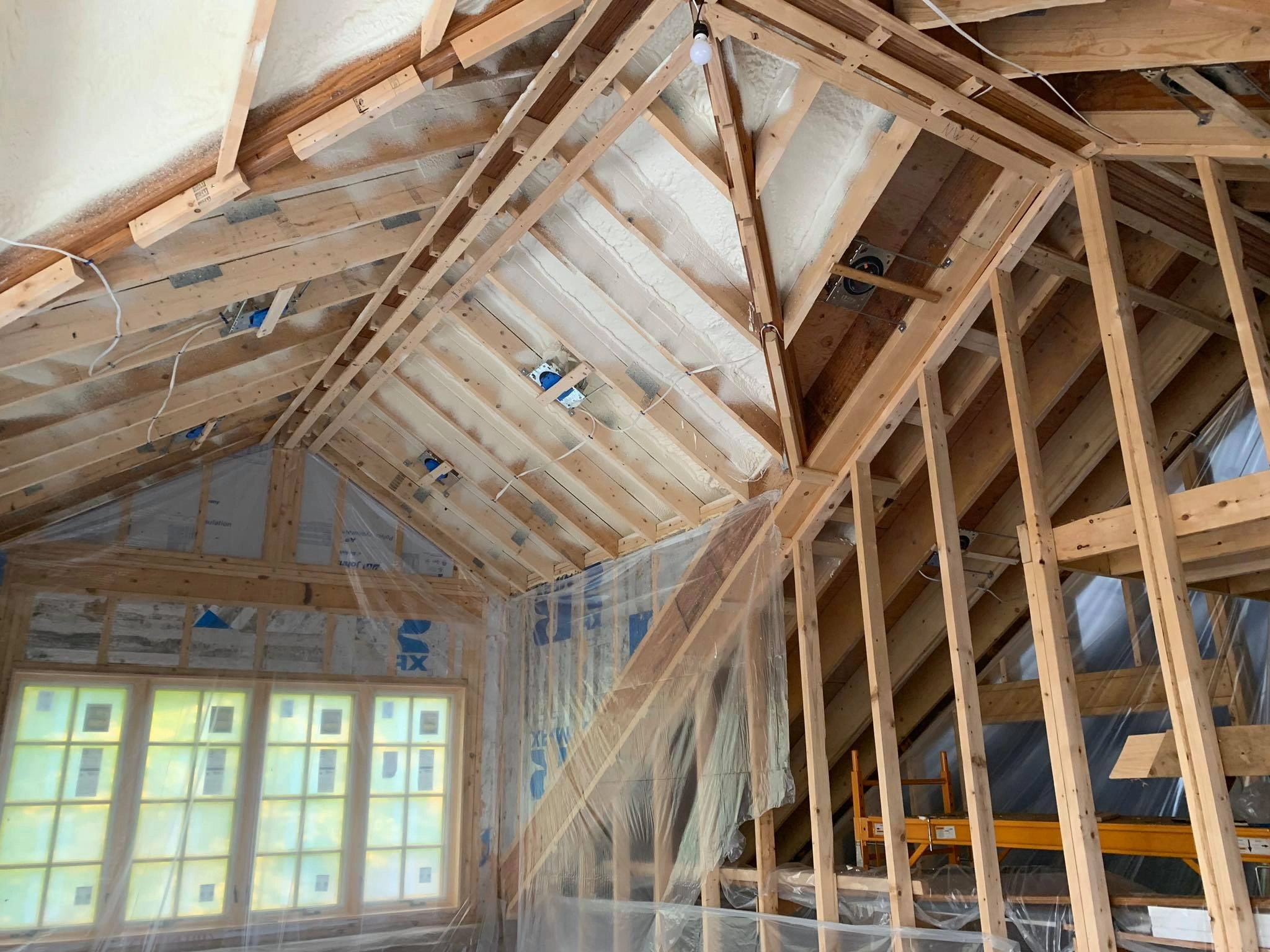
Spray foam insulation for attics offers stronger thermal performance and air sealing than fiberglass or cellulose, which is why it’s become the go-to option for homeowners dealing with ice dams, high energy bills, or an attic that never seems to hold temperature. It works by expanding to fill gaps and cracks, forming a continuous barrier that stops both heat transfer and air leakage. Before deciding whether this is the right upgrade for your attic, it helps to first understand open-cell spray foam, since that’s the foam type most commonly used in attic applications.
This guide covers how spray foam works, what it costs, the difference between open-cell and closed-cell foam for attics, and what to check before installation.
TL;DR: Spray foam for attic applications typically means open-cell foam, since it’s lighter, cheaper per inch, and provides excellent air sealing for interior spaces. Closed-cell foam costs more but offers a higher R-value per inch and doubles as a vapor barrier, which matters more in humid climates. Either option requires 8 to 10 inches (open-cell) or 4 to 6 inches (closed-cell) to hit recommended attic R-values, and professional installation is strongly recommended over DIY kits.
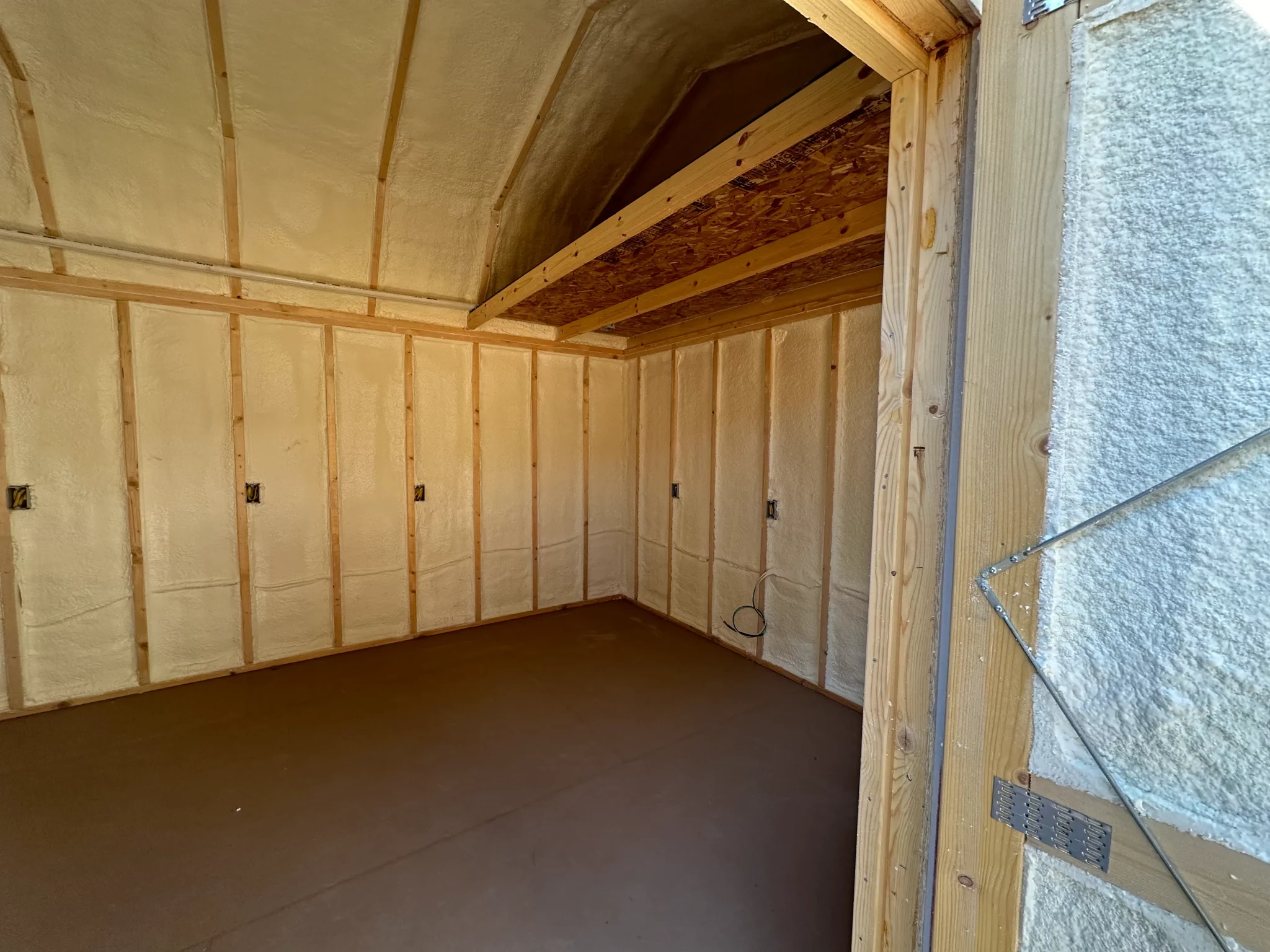
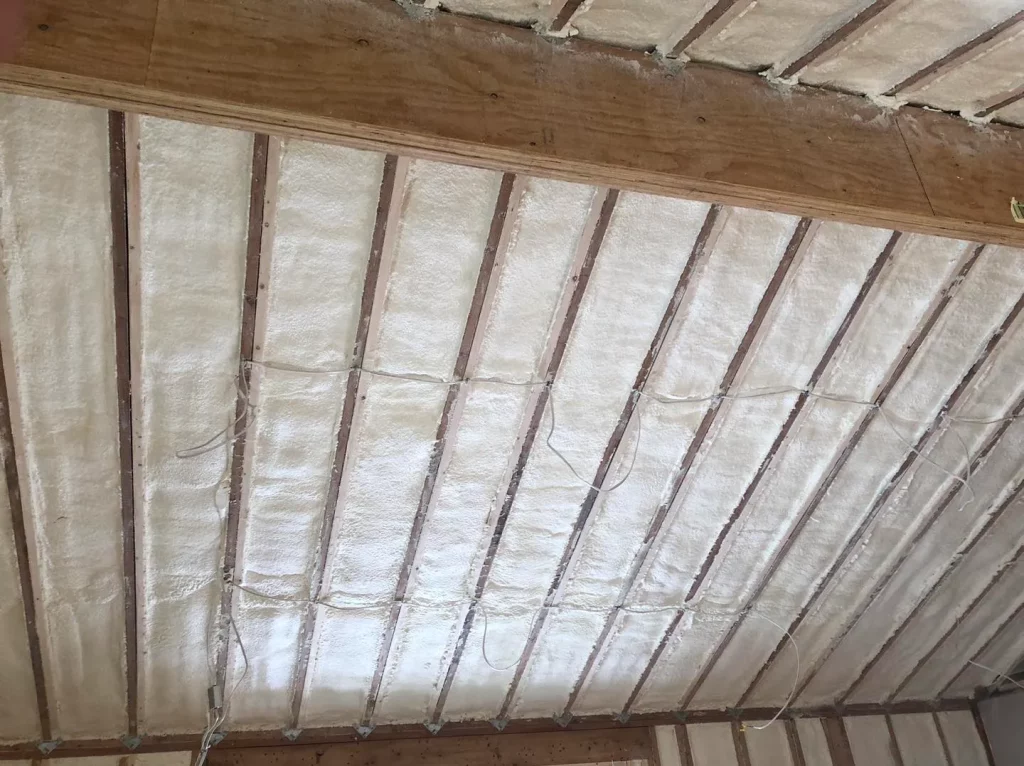
Spray foam insulation starts as a two-part liquid that mixes and expands on contact, forming a cellular plastic material. That expansion lets it fill every crack, crevice, and void in an attic space, something batt or blown-in insulation simply can’t do. This is what separates attic foam insulation from traditional materials: it doesn’t just slow heat transfer, it stops air movement outright.
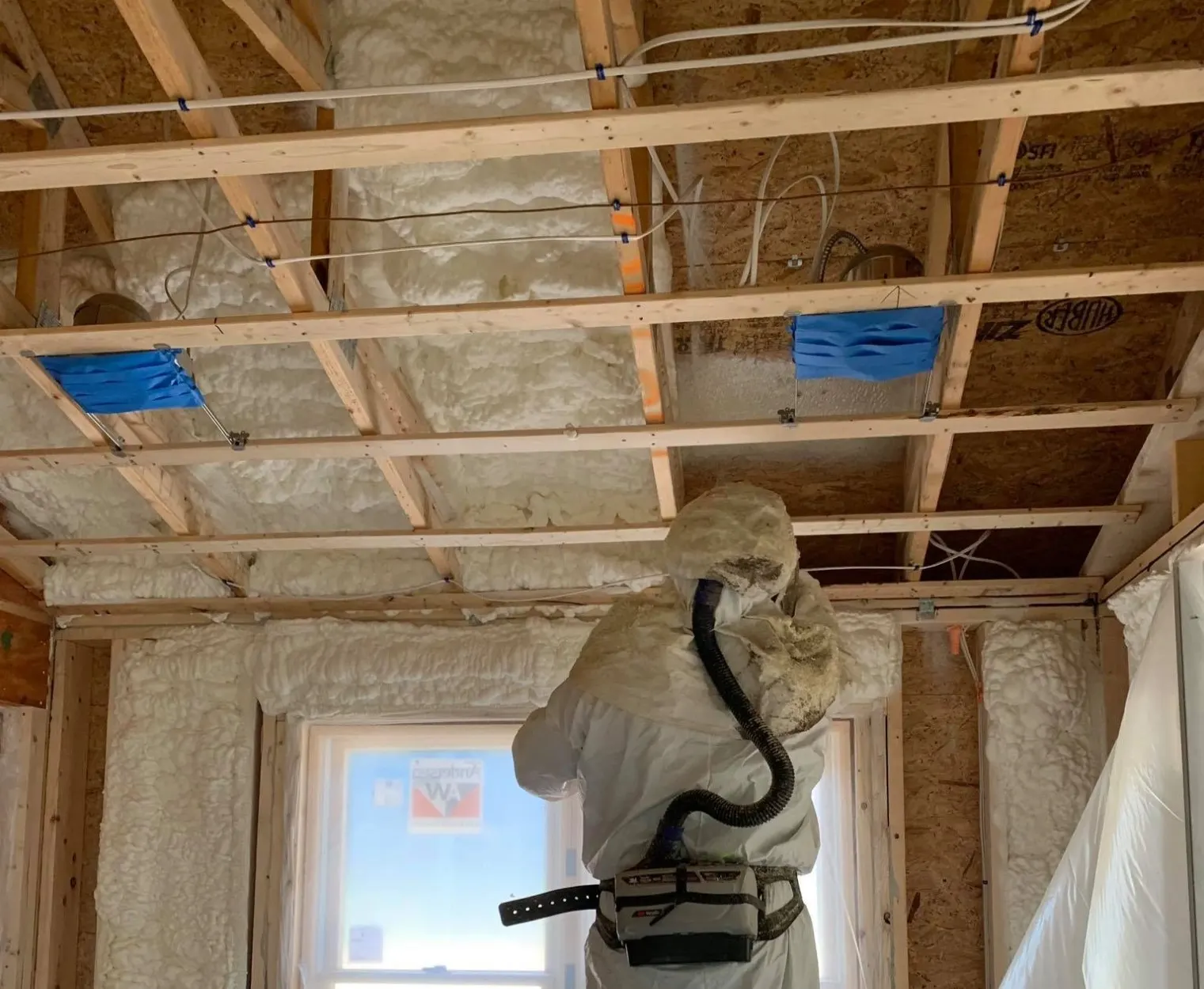
The installation process needs specialized equipment and trained technicians. Chemicals are heated and pumped through hoses to a spray gun, where they mix under pressure and expand rapidly on the surface. Installers wear protective equipment because of the chemical nature of the product and the fumes produced during application. The foam cures within minutes, but attic spaces typically need 24 to 48 hours before they’re safe to re-enter.
Both foam types can be used in attics, but they serve different purposes and come at different price points.
| Feature | Open-Cell Foam | Closed-Cell Foam |
| R-Value per inch | 3.5-3.8 | 6.0-7.0 |
| Expansion rate | ~100x original volume | ~30-40x original volume |
| Vapor barrier | Semi-permeable | Complete vapor barrier |
| Best application | Interior walls, attics | Foundations, metal buildings |
| Weight | Very light | Dense and heavy |
Open-cell foam is softer and more flexible, which lets it expand significantly more than closed-cell. It’s more affordable and adds solid sound dampening, making it a common choice for spray foam insulation for attics in most residential homes. For attic and interior applications specifically, our open-cell spray foam insulation service is built around getting the right coverage and thickness for that lighter, more flexible material.
Closed-cell foam is denser, delivers a higher R-value per inch, and acts as a complete moisture barrier. The added cost usually makes more sense for crawl spaces, basements, and areas where moisture control matters more than raw square footage of coverage.
The clearest advantage of spray foam in the attic is its air-sealing capability. Spray foam eliminates the need for a separate air barrier system since it handles both insulation and air sealing at once. According to the Spray Polyurethane Foam Alliance, properly installed spray foam significantly outperforms traditional insulation for controlling air leakage in a building envelope, which is one of the biggest drivers of both energy loss and moisture problems in older homes.
That performance comes with tradeoffs. The upfront cost can run two to three times higher than fiberglass. Installation requires professional expertise, since DIY attempts often lead to poor coverage and potential health hazards from improper mixing. The chemicals used during application can irritate the eyes, skin, and respiratory system, though most cured products are certified low-VOC and safe once fully off-gassed.
For homes in mixed climates like New England, a hybrid approach often works well: apply closed-cell foam in the first two inches for air sealing and moisture control, then add open-cell or conventional insulation on top to hit recommended R-values while keeping costs down.
Attic prep has a real impact on how well spray foam performs. The space needs to be clean and dry before installation, and any existing moisture problems, roof leaks, or ventilation issues should be resolved first, since spray foam will trap moisture against a damp surface instead of solving the problem. The attic structure is also worth a second look. Per the Insulation Institute, the added weight of closed-cell foam can require structural reinforcement in older homes, so this is worth confirming before committing to a material.
Building codes vary by region and often set specific requirements for spray foam installation. Most jurisdictions require foam to be covered by a thermal barrier such as drywall, especially in living spaces, and local regulations may limit which foam types are approved for attic use. Check with your local building department before scheduling installation.
If your air handler or ductwork sits in the attic, spray foam can allow you to convert the space into a conditioned area, which improves equipment efficiency and lifespan. That said, it takes extra planning around ventilation and moisture control to do it correctly.
Regional climate plays a real role in which spray foam approach makes sense. In cold climates like the Northeast, preventing ice dams is usually the top priority. Properly installed spray foam removes the warm-air leaks that cause ice dams in the first place by keeping the roof deck at a more consistent temperature. Research from Building Science Corporation has found that unvented attics using spray foam insulation outperform traditionally ventilated attics in cold climates when the work is done correctly.
Hot, humid climates come with a different set of challenges, where moisture control becomes the priority and closed-cell foam is often the better fit. Its complete vapor-barrier properties keep humid outdoor air from reaching cooler interior surfaces where condensation could form. Converting a ventilated attic into an unvented, conditioned space also means your HVAC system needs to be sized and evaluated correctly for the change.
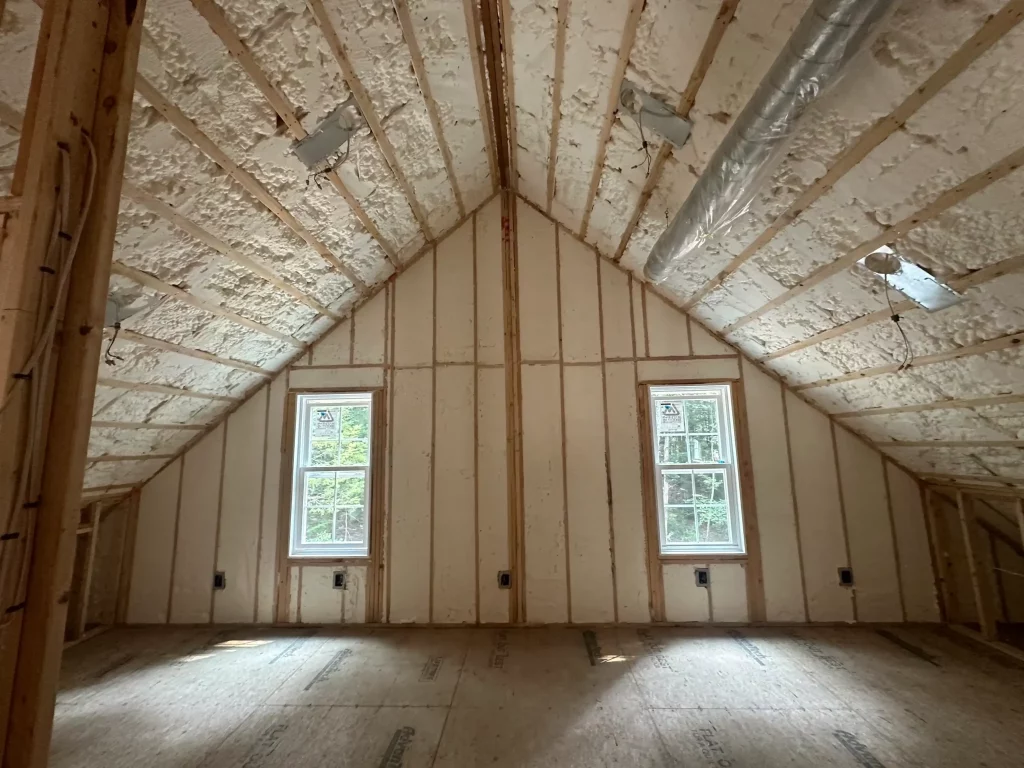
Spray foam attic insulation offers real advantages when it’s installed correctly, but it isn’t automatically the right call for every home. The decision comes down to climate, existing construction, budget, and how long you plan to stay in the house. Installation quality matters just as much as the product itself. A poor install can undo most of the benefits spray foam is supposed to deliver.
Before deciding, it’s worth evaluating your home’s current energy performance, existing insulation, and any moisture issues on hand. Spray foam works best as one part of a broader approach to energy efficiency that also includes air sealing, HVAC tuning, and moisture management. For homeowners comparing spray foam against other materials for tougher conditions, our breakdown of spray foam vs reflective insulation covers how each performs in extreme weather.
Every attic is different, and the right foam type, thickness, and prep work depend on your specific home and climate. Reach out to our team for a straightforward assessment and quote before you commit to a project.
Spray foam seals air leaks that traditional insulation can’t reach, which lowers energy bills and helps prevent ice dams. It also resists mold growth, adds structural rigidity in closed-cell form, and typically lasts longer than fiberglass or cellulose.
For homeowners staying in their home five or more years, spray foam usually pays for itself through lower heating and cooling costs. The higher upfront price is offset over time by reduced energy use and fewer ice-dam or moisture repairs.
Open-cell foam typically needs 8 to 10 inches to reach recommended R-30 to R-38 values. Closed-cell foam needs only 4 to 6 inches thanks to its higher R-value per inch. Exact requirements depend on your local building code and climate zone.
No. Spray foam creates an unvented attic assembly. Traditional vented attics rely on airflow to manage moisture, but spray foam removes the air leakage and moisture transport that ventilation is meant to control, which often performs better and simplifies the roof design.
Professional installation is strongly recommended. DIY kits exist, but they commonly produce weaker coverage and can create health hazards from improper mixing. Many manufacturers also void product warranties on DIY installations.
Open-cell foam is lighter, less expensive, and expands more, making it a common choice for attic and interior applications. Closed-cell foam costs more but delivers a higher R-value per inch and a full vapor barrier, which matters more in humid climates or moisture-prone spaces.
Building Science Corporation — research and consulting on building performance, unvented attic assemblies, and moisture control.
Spray Polyurethane Foam Alliance — the national trade association for the SPF industry, with technical data on spray foam performance and applications.
Insulation Institute — industry organization providing market research and technical information on insulation materials.