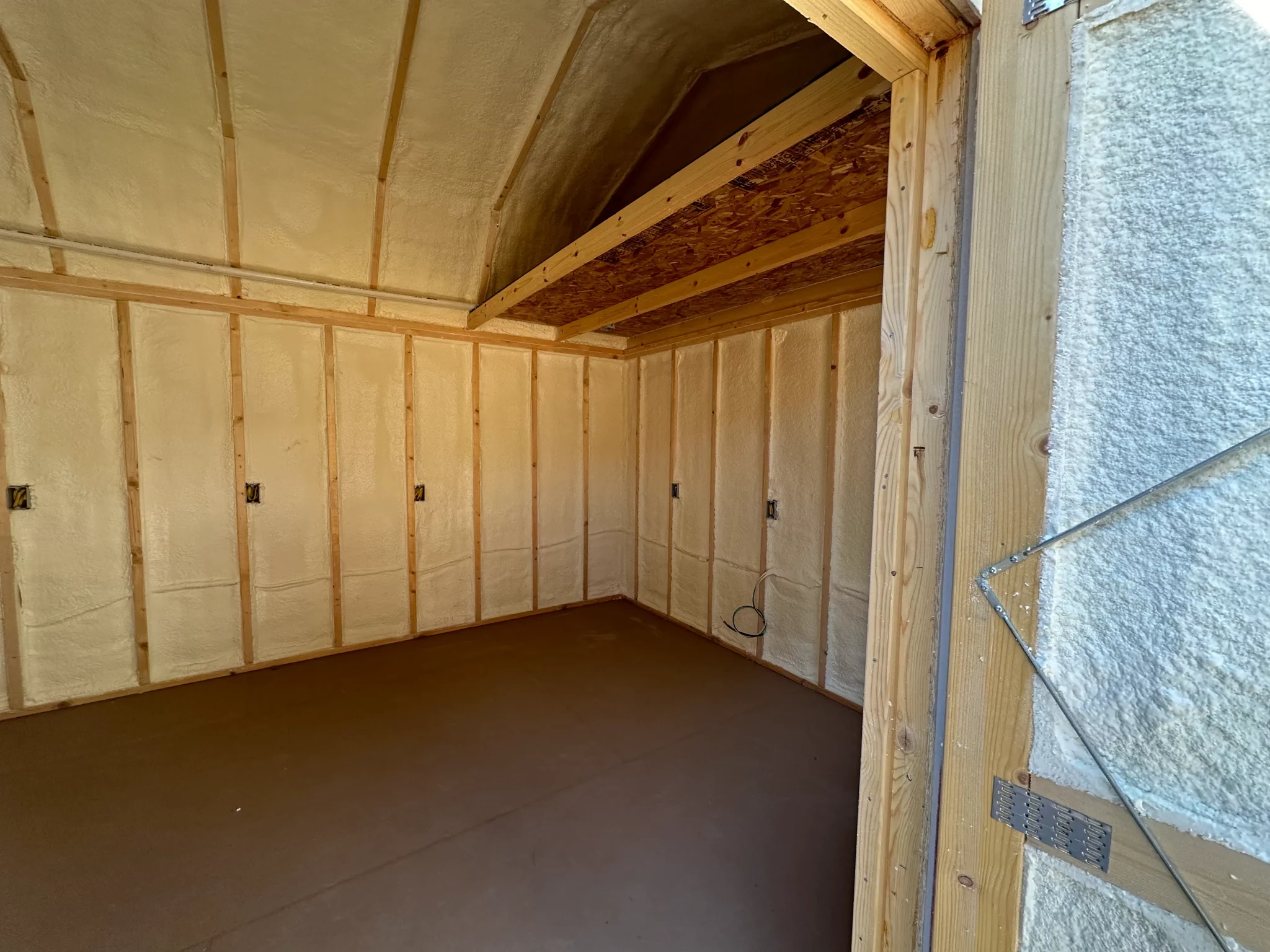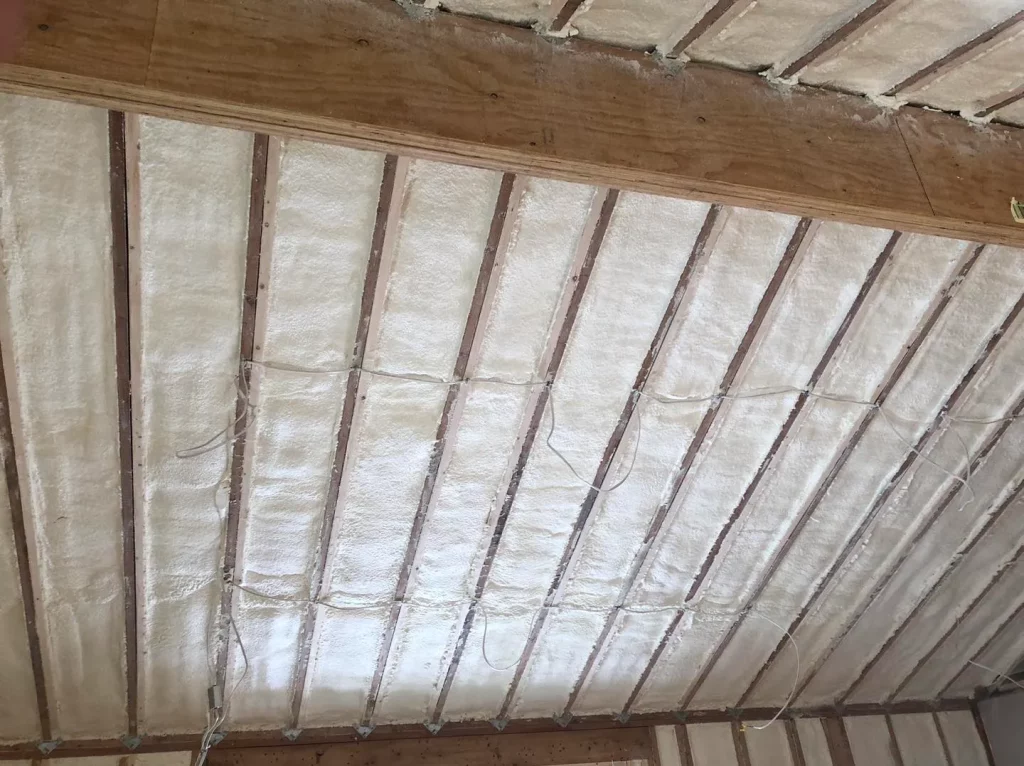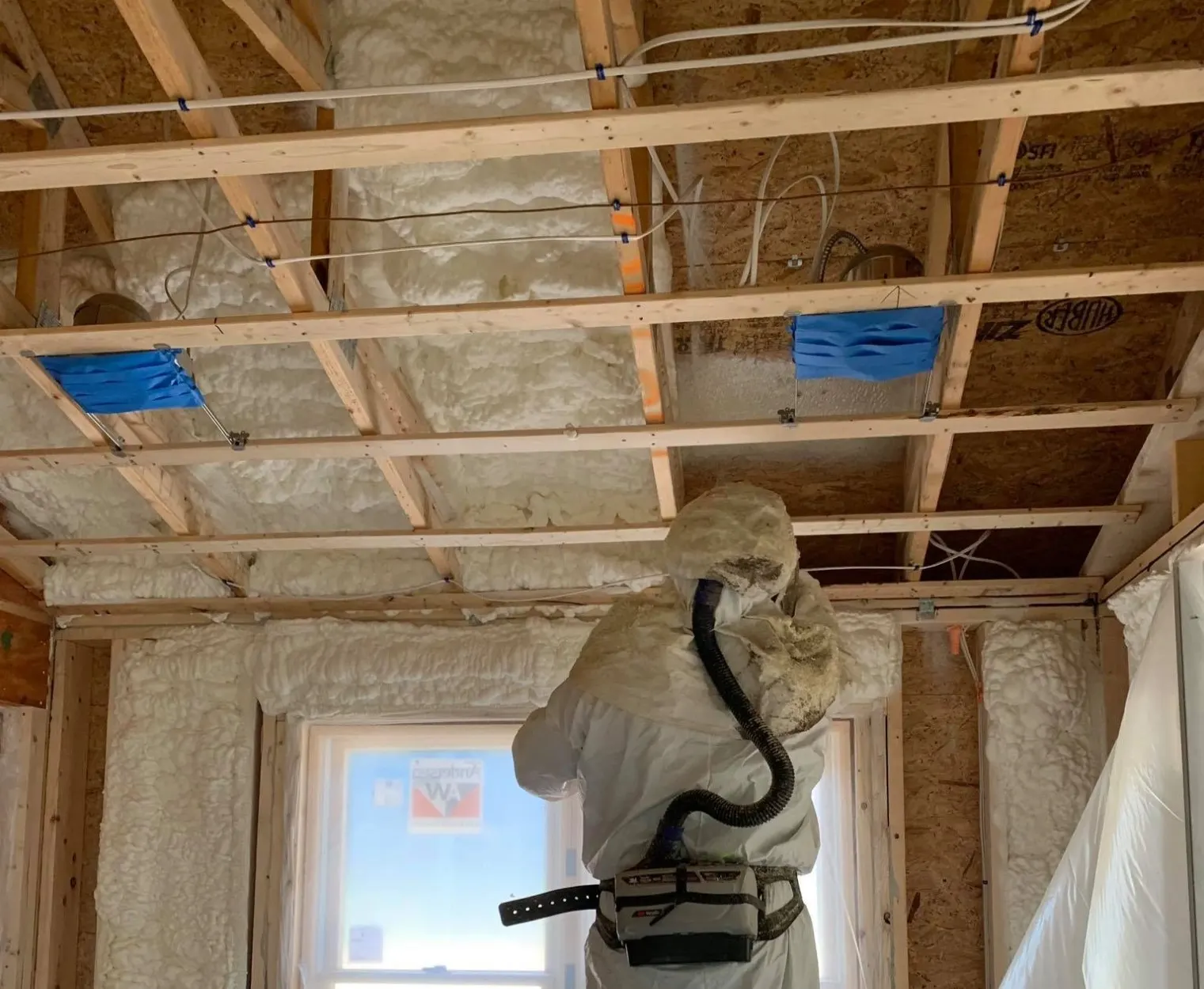
How to Address Uneven Insulation Coverage With Open-Cell Spray Foam in Worcester, MA
Fixing uneven insulation coverage with open-cell spray foam in Worcester, MA starts with diagnosis, not with more foam. Our team…


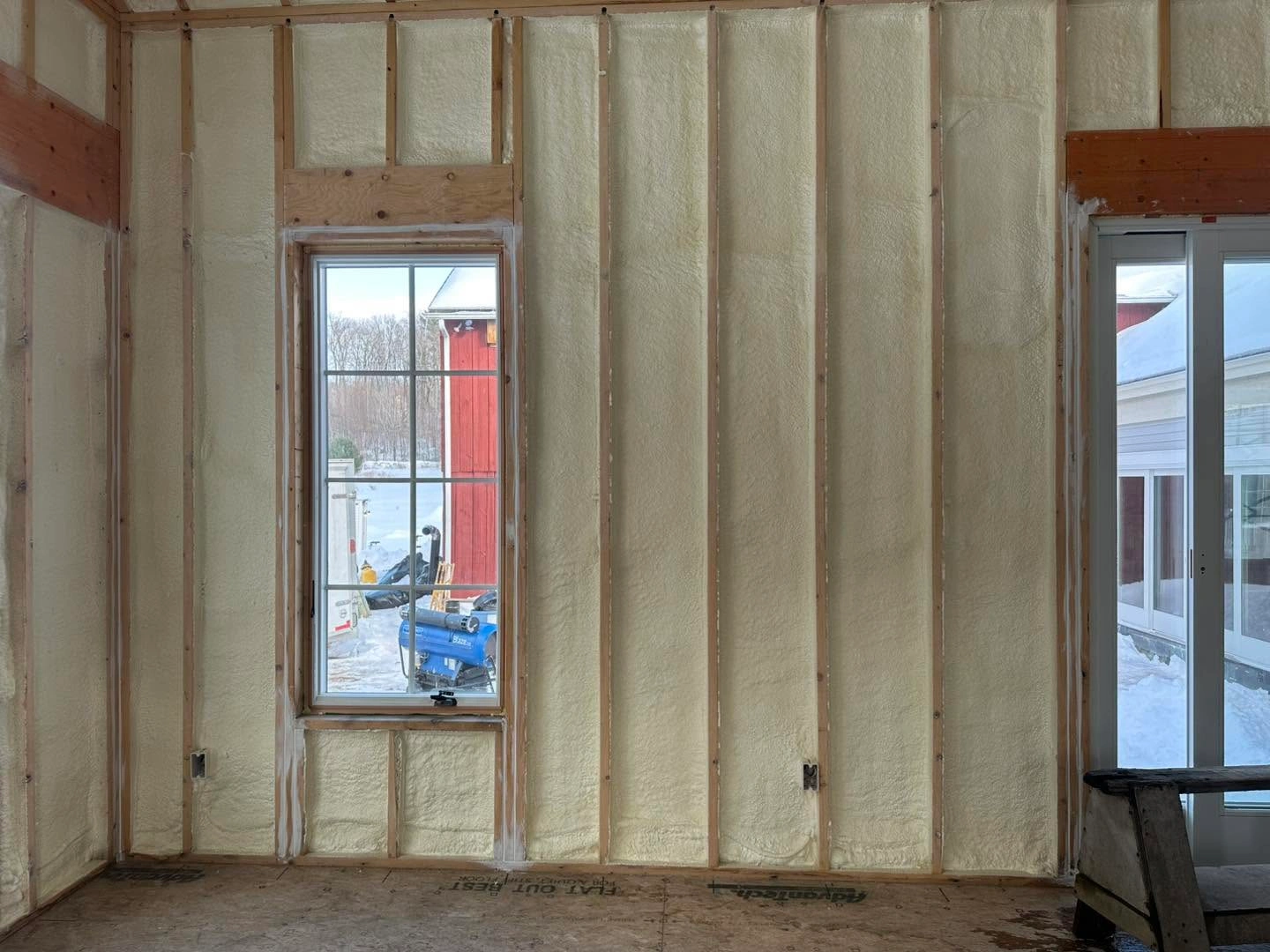
Spray foam insulation is one of the most effective investments a Charlton Depot, MA homeowner can make to improve both daily living conditions and long-term property value. Unlike fiberglass batts or blown cellulose, spray foam expands on application to fill gaps, cracks, and penetrations that other materials leave exposed. This dual function, thermal resistance combined with air sealing, directly lowers energy bills, reduces moisture problems, and creates a more comfortable indoor environment. For homeowners in Massachusetts, where winters are cold and humid summers are common, spray foam addresses the specific challenges that drive up heating and cooling costs and accelerate wear on a home’s structure. The type of spray foam chosen, where it is installed, and the quality of the installation all influence the results, so understanding the options matters before committing to a project.
Charlton Depot sits in a region that experiences cold winters, warm summers, and meaningful humidity swings throughout the year. In these conditions, the building envelope, the outer walls, roof, foundation, and all openings between them, works overtime to keep conditioned air inside and outdoor extremes out. According to the Department of Energy’s Oak Ridge National Laboratory, heating and cooling account for 50 to 70% of the energy used in the average American home, and inadequate insulation and air leakage are the leading causes of energy waste in most homes.
Most homes in the United States simply do not have enough insulation. The EPA reports that 9 out of 10 U.S. homes are under-insulated, which means the overwhelming majority of Charlton Depot properties are losing conditioned air through the envelope every day, regardless of age or construction type. Spray foam insulation directly addresses this problem because it does more than slow conductive heat transfer. It expands into gaps around framing, plumbing penetrations, electrical boxes, and rim joists, creating an airtight barrier that traditional batt insulation cannot match.
The concept of insulation R-value measures how well insulation resists heat flow. The higher the R-value, the better the thermal performance. But R-value alone does not tell the whole story. As the Oak Ridge National Laboratory explains, insulation reduces air movement only within the space it occupies. It does not stop air leaking through cracks between building parts, such as gaps between the foundation and sill plate or around window frames. This is the distinction between thermal resistance and air sealing, and it is the reason spray foam performs so differently from other materials.
Spray polyurethane foam is unique because it can provide continuity of water control, air control, vapor control, and thermal control layers in a single installed product, as documented by Building Science Corporation in their residential spray foam guide. When spray foam is applied, it expands to fill cavities and adheres to surrounding surfaces, sealing the kinds of leaks that batts, blankets, and loose-fill products leave open.
Not all spray foam is the same, and choosing the right type depends on the application, climate zone, and specific goals of the project.
| Property | Open-Cell Spray Foam | Closed-Cell Spray Foam |
|---|---|---|
| R-Value per Inch | R-3.5 to R-3.8 | R-6.0 to R-7.0 |
| Vapor Permeability | Vapor-open (breathable) | Acts as Class II vapor retarder at 1.5 inches |
| Density | Low density, softer | High density, rigid |
| Air Sealing | Excellent when applied at minimum depth | Excellent, even in thinner applications |
| Best Applications | Wall cavities, conditioned attics, sound control | Rim joists, crawlspaces, basement walls, flood-prone areas |
| Moisture Control | Does not act as vapor retarder | Provides vapor retarder and condensation control |
For Charlton Depot homes in IECC Climate Zone 5, closed-cell spray foam is recommended in several critical locations. Building Science Corporation advises that in Climate Zones 5 and higher, closed-cell spray foam provides additional condensation control and meets code requirements for both air-impermeable insulation and a Class II vapor retarder. Open-cell spray foam can still be used in wall cavities and conditioned attics when paired with appropriate vapor control strategies.
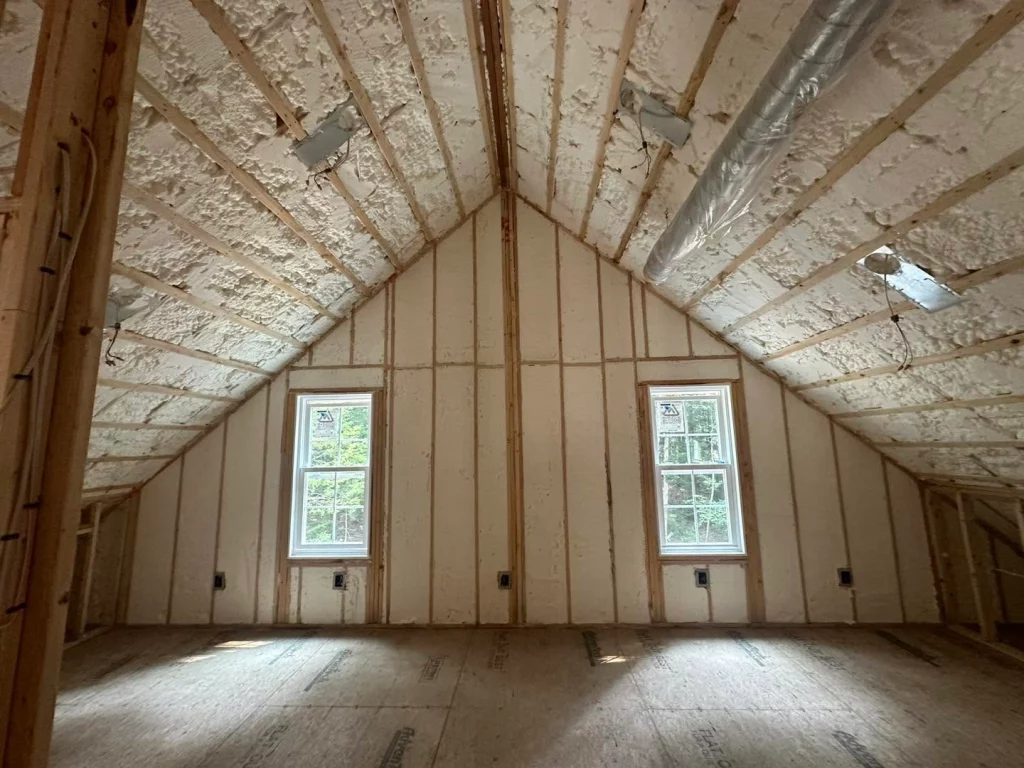
The attic is often the single largest source of energy loss in a home. When insulation is placed on the attic floor, air leaks around penetrations, recessed lights, and plumbing vents allow conditioned air to escape into unconditioned space. Spray foam applied to the underside of the roof deck converts the attic into a conditioned space, bringing HVAC ductwork and equipment within the thermal envelope.
The DOE Building America Solution Center documents that unvented conditioned attics with spray foam insulation offer several advantages: duct thermal losses are minimized, any duct air leaks still contribute to conditioning the home, and the assembly is more resistant to wind-driven rain and ember intrusion. In homes with complex ceilings, skylights, and numerous service penetrations, spray foam along the roof line provides a far more continuous air barrier than attempting to seal the attic floor.
The rim joist area, where the floor framing meets the foundation wall, is one of the leakiest parts of any home. Air infiltration through these gaps drives up heating costs in winter and allows humid air in during summer. Closed-cell spray foam is the standard solution here because it fills the irregular cavities, seals against air movement, and provides vapor control in a location where condensation risk is high. For basement foundation walls, spray foam applied to the interior provides thermal resistance and moisture control while avoiding the insect and durability issues associated with exterior foundation insulation.
In vented crawlspaces, floor insulation alone cannot stop air and moisture from entering the floor assembly. Closed-cell spray foam applied to the crawlspace ceiling seals against air and vapor infiltration while providing the high R-value needed in Massachusetts climate zones. Encapsulated, conditioned crawlspaces using spray foam on the walls eliminate moisture problems, protect ductwork, and reduce the risk of frozen pipes in winter.
The EPA’s methodology for estimating savings from air sealing and insulation is grounded in energy modeling of typical existing U.S. homes. According to the ENERGY STAR Seal and Insulate methodology, savings vary significantly by climate zone:
| Climate Zone | Estimated Total Energy Savings | Heating and Cooling Savings |
|---|---|---|
| Zone 5 (Southern/Central MA) | 12% | 16% |
| Zone 6 (Western/Northern MA) | 14% | 18% |
These savings come from two combined actions: sealing air leaks to achieve approximately a 25% reduction in total air infiltration, and adding insulation to meet or exceed the 2012 International Energy Conservation Code requirements. The EPA notes that estimated savings are higher in northern climates due to longer heating seasons, greater temperature differences between indoors and outdoors, and the prevalence of heating systems that respond directly to envelope improvements.
For Charlton Depot homeowners, this translates to meaningful reductions in annual energy bills. The ENERGY STAR program also reports that properly installed insulation and air sealing improve overall comfort, reduce noise from outside, limit pollen and dust infiltration, provide better humidity control, and lower the chance of ice dams in snowy climates.
While the direct connection between insulation upgrades and resale value varies by market, several factors make spray foam insulation a meaningful value driver for Charlton Depot homes:
The right approach depends on the home’s age, construction type, existing insulation, and the specific problems you want to solve. Here is a framework for common Charlton Depot scenarios:
| Home Scenario | Recommended Approach | Key Considerations |
|---|---|---|
| Older home with little to no attic insulation | Closed-cell spray foam on attic floor + air sealing | Address ventilation, ensure combustion safety first |
| Home with HVAC equipment in the attic | Closed-cell or open-cell spray foam under roof deck | Creates conditioned attic, protects ductwork |
| Unfinished basement with cold floors | Closed-cell spray foam on rim joists and basement walls | Improves comfort, controls moisture and air infiltration |
| Vented crawlspace with ductwork | Closed-cell spray foam on floor framing or conditioned crawlspace walls | Consider encapsulation for full moisture control |
| New construction or major renovation | Spray foam in walls, rim joists, and roof assembly per IRC tables | Maximum airtightness and thermal performance from the start |
Choosing who installs your spray foam insulation in Charlton Depot, MA matters as much as the material itself. Look for these indicators:
Lamothe Insulation and Contracting provides expert spray foam insulation services for homeowners throughout the Charlton Depot area. Our team evaluates your home’s unique needs, recommends the right spray foam products for each application, and installs with precision to maximize energy savings, comfort, and long-term durability. We take a building science approach to every project, ensuring your insulation performs as designed for years to come.
📞 Request a Quote | 📋 Schedule an Insulation Assessment
Contact us at [email protected] or call (508) 847-0119 to discuss your project. We are ready to help you improve the comfort, efficiency, and value of your Charlton Depot home.
Spray foam provides both high R-value and air sealing in a single application, while fiberglass only resists conductive heat flow and leaves gaps around framing and penetrations unsealed.
It depends on the location within the home. Closed-cell is recommended for rim joists, crawlspaces, and basement walls due to its vapor retarder properties. Open-cell works well in wall cavities and conditioned attics when paired with proper vapor control.
Yes. Spray foam can be retrofitted in attics, basements, crawlspaces, and rim joist areas of existing homes. Wall cavities can also be insulated with spray foam during renovations or siding replacement projects.
Spray foam reduces the warm air leakage from the living space into the attic that melts snow on the roof, which is the primary cause of ice dams. Sealing and insulating the attic floor or roof line with spray foam addresses this problem directly.
When properly installed, spray foam insulation is a permanent building material that does not settle, sag, or degrade over time. It maintains its R-value and air-sealing properties for the life of the home.