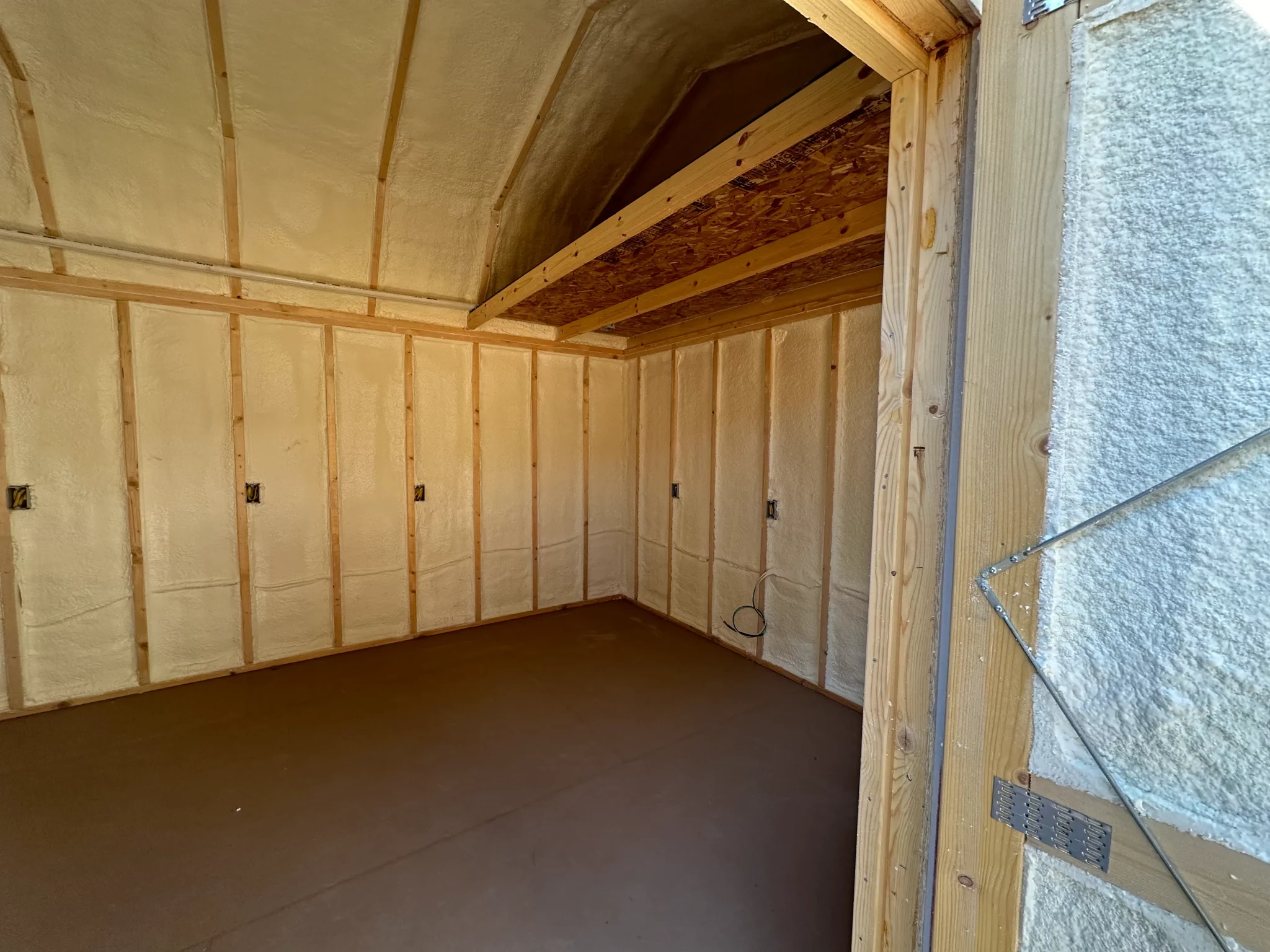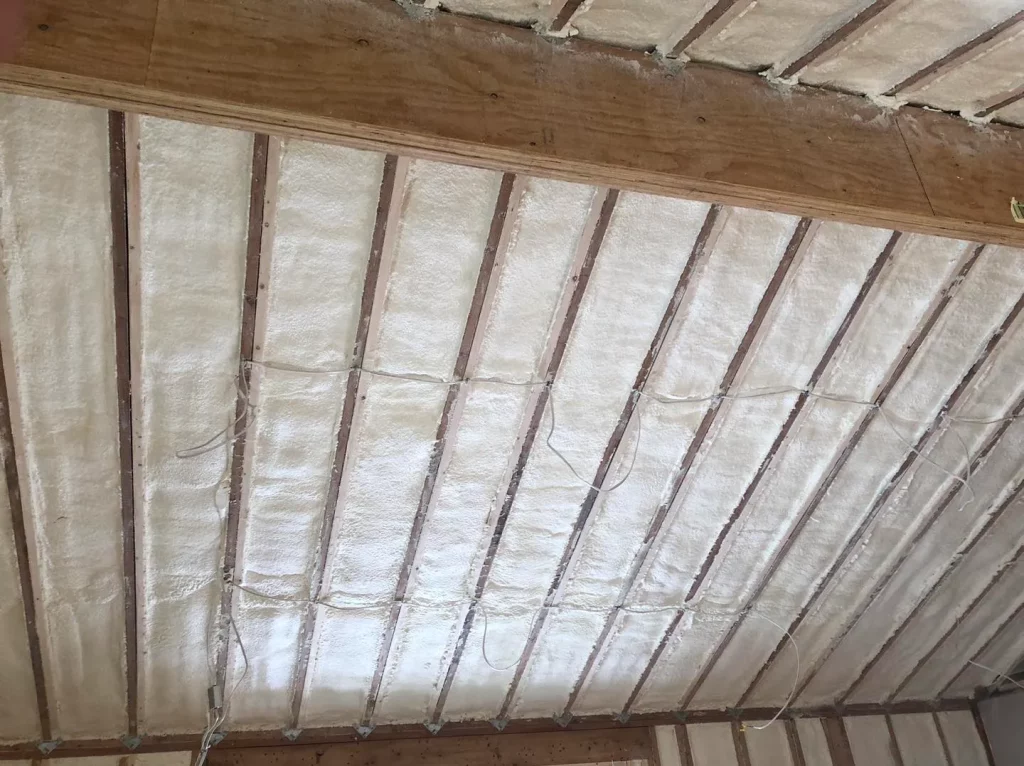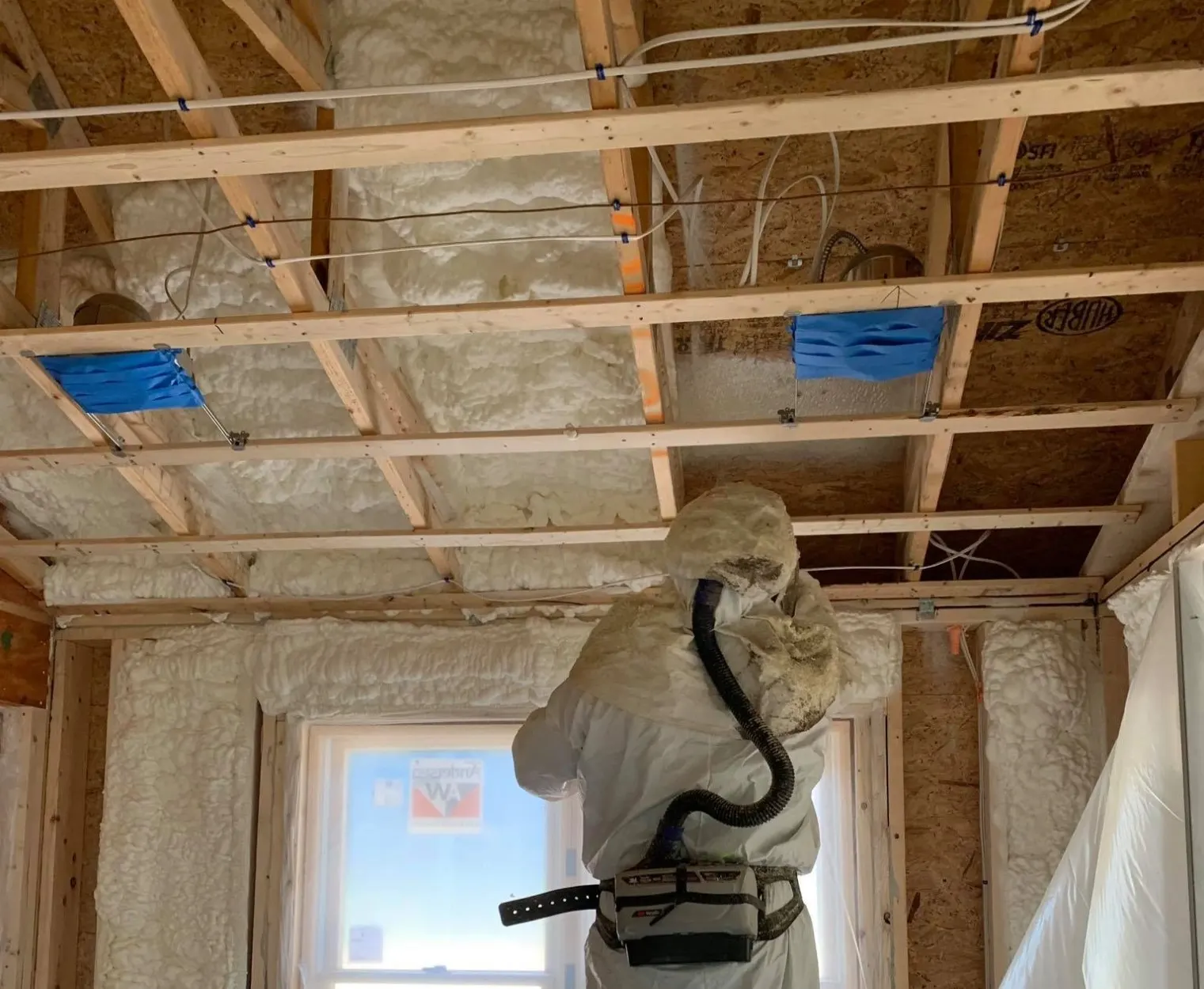
How to Address Uneven Insulation Coverage With Open-Cell Spray Foam in Worcester, MA
Fixing uneven insulation coverage with open-cell spray foam in Worcester, MA starts with diagnosis, not with more foam. Our team…

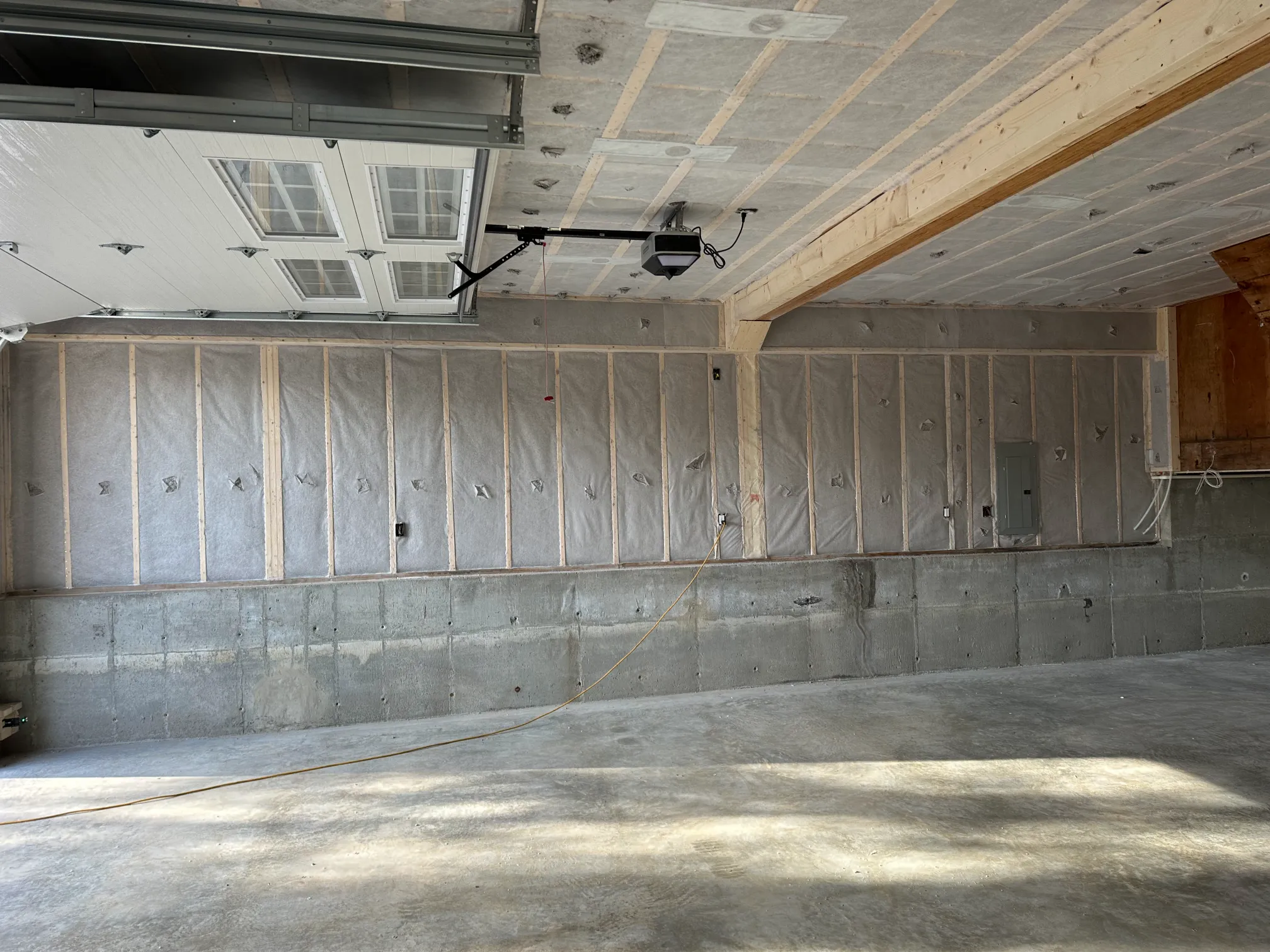
When comparing insulation options, the R-value of blown-in insulation is the key metric that indicates how well a material resists heat transfer. The higher the R-value, the more effective the insulation is at keeping conditioned air where it belongs. Blown-in insulation, commonly used in attics, walls, and floors, delivers strong thermal resistance while filling gaps and irregular spaces that batts and rolls often miss, and it’s one of the most flexible options available through our insulation services.
This guide breaks down R-value by material, what affects it over time, and how much you actually need for your attic, walls, or floors.
TL;DR
Blown-in insulation comes in a few different materials, each with its own R-value per inch of thickness.
Does R-value stay linear as you add thickness? For blown-in fiberglass, R-value increases in a roughly linear way with thickness up to a point, but settling and compression over time can reduce that relationship in the real world, which is one reason professional depth verification matters more than the number on the bag.
Increasing the depth of blown-in insulation raises the overall R-value, but effectiveness can vary based on settling over time.
Proper installation ensures even coverage and prevents air pockets that reduce thermal efficiency, which is where a blown fiberglass insulation R-value on paper and the R-value you actually get in your attic can start to differ.
Fiberglass and cellulose insulation can lose R-value if they absorb moisture, so moisture control is essential.
Insulation retains heat, but proper ventilation prevents condensation, which could degrade the insulation’s performance over time. Does insulation lose its R-value? Yes, if it settles, compresses, or absorbs moisture, its real-world performance drops below the rated number even though the material is still in place.
These recommendations align closely with the Department of Energy’s insulation and air-sealing guidance, which outlines minimum R-value criteria by building component.
Blown-in insulation selection depends on climate, budget, and project goals:
Blown-in insulation requires specialized equipment for even distribution. Professional installation ensures consistency and helps you actually hit the blown-in insulation R-value per inch the material is rated for, rather than an average pulled down by gaps and thin spots.
Over time, some materials, like cellulose, settle and lose insulation efficiency. Proper initial application mitigates this risk.
Periodic inspections help maintain insulation effectiveness by catching moisture buildup or compression issues early.
Blown-in insulation works best when paired with other efficiency measures:
For a deeper look at how different materials hold up under real conditions, see our breakdown of how insulation performs in extreme weather, which covers where blown-in options fit against other insulation types. The DOE Building Science Education Center also offers useful background on how high-R insulation standards are set.
Choosing the right blown-in insulation material and R-value makes a measurable difference in comfort and long-term energy costs. Getting professional installation is what actually turns a rated R-value into real performance in your home.
Contact our team for a free quote and expert insulation installation tailored to your home.
Cellulose and fiberglass are the most common choices for attics. Cellulose offers a higher R-value per inch, while fiberglass is more moisture-resistant.
Thickness varies by climate and material. Attics in colder climates may require up to 18 inches of insulation to reach R-60.
Yes, some materials settle, reducing their effectiveness. Proper installation minimizes settling and maintains long-term performance.
DIY installation is possible with rental equipment, but professional installation ensures even coverage and optimal efficiency.
Cellulose is treated with fire retardants, while rock wool is naturally fire-resistant.
Excess moisture can degrade insulation, leading to reduced R-value and mold growth. Proper ventilation and vapor barriers help prevent this.
Yes, but the existing insulation should be dry and in good condition to prevent issues.
Cold drafts, uneven temperatures, and high energy bills are common signs of insufficient insulation levels. High energy bills indicate insufficient insulation levels.
U.S. Department of Energy: https://www.energy.gov/cmei/buildings/articles/energy-efficient-home-improvement-credit-insulation-and-air-sealing
DOE Building Science Education: https://bsesc.energy.gov/energy-basics/high-r-insulation